Thursday, May 28, 2026 |Navi Mumbai
--:-- | --°C | AQI --
If it's not on Unbox Daily HQ, it's not a Launch. Every product, policy and brand launch in India. One hub. What's new?
The ₹1,472 crore Sabarmati Railway Station package prioritises commercial heavy haulage, while local commuters receive limited dual-fuel runs and partial safety tech.
The Takeaway
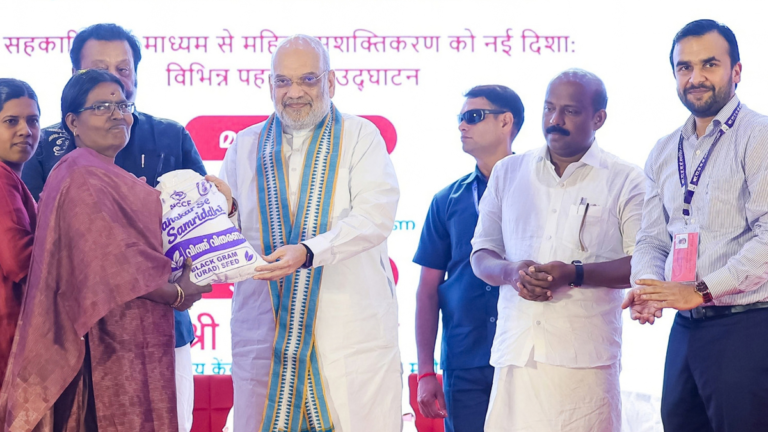
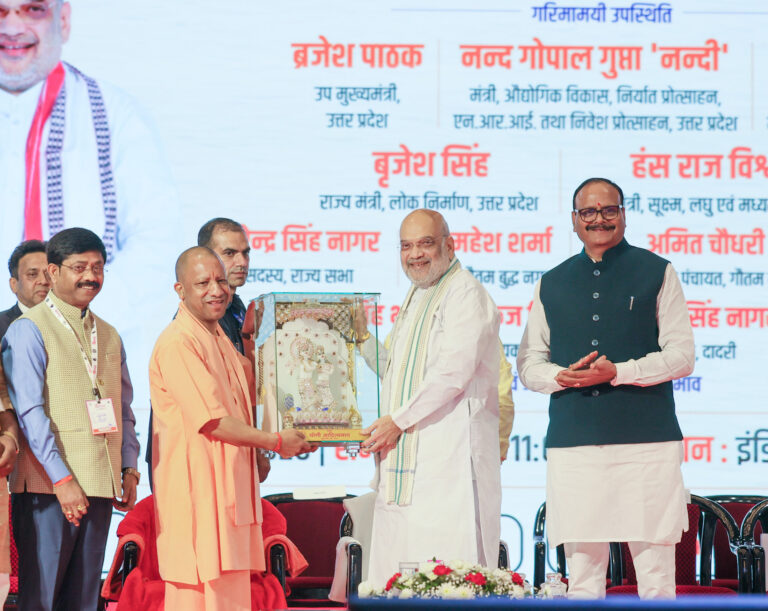
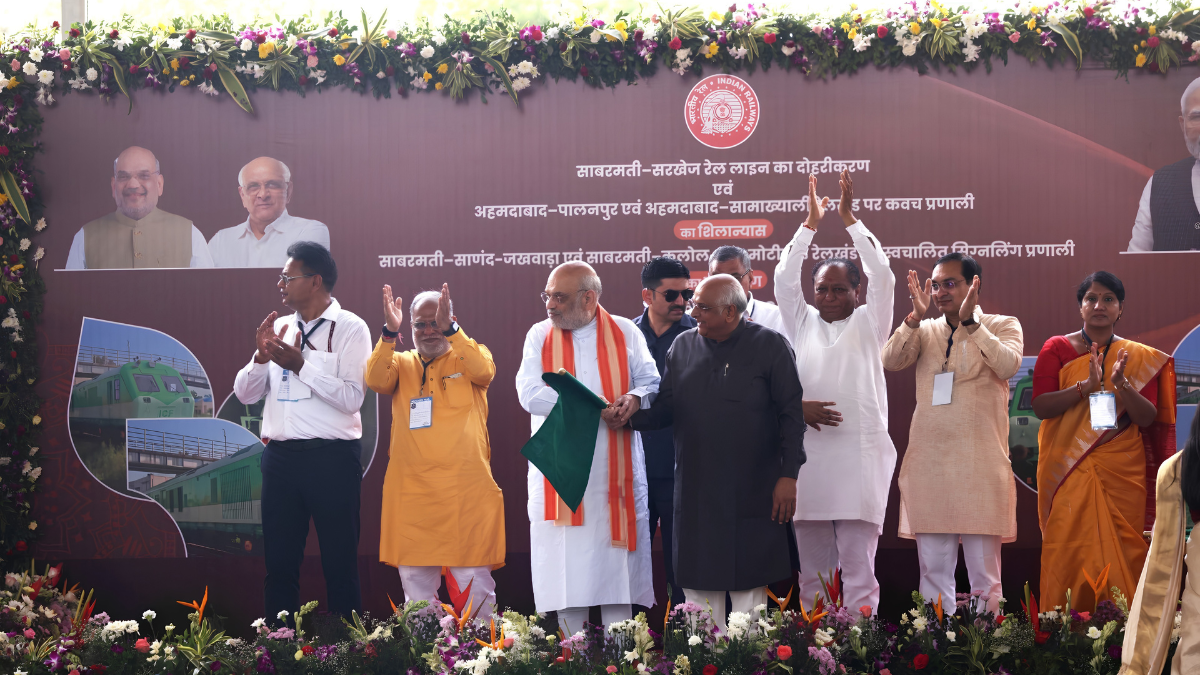
Press Information Bureau records confirm the official rollout of new railway infrastructure projects across Gujarat. Union Home Minister Amit Shah flagged off a new natural gas passenger service at Sabarmati Railway Station. Official speeches emphasized environmental protection and network modernization. Prominent achievements highlighted in the government release include near-complete line electrification and widespread bio-toilet installations.
Public communications highlight sweeping technical progress across the national rail grid. The headline feature centers on introducing gas power to regional passenger transit. Government data indicates broad-gauge electrification has reached 99.6 percent nationwide. Officials also stated that 97 to 98 percent of passenger coaches now carry bio-toilets. Meanwhile, safety upgrades focus on expanding the Kavach automatic train protection network.
A detailed inspection of the operational specifications reveals a clear gap between the announcement and the reality. The featured natural gas train runs on an interim dual-fuel system rather than pure gas. It replaces a maximum of 40 percent diesel consumption during line-haul operations. That leaves 60 percent of its propulsion reliant on standard diesel. The celebrated 99.6 percent electrification statistic applies strictly to broad-gauge lines, excluding narrow and metre-gauge routes that still serve rural communities. Furthermore, the ₹48 crore Kavach safety system is currently operational only on the localized Sabarmati to Kalol loop. Key regional lines toward Palanpur and Samakhiali remain at the initial work commencement stage.
Government representatives projected that national rail diesel consumption will drop to zero by 2030. Official figures show annual usage fell from 293 crore litres in 2015-16 to 108 crore litres in 2024-25. Reaching total zero within four years remains highly unlikely while key routes rely on interim dual-fuel engines. India did successfully develop an indigenous hydrogen fuel-cell train for the Jind to Sonipat route, joining four other nations with this capability. However, scaling zero-emission technology across daily passenger operations requires far more than isolated test runs.
The bulk of this capital spending serves heavy freight operations rather than everyday rail passengers. A single WAG-12 maintenance facility in Sabarmati absorbed ₹700 crore of the total ₹1,472 crore budget. This depot services 12,000-horsepower twin-section electric engines capable of pulling loads equal to 600 heavy trucks. Successful double-stack container trials between Mumbai and Vadodara further underline this focus on industrial supply chains. Everyday commuters looking for direct regional connections can examine the direct railway link uniting Kumaon and Garhwal regions. Train numbers 15309 and 15310 operate every Wednesday and Friday with halts at Kashipur and Moradabad.
ⓘ Sponsored: Unbox Daily HQ earns a commission if you buy through these links, at no extra cost to you. Prices shown are subject to change, and the actual price on Amazon at the time of purchase may vary from what is displayed here.
Past performance records also complicate the official narrative regarding coach sanitation. Authorities highlighted installing bio-toilets across almost all passenger coaches during the current administration. However, Indian Railways officially declared 100 percent bio-toilet coverage back in the 2019-2020 financial year. Those initial DRDO-designed units suffered from severe clogging and foul smells. Rail authorities subsequently began replacing them with aircraft-style vacuum bio-toilets costing ₹2.5 lakh per unit. The current administration is spending heavily to replace the exact sanitation models celebrated in this release.
Sabarmati Railway Station infrastructure investment and operational reality
| Project component | Confirmed outlay | Operational reality |
| WAG-12 locomotive shed | ₹700 crore | Dedicated to heavy commercial freight |
| Kavach safety system | ₹48 crore | Operational only on Sabarmati-Kalol loop |
| Gujarat state rail budget | ₹17,366 crore | Total annual allocation for 2026-27 |
The Western Railway corridor now carries heavy double-stack container trains that move raw materials faster. Industrial logistics firms gain substantial efficiency from high-capacity electric freight engines. Everyday passenger commuters, by contrast, experience little immediate change. They must wait for route-wide Kavach installation before experiencing enhanced collision safety on major express journeys.
The development of dual-fuel locomotive engines was completed by the Integral Coach Factory in Chennai.
The Unboxed Truth
At Unbox Daily HQ, our audit shows that the Sabarmati Railway Station package focuses primarily on industrial logistics rather than passenger transformation. Heavy freight infrastructure receives the vast majority of official funding. The natural gas train remains an experimental dual-fuel hybrid that continues to burn substantial diesel. Commuters on major regional routes must wait as safety systems expand beyond short local loops.
Best for: Industrial freight shippers and supply chain operators.
Who is this for: Regional logistics managers and everyday rail commuters aged 25 to 50.
Courtesy: Press Information Bureau
The total outlay for the Sabarmati Railway Station development package is ₹1,472 crore. The single largest component is a ₹700 crore maintenance shed built specifically for WAG-12 heavy electric locomotives. A further ₹48 crore went towards installing the Kavach train safety system on the local Sabarmati to Kalol loop.
The LNG-powered train is a retrofitted dual-fuel passenger engine rather than a fully gas-driven vehicle. It replaces up to 40 percent of conventional diesel intake during line-haul operations. Unlike pure zero-emission alternatives, this dual-fuel locomotive continues to burn 60 percent standard diesel during routine service.
The infrastructure upgrade primarily benefits commercial freight operators rather than everyday rail passengers. The vast majority of capital expenditure expands heavy industrial freight capacity and logistics efficiency. Passenger benefits remain limited to a single experimental dual-fuel local train and a localized safety loop.