Thursday, May 28, 2026 |Navi Mumbai
--:-- | --°C | AQI --
If it's not on Unbox Daily HQ, it's not a Launch. Every product, policy and brand launch in India. One hub. What's new?
State leaders project massive economic growth through defence and food subsidies, though strict rules govern the actual funds.
The Takeaway
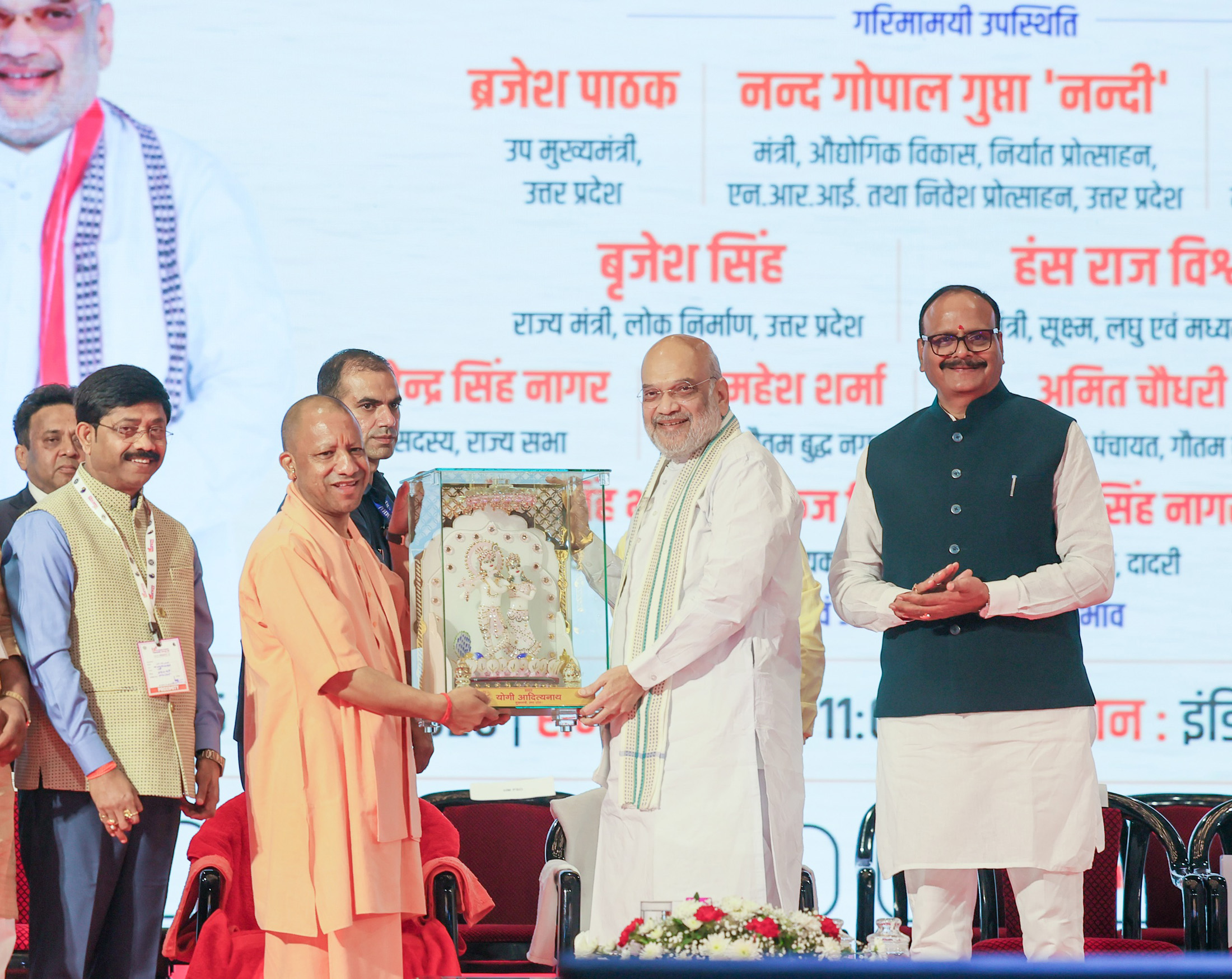
Uttar Pradesh International Trade Show features displays from manufacturers across seventy-five districts. Senior leaders used the Greater Noida event to frame the state as a prime industrial hub. Official speeches emphasized political stability and improved law enforcement. The state administration points to these factors to justify its ambitious economic growth targets.
Heavy manufacturing and regional culinary traditions form the twin pillars of this growth pitch. State promotional campaigns heavily highlight military production in Amethi and Lucknow. The government also introduced the Ek Janpad Ek Vyanjan scheme to take regional foods nationwide. This program promises financial backing to convert local delicacies like Varanasi Malaiyo into national packaged brands. Entrepreneurs can access a 25 percent capital subsidy to establish production facilities.
Scheme rules reveal significant eligibility limits upon closer inspection. The ODOC capital subsidy caps strictly at ₹20 lakh and applies exclusively to new units. Applicants must hold active Udyam Registration and formal food safety licenses while providing detailed project reports. This strict requirement completely excludes informal street cooks and traditional home kitchens. The total state budget for this cuisine initiative sits at ₹75 crore. That averages barely ₹1 crore per district.
The macro targets show similar gaps between announcement and reality. State leadership quietly extended the one trillion dollar economy deadline from 2027 to 2030. Current Gross State Domestic Product stands at roughly ₹39.8 lakh crore.
Uttar Pradesh International Trade Show economic metrics and scheme terms
ⓘ Sponsored: Unbox Daily HQ earns a commission if you buy through these links, at no extra cost to you. Prices shown are subject to change, and the actual price on Amazon at the time of purchase may vary from what is displayed here.
| Metric | Current Status |
| Target Economy Size | $1 Trillion by 2030 |
| Projected 2026-27 GSDP | ₹39.8 Lakh Crore |
| ODOC Max Capital Subsidy | ₹20 Lakh |
| ODOC Total State Budget | ₹75 Crore |
| State Poverty Rate | 8.20 Percent |
Political narratives often blend state metrics with national achievements. The inauguration speech cited a record July Goods and Services Tax collection of ₹2.11 lakh crore alongside massive semiconductor projects. These are pan-India figures. Unlike Gujarat or Maharashtra, Uttar Pradesh must generate unprecedented double-digit growth to hit its 2030 goal. Currently, Kanpur captures the bulk of the actual defence manufacturing output despite six advertised nodes across the state. Regional cooperative structures sometimes provide more stable localized growth. A green hub in Jamnagar sets a new standard for credit as Jamnagar District Cooperative Bank reports zero gross NPAs and opens a 47,000-square-foot solar-powered headquarters.
The real impact of these policies depends entirely on your business classification. Defence corridor contracts heavily benefit major anchor corporations with military-grade certifications. Regional micro-cooks will find the ODOC scheme inaccessible due to strict compliance hurdles. The logistics risk of moving perishable goods nationwide falls entirely on the business owner rather than the state.
Despite the Amethi gun factory campus existing since 2007, the first truly indigenous rifle only passed test-firing in August 2026. The initial 2024 batches relied heavily on imported Russian kits. Full domestic mass production remains a future goal.
The Unboxed Truth
Unbox Daily HQ checks the math on government announcements. The Uttar Pradesh International Trade Show presents a highly polished view of state progress. The economic targets and the Ek Janpad Ek Vyanjan scheme sound impressive on paper. Yet they mask deep regional inequalities and immense compliance burdens. The state per-capita income of roughly ₹1,58,000 remains among the lowest nationally. The promised prosperity largely reaches heavy industry contractors and fully licensed startups. It completely misses the informal workers who form the backbone of the local economy.
Best for: Registered medium enterprises and certified defence contractors.
Who Is This For: Formal business owners aged 30 to 55 looking to secure state subsidies.
Courtesy: Press Information Bureau
The initiative features a total state budget of ₹75 crore across 75 districts. Individual entrepreneurs can access a capital subsidy capped at 25 percent up to ₹20 lakh for new production units.
Unlike general trade fairs, this event highlights twin regional pillars of heavy defence corridor manufacturing and traditional culinary commercialization. State leadership uses the platform to project a 2030 target for a one trillion dollar economy.
No, the scheme is best for registered medium enterprises and formal business owners aged 30 to 55. Strict compliance rules requiring active Udyam Registration and food safety licenses entirely exclude informal vendors.