Thursday, May 28, 2026 |Navi Mumbai
--:-- | --°C | AQI --
If it's not on Unbox Daily HQ, it's not a Launch. Every product, policy and brand launch in India. One hub. What's new?
The 2026 amendment protects Indian MSMEs from immediate litigation over genuine procedural and regulatory lapses.
The Essentials
The Pulse
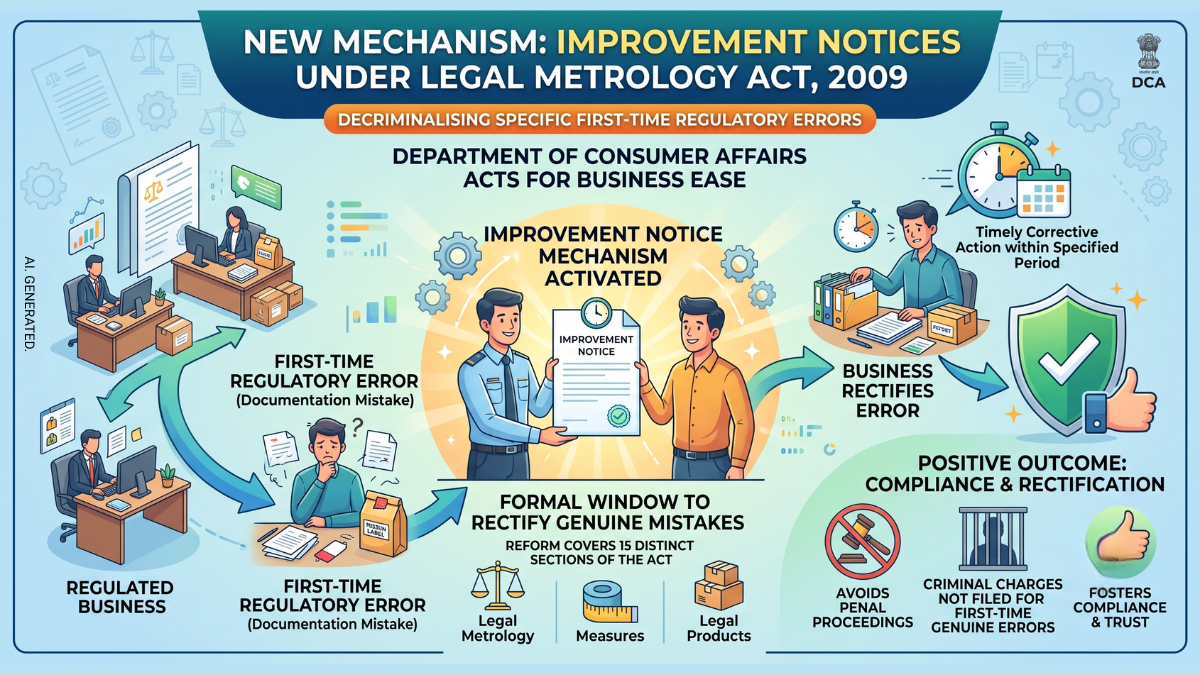
First-time procedural errors under India’s legal metrology framework no longer result in immediate penal action. The Department of Consumer Affairs has activated the Improvement Notice mechanism through the Jan Vishwas (Amendment of Provisions) Act, 2026. This allows a Legal Metrology Officer to issue a formal warning and a rectification timeline instead of straightaway initiating litigation against a business.
What exactly does an Improvement Notice cover?
It applies specifically to first-time regulatory lapses involving registration, model approvals, record maintenance, and the import or sale of weights and measures. If a regulated entity fixes the identified deficiency within the prescribed period, the matter is closed completely without any financial penalty or court proceedings.
This policy shift directly targets the compliance burden that traditionally restricts MSMEs and independent traders. Strict enforcement remains in place for fraud, tampering, or repeated violations that genuinely harm consumer interests. The mechanism draws a clear line between an inadvertent administrative oversight and deliberate malpractice, saving businesses time and legal costs while keeping consumer safeguards intact.
ⓘ Sponsored: Unbox Daily HQ earns a commission if you buy through these links, at no extra cost to you. Prices shown are subject to change, and the actual price on Amazon at the time of purchase may vary from what is displayed here.
The Snapshot
| Policy Name | Improvement Notice Mechanism |
| Governing Law | Legal Metrology Act, 2009 |
| Enabling Legislation | Jan Vishwas (Amendment of Provisions) Act, 2026 |
| Applicable To | Manufacturers, importers, packers, dealers, repairers, traders, MSMEs |
| Key Benefit | Opportunity to rectify first-time procedural non-compliances |
| Exclusions | Fraud, repeated violations, tampering |
| Sections Covered | 15 specific provisions (including Sections 25, 27, 28, 31, 32) |
The Big Picture
The traditional regulatory framework in Indian manufacturing historically treated administrative oversights with the same severity as deliberate fraud. This approach led to clogged courts and immense operational friction for honest enterprises trying to scale. The shift towards trust-based governance aligns with broader national efforts to improve ease of doing business rankings. By filtering out inadvertent administrative errors from the legal system, enforcement authorities free up bandwidth to pursue actual malpractice, modernising how consumer protection operates at a structural level across the country.
The India Prospective
For independent traders and packaging units operating across Indian cities, this removes the constant anxiety of severe penalties for minor paperwork mistakes. Compliance costs in India often include the heavy legal fees required to fight inadvertent errors in metrology records. This mechanism effectively serves as a practical buffer, ensuring that a genuine misunderstanding regarding a registration certificate or return filing does not instantly disrupt daily business operations.
The Inside Intel
The safety net extends specifically to the import of weights and measures without registration under Section 38 and furnishing incorrect returns under Section 41. Historically, documentation discrepancies in these exact areas triggered immediate and strict penal proceedings for importers. Now, even these highly scrutinised import-export functions fall under the self-correction window, provided it is an honest first-time oversight.
The Unboxed Truth
Unbox Daily HQ considers this a highly practical legislative update that fundamentally protects honest enterprises from bureaucratic friction. Small business owners and independent manufacturers should familiarise themselves with these 15 provisions immediately. It costs nothing to implement, but knowing your right to an Improvement Notice could save thousands in legal fees and operational disruption. The ability to correct a genuine paperwork error without facing a magistrate is the single biggest relief for early-stage ventures navigating India’s complex compliance structures.
Best for: Registered MSMEs and independent packers who manage their own legal metrology compliance without large legal teams
Who Is This For: Perfect for 28 to 55-year-old business owners and retail operators in India who handle daily packaging, weighing, or manufacturing operations
The Checkout
Department of Consumer Affairs – Official Portal
The Source
Department of Consumer Affairs | PIB.GOV
The Query
Yes, the Department of Consumer Affairs has activated the Improvement Notice mechanism in India through the Jan Vishwas Act, 2026. This regulatory update is a government mechanism that costs nothing for businesses to implement. It is currently available nationwide for manufacturers, importers, and MSMEs.
Traditional enforcement treated administrative oversights with immediate penal action and litigation. The new mechanism differs by providing a formal warning and a reasonable timeline to rectify first-time procedural errors. This allows honest businesses to correct documentation mistakes before any financial penalties or court proceedings are initiated.
Yes, this legislative update is highly practical as it protects honest enterprises from bureaucratic friction and immediate fines. While it costs nothing to implement, knowing this right saves small businesses thousands in legal fees. It is ideal for independent packers and business owners aged 28 to 55 managing daily packaging compliance.