Thursday, May 28, 2026 |Navi Mumbai
--:-- | --°C | AQI --
If it's not on Unbox Daily HQ, it's not a Launch. Every product, policy and brand launch in India. One hub. What's new?
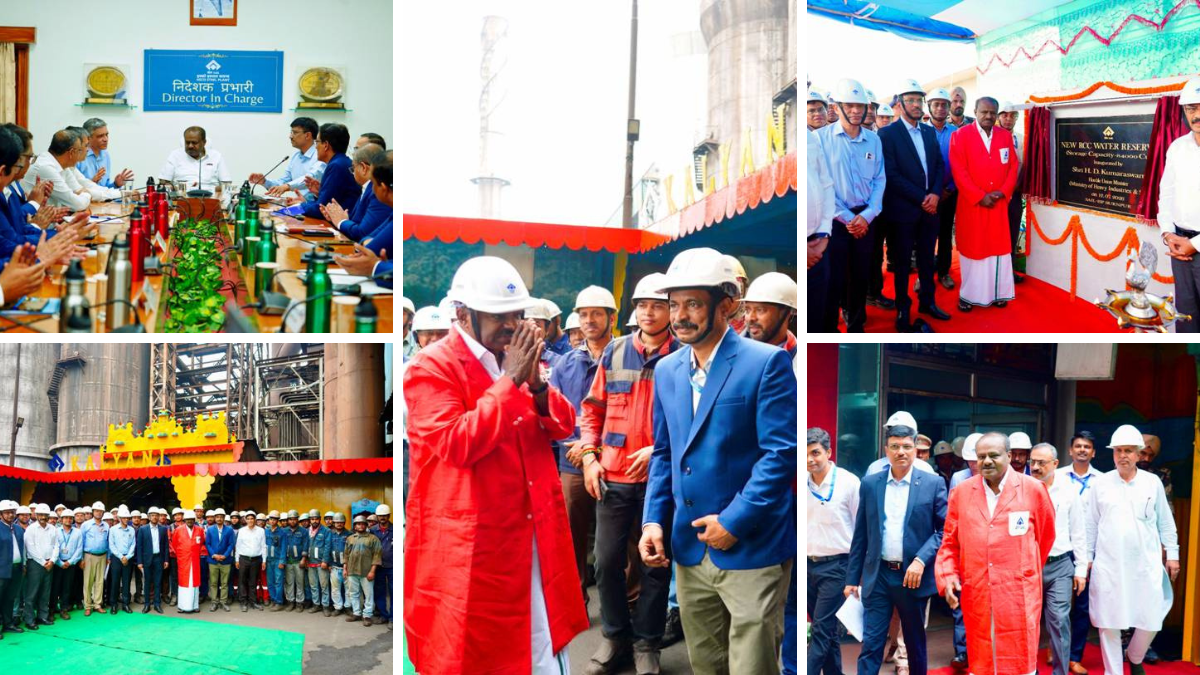
The closed-loop water system ensures sustainable operation for IISCO's upcoming 4.08 million tonnes expansion project.
The Essentials
The Pulse
The Ministry of Steel expands the infrastructure at one of India’s oldest integrated steel plants with an 84,000 cubic metre water reservoir. This upgrade at the IISCO facility in Burnpur addresses a critical bottleneck in heavy manufacturing: securing sustainable water supply for scaled production. With the plant already exceeding its rated capacity for hot metal production this financial year, the existing utility framework required modernising to support future growth without depleting local resources.
This development signals a clear shift in public sector capital expenditure, which jumped to ₹1,860 crore for IISCO in the 2025-26 financial year. The focus extends beyond adding blast furnaces to upgrading the supporting utility networks that keep those furnaces running efficiently.
The infrastructure directly prepares the ground for the plant’s upcoming 4.08 million tonnes per annum expansion project. By securing the water supply chain now, the Steel Authority of India Limited ensures that future capacity augmentation at the West Bengal plant will not face severe environmental or utility hurdles.
The Breakdown
ⓘ Sponsored: Unbox Daily HQ earns a commission if you buy through these links, at no extra cost to you. Prices shown are subject to change, and the actual price on Amazon at the time of purchase may vary from what is displayed here.
The reinforced cement concrete structure is built to handle the intense fluid demands of the Stamp Charge Coke Oven Battery (COB-10) and subsequent capacity additions. The hydraulic network operates through a multi-stage pumping system. It features a newly constructed main booster pump house that drives pressure across the facility.
This connects to a dedicated pump station specifically calibrated for COB-10 operations. An additional process water pump house, currently in the construction phase, will complete the circuit. Once fully active, this tripartite pumping infrastructure forms a sealed circulation system. This design captures, cools, and recirculates process water, minimising evaporation and operational losses during the high-temperature coke dry cooling and by-product extraction phases.
The Distinction
The primary differentiator of the new IISCO water reservoir is its closed-loop circulation architecture integrated directly with the coke oven batteries. Traditional steel plant water systems often rely on high-wastage cooling methods that drain local municipal resources. This facility combines a primary booster pump house with dedicated process water routing for COB-10, meaning the plant recycles its own industrial fluid rather than constantly drawing fresh supply. It represents a fundamental shift in how legacy Indian public sector steel facilities handle high-volume resource management during major capacity expansions.
The Snapshot
| Specification | Detail |
| Project | RCC Water Reservoir |
| Location | IISCO Steel Plant, Burnpur, West Bengal |
| Capacity | 84,000 cubic metres |
| Supporting Unit | COB-10 & Future 4.08 MTPA Expansion |
| System Type | Closed-loop water circulation |
| FY 25-26 Plant Capex | ₹1,860 crore |
The Big Picture
Steel production is notoriously water-intensive, often straining regional resources in industrial belts. While private operators like Tata Steel and JSW have aggressively upgraded their utility grids for zero-liquid discharge, older public sector units have historically lagged in modernising auxiliary infrastructure. SAIL’s substantial capital injection into the Burnpur utility network demonstrates an effort to match private sector resource efficiency. As India pushes towards ambitious national steel targets, upgrading the peripheral utility infrastructure of legacy plants becomes just as critical as building new blast furnaces.
The India Prospective
For industrial observers and policymakers in India, this reservoir represents a vital step in bridging the Centre-State infrastructure gap in West Bengal. Heavy industries in the Asansol-Durgapur belt frequently face environmental scrutiny over resource consumption. By implementing a self-contained water system, IISCO secures its operational future while reducing the burden on local municipal water grids, an essential move for large-scale manufacturing in water-stressed Indian industrial zones.
The Inside Intel
The scale of the production requires this massive utility upgrade because IISCO has been operating significantly beyond its original design limits. The plant recorded hot metal production at 108 per cent of its rated capacity during the current financial year, pushing the existing infrastructure to its absolute maximum before this new reservoir intervention.
The Unboxed Truth
Unbox Daily HQ considers this a pragmatic and overdue infrastructure upgrade for one of India’s legacy public sector units. Rather than merely announcing future steel targets, constructing a massive closed-loop utility network addresses the physical reality of heavy manufacturing, you cannot expand steel capacity without first securing the water to cool it. At ₹1,860 crore for the plant’s total annual capital expenditure, directing funds towards closed-loop utilities represents a far better long-term investment than paying escalating municipal water tariffs for open-loop cooling. At a time when industrial water usage is highly scrutinised, building an 84,000 cubic metre internal recycling system is a necessary defensive measure for SAIL. This ensures the upcoming 4.08 MTPA expansion has the structural foundation it needs without sparking local resource conflicts in the Burnpur region.
Best for: Infrastructure analysts and industrial stakeholders tracking public sector manufacturing upgrades in eastern India.
Who Is This For: Perfect for 30 to 55-year-old industry professionals, policy observers, and local stakeholders in West Bengal monitoring sustainable industrial expansion.
The Checkout
The Source
Ministry of Steel
The Query
IISCO achieved a capital expenditure of ₹1,860 crore during the 2025-26 financial year to fund its infrastructure expansion. This allocation represents a significant increase from the ₹689 crore spent in the previous fiscal year. The funding covers major utility upgrades including the new 84,000 cubic metre reservoir.
The IISCO facility introduces a closed-loop water circulation system that actively recycles industrial fluid to match the resource efficiency of private operators like Tata Steel and JSW. Traditional public sector setups rely on high-wastage cooling methods. This architecture uses a multi-stage pumping network to minimise operational fluid losses.
The reservoir is a highly pragmatic long-term investment for SAIL because it protects the plant from escalating municipal water tariffs. It provides the essential utility foundation required for the upcoming 4.08 million tonnes per annum expansion. This infrastructure is vital for industrial stakeholders and policymakers tracking sustainable manufacturing in West Bengal.