Thursday, May 28, 2026 |Navi Mumbai
--:-- | --°C | AQI --
If it's not on Unbox Daily HQ, it's not a Launch. Every product, policy and brand launch in India. One hub. What's new?
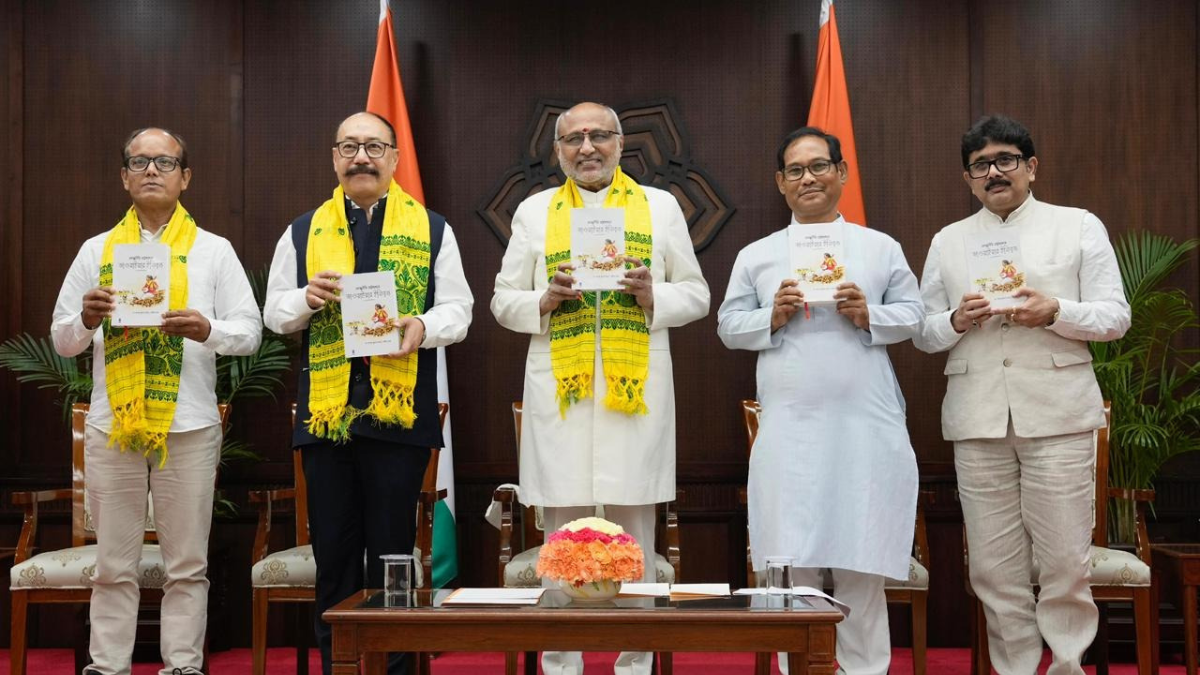
The book Sanskritir Ratna Bhandar maps how agricultural customs and seasonal festivals shaped regional music.
The Essentials
The Pulse
Member of Parliament Dr. Jayanta Kumar Roy and co-author Sangita Roy document the agrarian folk music of North Bengal in their new book, Sanskritir Ratna Bhandar: Bhaowaiyar Itibritto. Released in New Delhi by Vice-President Shri C. P. Radhakrishnan, the work systematically traces the origins and cultural journey of the Bhawaiya tradition.
What exactly is Bhawaiya?
It is a traditional folk music genre rooted in the social, agricultural, and community life of North Bengal, Assam, and adjoining areas, specifically reflecting the lived experiences of the Koch Rajbanshi community. The text examines how seasonal festivals, religious practices, and everyday struggles shaped this oral tradition over generations.
The publisher, Katha-O-Kahini, brings this regional history to the mainstream. The book positions Indian folk music not just as entertainment, but as a living record of collective memory. By mapping the evolution of Bhawaiya, the authors provide a structural look at how traditional knowledge systems survive modern urbanisation.
ⓘ Sponsored: Unbox Daily HQ earns a commission if you buy through these links, at no extra cost to you. Prices shown are subject to change, and the actual price on Amazon at the time of purchase may vary from what is displayed here.
The Snapshot
| Title | Sanskritir Ratna Bhandar: Bhaowaiyar Itibritto |
| Author | Dr. Jayanta Kumar Roy and Sangita Roy |
| Publisher | Katha-O-Kahini |
| Genre | Cultural History / Folk Music |
| Language | Bengali |
| India Price (₹) | Not yet confirmed |
| Release Date | June 2026 |
| Availability | Available in India |
| Where to Buy in India | Not yet confirmed |
The Big Picture
Regional cultural documentation often struggles to find mainstream publishing support in India, with oral traditions particularly vulnerable to being lost. While mainstream literature frequently focuses on metropolitan histories or classical arts, the folk traditions of regions like North Bengal usually remain confined to academic papers. This publication by Katha-O-Kahini brings a highly specific agrarian musical heritage into formal print, highlighting a growing shift towards preserving hyper-local Indian histories before they disappear entirely from the public consciousness.
The India Prospective
For readers with roots in North Bengal or Assam, this text offers a formal academic validation of their ancestral music. It places local traditions like Bhawaiya within the broader civilisational framework of India, showing how agrarian customs and regional dialects contribute directly to the national cultural identity. The book provides those living outside their home states a tangible way to reconnect with the specific community life and seasonal festivals of the Koch Rajbanshi people.
The Inside Intel
The text connects regional folk traditions to ancient Indian philosophy, noting that music was historically viewed as a pathway to the Divine through concepts like Nada Brahma and the Sama Veda. It highlights that ancient works like Bharata Muni’s Natya Shastra treated music as a fundamental expression of human emotion centuries before the formalisation of Western classical music in Europe.
The Unboxed Truth
Unbox Daily HQ considers this a highly specific but valuable addition to the library of anyone studying Indian folk history or ethnomusicology. You should buy this if you have a direct connection to the Koch Rajbanshi community or an academic interest in how agrarian societies preserve their history through music. For the casual reader seeking light entertainment, a dense historical account of a regional music genre might be too academic, making it an easy skip. However, for cultural researchers, it provides a rare, formal documentation of an oral tradition.
Best for: Academics and readers with roots in North Bengal who want to understand the historical evolution of their local folk music.
Who Is This For: Perfect for 22 to 55-year-old historians and cultural sociology students in India who study regional arts and oral traditions.
The Checkout
The Source
Vice President’s Secretariat | PIB.GOV
The Query
The official retail price for Sanskritir Ratna Bhandar: Bhaowaiyar Itibritto in India is not yet confirmed by the publisher. The book is available in India through the publisher Katha-O-Kahini on their website kathaokahini.com. Retail distribution to other major platforms is currently pending following the release.
Sanskritir Ratna Bhandar highlights that ancient Indian traditions treated music as a spiritual connection to the cosmic order centuries before Western classical music formalised. The book focuses on how Bhawaiya folk music reflects organic human emotions and agricultural customs. This contrasts with the structured composition styles of Western traditions.
Sanskritir Ratna Bhandar: Bhaowaiyar Itibritto is worth buying for cultural researchers, historians, and readers with ancestral roots in North Bengal. The text provides rare documentation of the Koch Rajbanshi community and their agrarian musical heritage. Casual readers looking for light entertainment should skip this text as it remains highly academic.