Thursday, May 28, 2026 |Navi Mumbai
--:-- | --°C | AQI --
If it's not on Unbox Daily HQ, it's not a Launch. Every product, policy and brand launch in India. One hub. What's new?
The second edition of the India Electric Mobility Index evaluates state policies and charging readiness.
The Takeaway
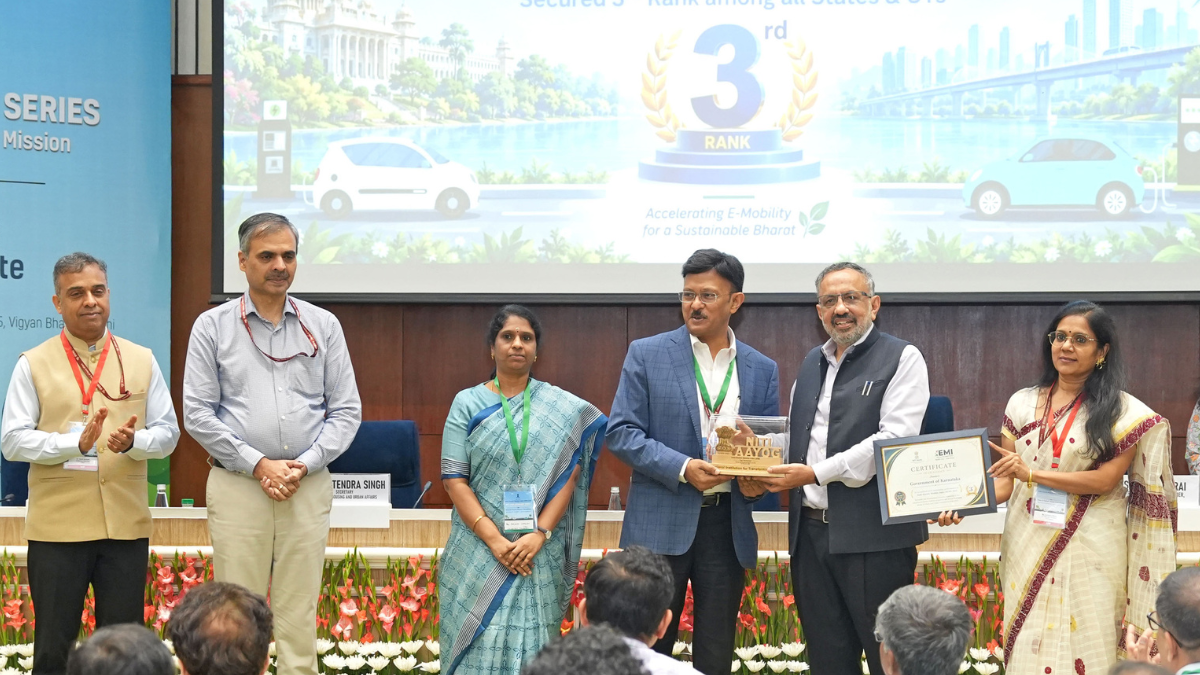
NITI Aayog published its second state electric mobility report during an official policy gathering in New Delhi in September 2026. Shri Rajiv Gauba led the proceedings. Clean vehicle transition represents an economic and strategic priority for the nation. Government strategy relies on state policy updates to accelerate urban electric transit adoption while reducing heavy urban air pollution across major metropolitan areas.
Central financial support flows through multiple dedicated public funding channels. Capital grants fund FAME, PM E-DRIVE, and PM E-bus Sewa programmes. Manufacturing incentives expand through Production Linked Incentive structures covering auto components and Advanced Chemistry Cell battery storage.
The framework ties regional policy evaluation directly to real public infrastructure availability. Public charging access will expand through the Unified Bharat e-Charge application. This digital system merges scattered charging networks under one interface for drivers.
India Electric Mobility Index details
| Parameter | Detail |
| Assessment Framework | India Electric Mobility Index |
| Publishing Entity | NITI Aayog |
| Total Regions Assessed | 36 States and UTs |
| Active Policy Frameworks | 29 notified policies |
| Public Report Cost | Free digital download |
International adoption figures from 2025 show electric cars taking 10 percent of new sales in the US and over 25 percent in Europe. While battery adoption grows globally, alternative clean powertrains are expanding, such as Maruti’s flex-fuel vehicle running on pure ethanol designed to reduce petroleum use in conventional engines.
ⓘ Sponsored: Unbox Daily HQ earns a commission if you buy through these links, at no extra cost to you. Prices shown are subject to change, and the actual price on Amazon at the time of purchase may vary from what is displayed here.
Domestic urgency stems from India importing nearly 89 percent of its crude oil requirements. Recent instability in West Asia highlights risks similar to the 1970s oil crises. Transitioning away from petrol shields an automotive sector that drives 7.1 percent of national Gross Domestic Product while employing nearly 1.9 crore citizens.
The Unboxed Truth
At Unbox Daily HQ, we view the India Electric Mobility Index as an essential reality check for state administrations. Tracking progress through objective numbers stops local officials from making vague promises about clean transit. You get clear data on where charging infrastructure actually works, while the Unified Bharat e-Charge app directly solves charger discovery issues for everyday drivers.
Best for: State transport officials and municipal urban planners.
Who Is This For: Clean tech analysts and mobility researchers aged 25 to 48 years.
Courtesy: NITI Aayog
The India Electric Mobility Index second edition is available as a free digital download in India. The public report was released by NITI Aayog during an official policy gathering in September 2026. All 36 states and Union Territories can access the assessment data without any access fee.
The India Electric Mobility Index evaluates state policies through objective score metrics rather than relying on vague local promises. It ties regional progress directly to real infrastructure metrics such as public charging access through the Unified Bharat e-Charge platform. The assessment covers performance across 36 Indian states and Union Territories.
The India Electric Mobility Index is an essential resource for state transport officials, municipal urban planners, and clean tech analysts aged 25 to 48 years. It delivers an essential reality check by benchmarking state performance against national zero-emission goals. The report provides clear data to hold local leaders accountable for clean transit progress.