Thursday, May 28, 2026 |Navi Mumbai
--:-- | --°C | AQI --
If it's not on Unbox Daily HQ, it's not a Launch. Every product, policy and brand launch in India. One hub. What's new?
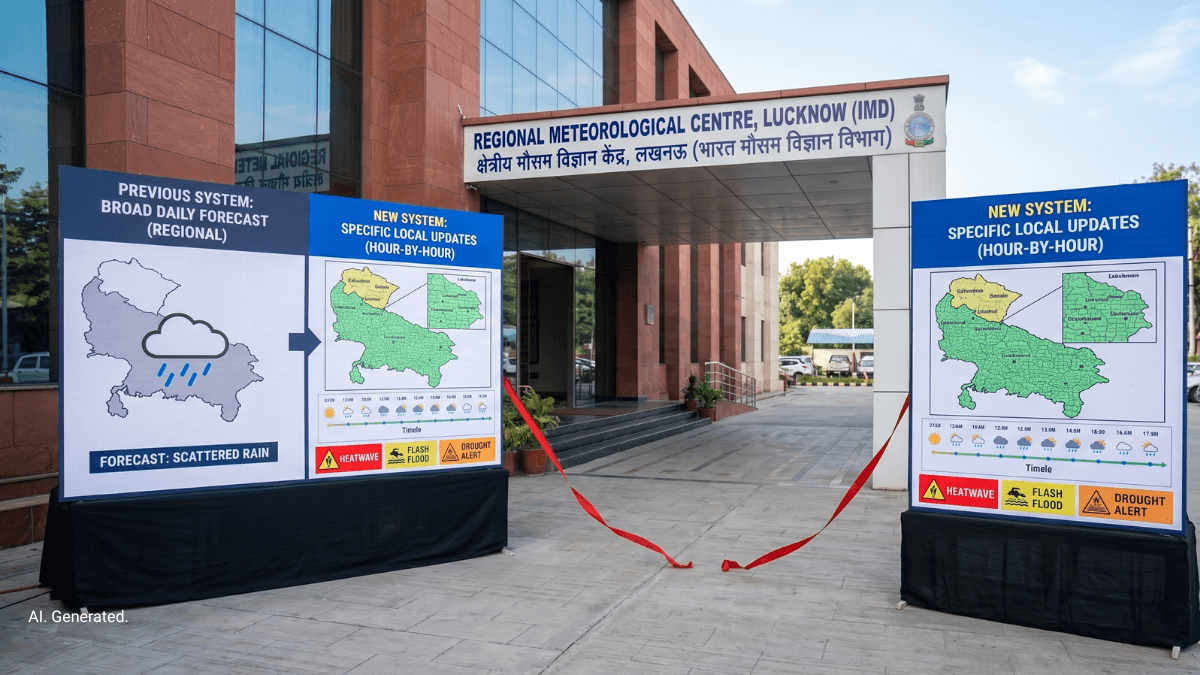
The new facility will provide highly localised forecasts and immediate early warnings for Uttar Pradesh and Uttarakhand.
The Essentials
The Pulse
A new Regional Meteorological Centre has opened in Lucknow to serve Uttar Pradesh, Uttarakhand, and nearby areas. The facility aims to shift weather forecasting from broad regional predictions to specific, hour-by-hour local updates. This matters heavily for a region that regularly faces extreme events like heatwaves, droughts, and flash floods.
The improvement relies on a massive increase in observation equipment. For context, India operated just 17 Doppler weather radars a decade ago. That number sits at 50 today, with plans to double it within two years. Uttar Pradesh alone has grown from a single radar to three, with six more arriving shortly.
The direct question many will ask is whether this actually changes how you prepare for bad weather. The answer is yes, provided local authorities act on the data. The equipment can detect incoming thunderstorms, cloudbursts, and lightning strikes accurately enough to send warnings straight to district and Panchayat levels. You will no longer just know that it might rain in your state, but exactly when a storm will hit your district.
The Snapshot
ⓘ Sponsored: Unbox Daily HQ earns a commission if you buy through these links, at no extra cost to you. Prices shown are subject to change, and the actual price on Amazon at the time of purchase may vary from what is displayed here.
| Specification | Detail |
| Facility | Regional Meteorological Centre |
| Location | Lucknow, Uttar Pradesh |
| Coverage Area | Uttar Pradesh, Uttarakhand, adjoining regions |
| Total Radars in India (2014) | 17 |
| Total Radars in India (Current) | 50 |
| Total Radars in India (Planned) | 100 within two years |
| UP Operational Radars | 3 |
| UP Lightning Sensors | 7 |
| Aviation Met Services | 11 UP airports |
The Big Picture
Private weather forecasters like Skymet have long highlighted the need for denser ground observation networks across India. Historically, national weather forecasting relied on broad regional models rather than hyper-local data, which often delayed disaster response. By expanding heavily under Mission Mausam, the national agency is closing that critical gap. Moving from 17 national radars to a projected 100 transforms the meteorological department from a basic reporting unit into a precise, predictive safety tool that rivals international weather monitoring standards.
The India Prospective
For anyone travelling through or living in the north, this means fewer surprises during the monsoon. If you are flying into any of the 11 covered airports in Uttar Pradesh, the dedicated aviation meteorological services will help reduce sudden, weather-related flight delays. Early warnings for heatwaves and severe thunderstorms will now hit your phone with enough lead time to actually alter your daily commute, protect your property, or adjust your weekend travel plans.
The Inside Intel
Despite being one of the most vulnerable states to flash floods, cloudbursts, and landslides, Uttarakhand previously operated without a single Doppler weather radar. The hill state relied entirely on broader national modelling that often missed sudden localised events. It currently has three dedicated radars functioning on the ground, fundamentally changing how quickly hill stations and trekking routes can be evacuated before a major weather event strikes.
The Unboxed Truth
Unbox Daily HQ views this as a vital upgrade for anyone tired of vague weather predictions ruining their plans or putting them at risk. As a taxpayer, you are finally getting precise, actionable data that helps you make better daily decisions. The shift to impact-based, short-range forecasting means you should start taking those SMS weather alerts and app notifications seriously, rather than dismissing them as general guesses. If you frequently travel for work or leisure across the northern states, paying attention to these newly accurate regional warnings is the smartest thing you can do to avoid getting stranded.
Best for: frequent travellers and residents in northern India who need reliable local weather updates to plan their week safely.
Who Is This For: Perfect for 28 to 55 working professionals and families in urban or semi-urban areas who commute daily and want to avoid severe weather disruptions.
The Checkout
India Meteorological Department – India Page
The Source
Ministry of Science & Technology | PIB.GOV.
Yes, the facility has opened in Lucknow to serve Uttar Pradesh, Uttarakhand, and adjoining regions. It provides real-time, short-range weather warnings directly to district and Panchayat levels. Residents can access these localised updates immediately through digital platforms and SMS alerts.
Unlike traditional broad regional models, this national facility focuses on hyper-local, hour-by-hour weather updates using a vastly expanded radar network. While private forecasters have noted the gap in ground observations, this centre integrates data from multiple new Doppler radars and lightning sensors. This infrastructure allows the department to send precise, impact-based warnings directly to local administrations before severe weather strikes.
The service is designed for frequent travellers, working professionals, and families living in northern India who commute daily. It is particularly useful for anyone flying through the 11 covered airports in Uttar Pradesh or navigating trekking routes in Uttarakhand. By monitoring these highly accurate local warnings, residents can safely plan their week and avoid severe weather disruptions.