Thursday, May 28, 2026 |Navi Mumbai
--:-- | --°C | AQI --
If it's not on Unbox Daily HQ, it's not a Launch. Every product, policy and brand launch in India. One hub. What's new?
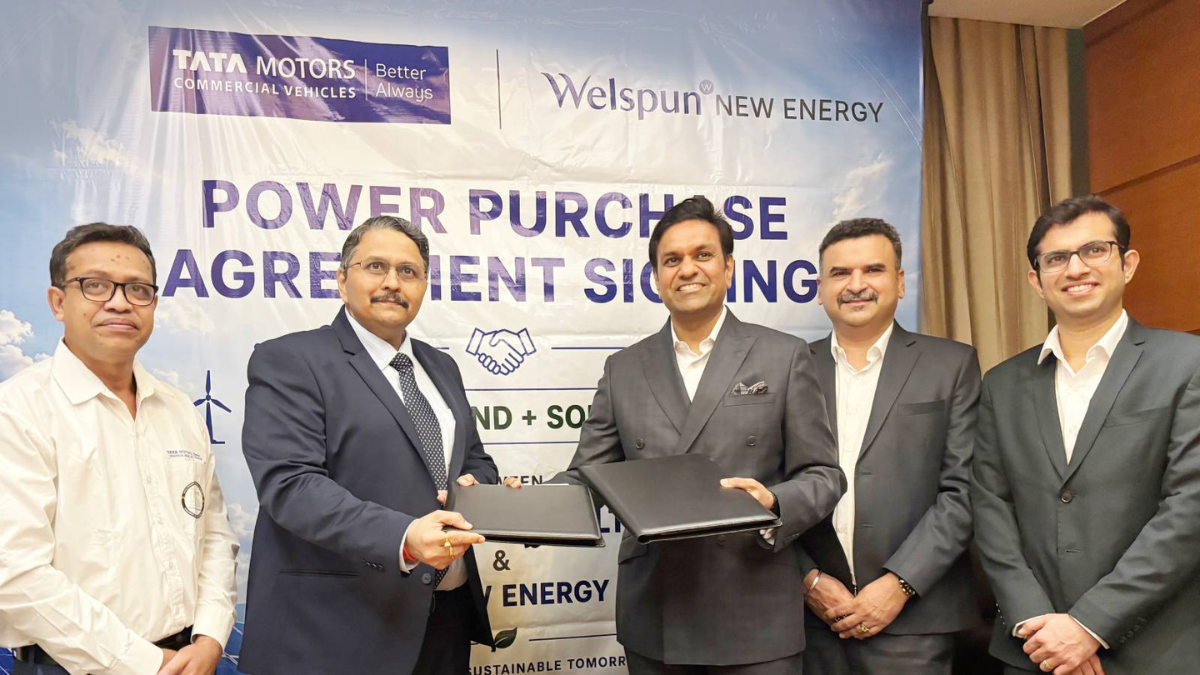
Generating 200 million units of clean electricity annually, this Welspun partnership offsets over 1.4 lakh tons of CO2.
The Essentials
The Pulse
Tata Motors is shifting its commercial vehicle production away from traditional grid dependence by securing an independent clean energy supply. Through a long-term Power Purchase Agreement with Welspun Renewable Energy, the manufacturer will co-develop an 86 MW wind-solar hybrid project. This infrastructure delivers electricity directly to manufacturing plants across Jharkhand, Uttar Pradesh, Uttarakhand, and Karnataka.
The installation generates 200 million units of renewable energy annually, specifically addressing the heavy electricity demands of automotive production. By integrating both wind and solar generation, the energy supply remains consistent across different weather conditions and times of day. This operational shift directly supports the RE100 target set for 2030, pushing the company toward entirely renewable energy reliance.
Heavy industries face intense scrutiny to lower their carbon footprints, and large-scale, co-invested power purchase agreements provide a practical path to net-zero operations. Welspun serves as the dedicated infrastructure partner here, constructing the exact capacity required to keep these commercial vehicle assembly lines running on green power.
The Snapshot
ⓘ Sponsored: Unbox Daily HQ earns a commission if you buy through these links, at no extra cost to you. Prices shown are subject to change, and the actual price on Amazon at the time of purchase may vary from what is displayed here.
| Metric | Detail |
| Project Type | Wind-Solar Hybrid Renewable Energy |
| Capacity | 86 MW |
| Annual Generation | 200 million units |
| Emissions Offset | 1.4 lakh tons of CO2 annually |
| Development Partner | Welspun Renewable Energy Private Limited |
| Plant Locations | Jharkhand, Uttar Pradesh, Uttarakhand, Karnataka |
| Corporate Target | RE100 by 2030 |
The Big Picture
Securing reliable renewable energy for heavy manufacturing is historically difficult due to the sheer volume of power required. Major Indian corporations typically rely on standard coal-heavy local grids, making carbon reduction targets difficult to achieve. By co-investing in a dedicated 86 MW hybrid project, an automotive manufacturer takes direct control of its energy transition rather than waiting for state infrastructure to turn green. This type of hybrid power purchase agreement sets a benchmark for other heavy industries trying to balance high production volumes with strict net-zero timelines.
The India Prospective
For the Indian market, this means the commercial vehicles handling last-mile delivery and public transport will soon be produced with a significantly smaller carbon footprint. Operating dedicated green energy projects across states like Karnataka and Uttar Pradesh also reduces the industrial load on local public power grids. It demonstrates that large-scale corporate sustainability is moving past theoretical targets into physical infrastructure investment within India.
The Inside Intel
The entity executing this energy transition recently completed a significant corporate restructuring to streamline its operations. Following a composite scheme of arrangement sanctioned by the National Company Law Tribunal in Mumbai, the commercial mobility arm previously known as TML Commercial Vehicles Limited officially reclaimed the primary Tata Motors Limited name in late October 2025. This alignment consolidates eight decades of heavy vehicle manufacturing under a single banner.
The Unboxed Truth
Unbox Daily HQ considers this a critical indicator of how serious Indian heavy industry has become about its climate obligations, not through buying carbon credits, but by building physical renewable assets. Investors and industry professionals tracking the mobility sector should note this shift from grid reliance to independent green power generation. The 200 million units of annual clean energy actively future-proofs four major factories against rising industrial electricity costs. This infrastructure investment makes the 2030 RE100 target look highly achievable rather than just a corporate talking point.
Best for: Corporate sustainability analysts who need to track structural energy shifts in Indian manufacturing.
Who Is This For: Perfect for 28 to 55-year-old industry professionals in the financial or automotive sectors who monitor corporate ESG developments.
The Checkout
The Source
Tata Motors India
The Query
The project provides green energy exclusively to four Tata Motors commercial vehicle manufacturing plants. It is not available to the public or external companies. The power is distributed across facilities in Jharkhand, Uttar Pradesh, Uttarakhand, and Karnataka under a long-term Power Purchase Agreement.
This hybrid project combines wind and solar generation to ensure a more consistent clean energy supply across varying weather conditions. Unlike standard coal-heavy local grids, it offsets over 1.4 lakh tons of carbon emissions annually. The dedicated infrastructure directly powers vehicle production lines across four Indian states.
The project is worth the co-investment because it generates 200 million units of clean electricity annually to future-proof factories against rising industrial power costs. It is vital for corporate sustainability analysts tracking industrial energy shifts. The infrastructure provides a realistic path to achieve the RE100 target by 2030.