Thursday, May 28, 2026 |Navi Mumbai
--:-- | --°C | AQI --
If it's not on Unbox Daily HQ, it's not a Launch. Every product, policy and brand launch in India. One hub. What's new?
The new Rajasthan Refinery and integrated green projects are expanding India's domestic fuel capacity.
The Essentials
The Pulse
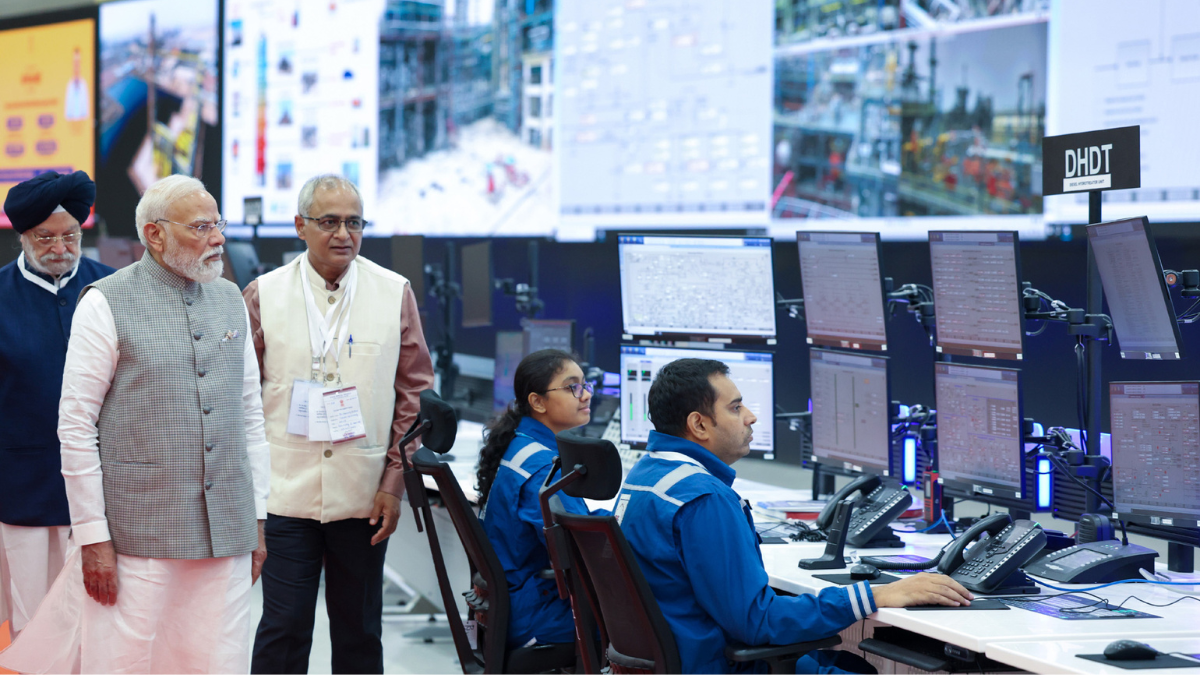
The central government has officially dedicated the vast Rajasthan Refinery in Balotra, the anchor of a ₹1.06 lakh crore infrastructure push across the state. The project signals a major shift in domestic energy strategy. While western nations watch their refining capacities shrink, this completion cements India’s position holding the fourth-largest refinery capacity globally.
For those tracking the broader environmental impact, the energy push pairs heavily with ecological responsibility. The government is actively driving renewable transitions, integrating over 1.5 lakh homes into the PM Surya Ghar scheme and establishing massive solar parks in the region.
Beyond the steel and solar panels, the immediate benefit is economic resilience. When global conflicts recently threatened critical supply lines, domestic facilities rapidly reconfigured to divert industrial gas into domestic cooking fuel. This boosted national LPG production from 35,000 to 54,000 metric tonnes in just seven days. This strategic capacity is exactly why domestic cylinders remained capped below ₹950, avoiding the severe fuel rationing seen in other nations.
The Snapshot
ⓘ Sponsored: Unbox Daily HQ earns a commission if you buy through these links, at no extra cost to you. Prices shown are subject to change, and the actual price on Amazon at the time of purchase may vary from what is displayed here.
| Project | Detail |
| Key Infrastructure | Rajasthan Refinery, Balotra |
| Total Investment Block | ₹1.06 lakh crore |
| Original MoU Signed | 2017 |
| Global Position | Fourth-largest refinery capacity in the world |
| LPG Production Surge | 35,000 to 54,000 metric tonnes in seven days |
| Domestic LPG Cap | Under ₹950 (Under ₹650 for Ujjwala) |
| Renewable Integration | 1.5 lakh homes (PM Surya Ghar) |
| Agricultural Solar Support | 65,000 solar pumps (PM Kusum Yojana) |
| Urea Subsidy Price | ₹300 per bag |
| Loss Absorbed to Protect Consumers | ₹75,000 crore (April to June) |
The Big Picture
America has not built a new refinery in 50 years, and European capacity continues to shrink. In contrast, India is aggressively expanding its domestic processing capabilities. The Rajasthan Refinery is central to this sovereign energy strategy. By building out local capacity and simultaneously broadening its import base from 26 to over 40 nations, the country is firmly insulating its domestic markets. This dual approach protects consumers from the severe energy crises and sudden supply chain shocks that are currently affecting the rest of the globe.
The India Prospective
While the refinery physically sits in Rajasthan, the fiscal ripple effects touch every Indian household. By holding vast domestic processing power, the central government recently absorbed a ₹75,000 crore loss over three months and slashed excise duties by ₹10 per litre to keep fuel flowing. For the Indian consumer, this infrastructure is the direct reason daily commutes and domestic cooking gas remain affordable despite massive international volatility.
The Inside Intel
When global supply chains froze during recent conflicts, domestic refineries that had never processed liquid petroleum gas before were completely reconfigured in exactly seven days. This rapid tactical pivot redirected gas originally meant for industrial work straight into domestic cooking supplies. The swift engineering shift successfully averted what market experts warned would be a severe nationwide shortage, proving the agility of local facilities.
The Unboxed Truth
Unbox Daily HQ considers the Rajasthan Refinery a critical asset for India’s economic stability, proving that large-scale industrial projects can coexist with renewable energy goals. The completion of this massive facility, alongside the rollout of solar parks and residential solar schemes, shows a balanced approach to the energy crisis. Instead of relying solely on imports, this ₹1.06 lakh crore investment block physically ensures that Indian fuel and fertiliser supplies remain strictly under domestic control.
Best for: Energy sector professionals and local job seekers who want to capitalise on the new industrial hub in Balotra.
Who Is This For: Perfect for 28 to 55-year-old professionals and business owners who track national infrastructure to understand long-term economic stability.
The Checkout
HPCL Rajasthan Refinery – Official Page
The Source
Prime Minister’s Office | PIB.GOV
The Query
The Rajasthan Refinery project in Balotra is part of a major regional energy infrastructure block requiring a total investment of approximately ₹1.06 lakh crore. This newly dedicated facility expands India’s processing capabilities to shield domestic consumers from global market volatility. It anchors state-wide economic development alongside localised solar power initiatives.
The Rajasthan Refinery expands India’s capacity while American refining infrastructure has seen no new builds for 50 years and European capacity continues to shrink. This strategic growth cements India’s position as the holder of the fourth-largest refinery capacity globally. The integrated facility pairs industrial fuel production directly with extensive regional green energy projects.
Tracking the Rajasthan Refinery is highly valuable for commercial investors as it resolves long-standing regional infrastructure bottlenecks and drives industrial growth. The ₹1.06 lakh crore investment block secures fuel and fertiliser supplies under strict domestic control. It serves as a critical asset for economic stability while balancing industrial and renewable goals.