Thursday, May 28, 2026 |Navi Mumbai
--:-- | --°C | AQI --
If it's not on Unbox Daily HQ, it's not a Launch. Every product, policy and brand launch in India. One hub. What's new?
Special Campaign 6 targets bureaucratic file backlogs and office scrap.
The Takeaway
The Department of Health and Family Welfare is implementing Special Campaign 6 as part of the government’s broader cleanliness and administrative reform exercise. The Department of Administrative Reforms and Public Grievances (DARPG) coordinates the government-wide campaign.
The implementation phase is scheduled to continue through October 31, 2026, following preparatory activities conducted during September.
2,017 Sites Included in the Drive
The Department has identified 2,017 sites for cleanliness and related activities during the campaign. The exercise covers offices and establishments under the Department of Health and Family Welfare, including its subordinate and autonomous organisations.
Alongside physical cleanliness, the campaign includes efforts to identify obsolete records and assets for appropriate disposal and improve the use of office space.
ⓘ Sponsored: Unbox Daily HQ earns a commission if you buy through these links, at no extra cost to you. Prices shown are subject to change, and the actual price on Amazon at the time of purchase may vary from what is displayed here.
Officials have also identified 12 internal procedures for simplification as part of the exercise.
More Than 70,000 Records Under Review
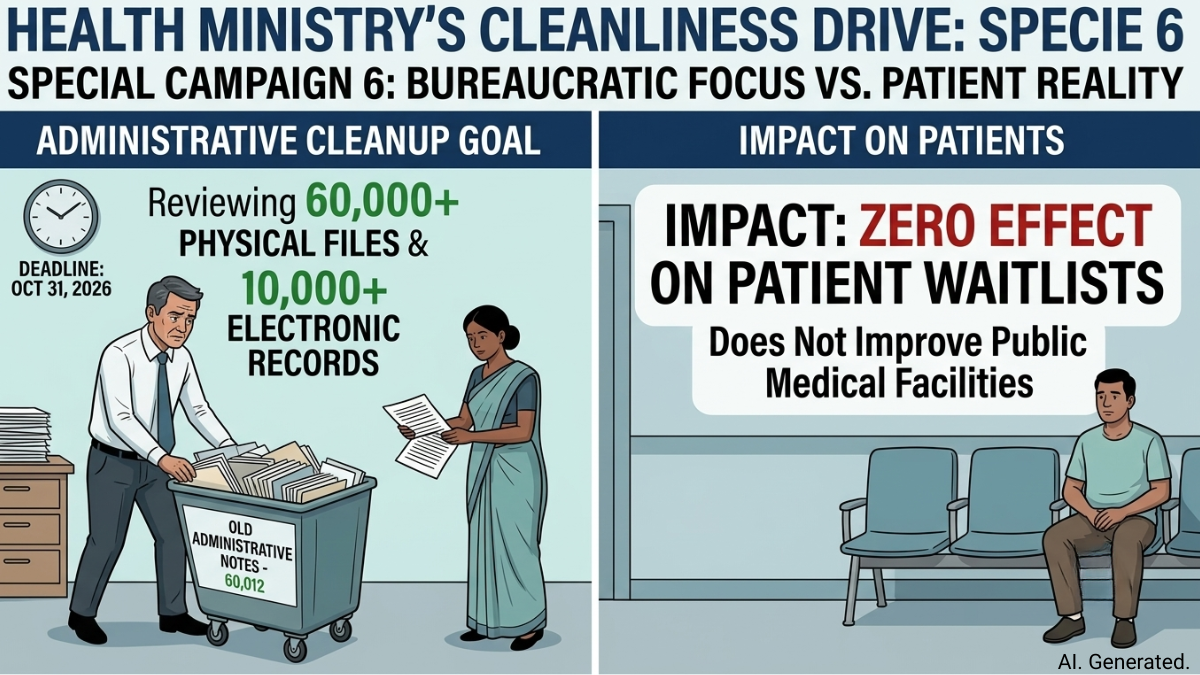
Record management is another major component of the campaign. The Department has set a target of reviewing 60,012 physical files and 10,020 electronic files.
The exercise involves identifying records that can be appropriately weeded out or otherwise managed in accordance with applicable record-retention requirements. It is an administrative record-management exercise and is separate from the disposal of pending patient cases or hospital waiting lists.
| Category | Target |
| Sites identified for cleanliness activities | 2,017 |
| Physical files for review | 60,012 |
| Electronic files for review | 10,020 |
| Internal procedures identified for simplification | 12 |
Previous Campaign Delivered Administrative Gains
The Department’s previous campaign provides a benchmark for the current exercise. During Special Campaign 5, more than 43,000 physical files were processed and 30,082 obsolete files were weeded out.
The earlier exercise also resulted in the freeing up of 30,697 square feet of office space and generated approximately ₹38.66 lakh through the disposal of obsolete or unserviceable items.
The current campaign has set new targets for cleanliness, record management, asset disposal and procedural simplification.
What the Campaign Means for the Public
Special Campaign 6 is primarily an administrative exercise covering government offices and institutions under the Department of Health and Family Welfare. It is not a programme for reducing hospital waiting lists or directly upgrading services at state-run hospitals and local health centres.
Its immediate focus is on cleaner workplaces, better record management, disposal of obsolete assets and streamlined internal procedures. Any wider benefits to public administration would depend on how these improvements translate into day-to-day government functioning.
The Unboxed Truth
Special Campaign 6 is fundamentally an administrative cleanliness and efficiency exercise rather than a new public healthcare programme. Its measurable targets concern office cleanliness, record management, asset disposal and procedural simplification.
The campaign can improve the working environment and administrative processes within participating government offices, but those outcomes should not be confused with direct improvements to hospital capacity, patient waiting times or healthcare delivery.
Who Is This For: Officials, employees and organisations covered by the Department of Health and Family Welfare’s administrative campaign.
Courtesy: Ministry of Health and Family Welfare
The implementation phase of Special Campaign 6 is scheduled to continue until October 31, 2026. The campaign follows a preparatory phase during September, during which participating departments and organisations identified targets for cleanliness, record management, asset disposal and procedural simplification.
Special Campaign 6 combines workplace cleanliness with administrative reforms, including the review and appropriate disposal of physical and electronic records, disposal of obsolete assets and simplification of identified procedures. For the Department of Health and Family Welfare, the campaign covers government offices and associated organisations rather than functioning as a direct public healthcare programme.
The campaign’s immediate activities are focused on government offices and administrative processes, so it is not designed to directly reduce hospital waiting times or provide new medical services. However, cleaner workplaces, improved record management and simplified administrative procedures can support more efficient government functioning. The extent of any wider public benefit will depend on how these administrative improvements translate into day-to-day services.