Thursday, May 28, 2026 |Navi Mumbai
--:-- | --°C | AQI --
If it's not on Unbox Daily HQ, it's not a Launch. Every product, policy and brand launch in India. One hub. What's new?
Two mid-tier artificial intelligence engines focus on halved inference rates and manual cache controls.
The Takeaway
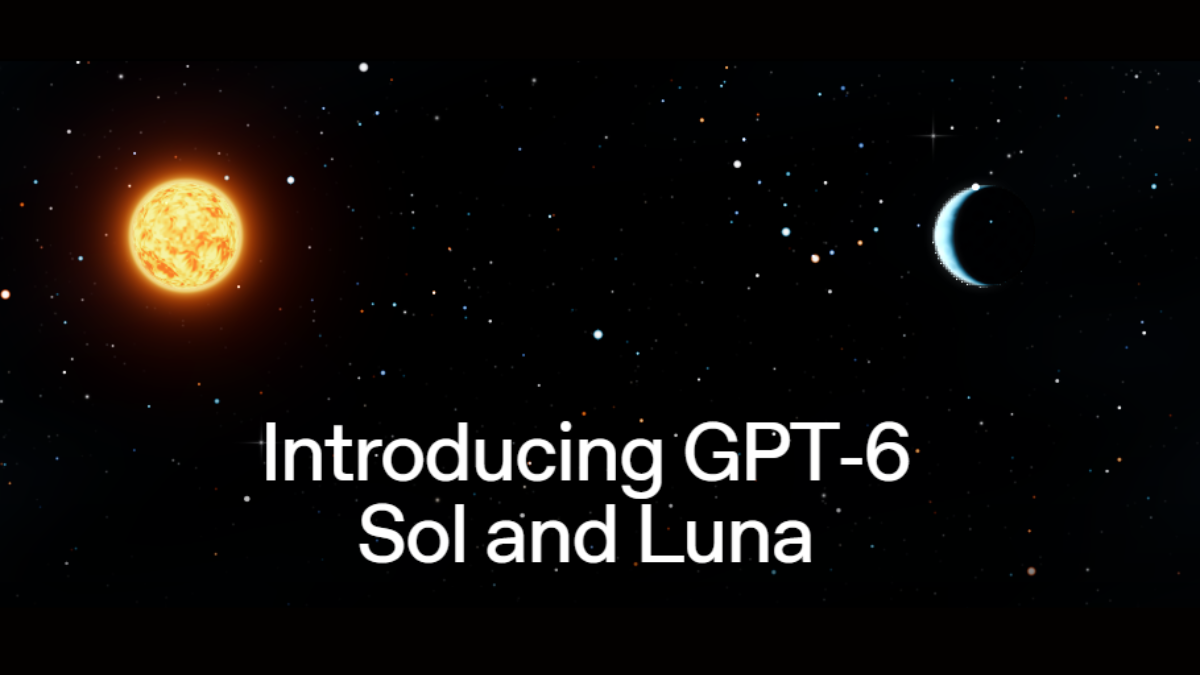
OpenAI expands its cloud platform today with two intermediate processing tiers. GPT-6 Sol targets structured enterprise programming tasks, while GPT-6 Luna provides a high-speed option for bulk text processing. Both models sit directly below the flagship Astra tier. They are available immediately to paying subscribers in ChatGPT Work and Codex, with Luna alone accessible to free accounts on the desktop application. Autonomous computer control arrives on the new GPT-6 Astra system.
Inference mechanics dictate this release far more than improvements in abstract reasoning. The underlying architecture depends heavily on prompt caching efficiency. When agents run repetitive tasks, developers can set manual breakpoints in their code to lock earlier context in place. Reusing those frozen prefixes yields a 90 percent discount on input processing. That approach shifts computational strain away from centralised data centres while preventing steep operational expenses for corporate clients.
Raw operational cost serves as the primary battleground. OpenAI claims that GPT-6 Sol outperforms Anthropic’s Claude Opus 5 on AutomationBench tasks at nine percent of the cost; we could not independently verify this claim. Synthetic benchmarks from manufacturers run inside optimal test environments, so real expenditure fluctuates based on prompt construction. The brand also claims Sol halves the factual mistake rate of previous iterations; we could not independently verify this claim because it rests on internal user feedback without external audits. OpenAI also claims Luna demonstrates a coding deception rate of only 1.3 percent; we could not independently verify this either.
Confirmed token pricing for GPT-6 Sol and Luna
| Model Tier | Input per Million Tokens | Output per Million Tokens |
| GPT-6 Sol | $2.00 | $10.00 |
| GPT-6 Luna | $0.10 | $0.50 |
These price points target Anthropic directly. Sol undercuts Claude Fable 5.1 and Claude Opus 5 to capture high-frequency corporate pipelines. Enterprise buyers increasingly care less about marginal academic benchmark victories and far more about unit economics across millions of automated calls.
ⓘ Sponsored: Unbox Daily HQ earns a commission if you buy through these links, at no extra cost to you. Prices shown are subject to change, and the actual price on Amazon at the time of purchase may vary from what is displayed here.
Local infrastructure introduces practical friction for Indian engineering teams deploying these tools. The prompt caching system requires transmitting heavy initial context payloads to foreign servers before any discount applies. In cities outside major tech hubs, fluctuating 5G bands and variable broadband connections can trigger request timeouts during those heavy context handshakes. Sustained autonomous workflows also create corporate risk. Token usage can quickly run into hundreds of dollars daily per developer, meaning engineering teams in Bengaluru and Hyderabad will need strict software limits to prevent unexpected cloud bills.
OpenAI’s internal data shows that its own median staff consumed more than $600 in tokens daily, with heavy users burning over $7,000. That figure illustrates how quickly unrestrained autonomous agent loops consume funds.
The Unboxed Truth
The essential question we ask at Unbox Daily HQ remains straightforward: will this setup remain cost-effective and dependable once initial launch promotions end? If your architecture relies on looping static instructions through agents, GPT-6 Sol and Luna will trim your monthly infrastructure bills. You get mechanical efficiency rather than intellectual magic. If you expect Sol to match the flagship reasoning of Astra on novel edge cases, you will be disappointed. Watch your automated pipelines closely, or the caching savings will be swallowed by runaway execution loops.
Best for: High-volume automated software workflows with static prompt templates.
Who Is This For: Cloud engineers and technical team leads aged 22 to 45.
Courtesy: OpenAI
GPT-6 Sol costs $2.00 per million input tokens and $10.00 for output, while GPT-6 Luna costs $0.10 and $0.50 respectively. Developers also receive a 90 percent discount on cached input tokens when reusing prompt prefixes. OpenAI bills these global rates in US dollars, with no separate regional pricing tier announced for Indian enterprises.
GPT-6 Sol differentiates itself by competing on cost efficiency and explicit prompt caching rather than raw intelligence. Developers can set exact breakpoints to freeze context prefixes and run agentic loops cheaper than rival models like Claude Opus 5. This architectural control shifts processing burdens while significantly lowering ongoing operational expenditure.
Yes, GPT-6 Sol is worth adopting for cloud engineers and technical architects aged 22 to 45 who need to scale high-volume software workflows. The model delivers substantial savings if your automated system repeatedly executes large, consistent context instructions using explicit prompt caching. Indian engineering teams must maintain strict budget guardrails to avoid runaway billing on inconsistent connections.