Thursday, May 28, 2026 |Navi Mumbai
--:-- | --°C | AQI --
If it's not on Unbox Daily HQ, it's not a Launch. Every product, policy and brand launch in India. One hub. What's new?
Skyroot Aerospace successfully places Vikram-1 into Low Earth Orbit, testing a fully 3D-printed liquid engine in space.
The Essentials
The Pulse
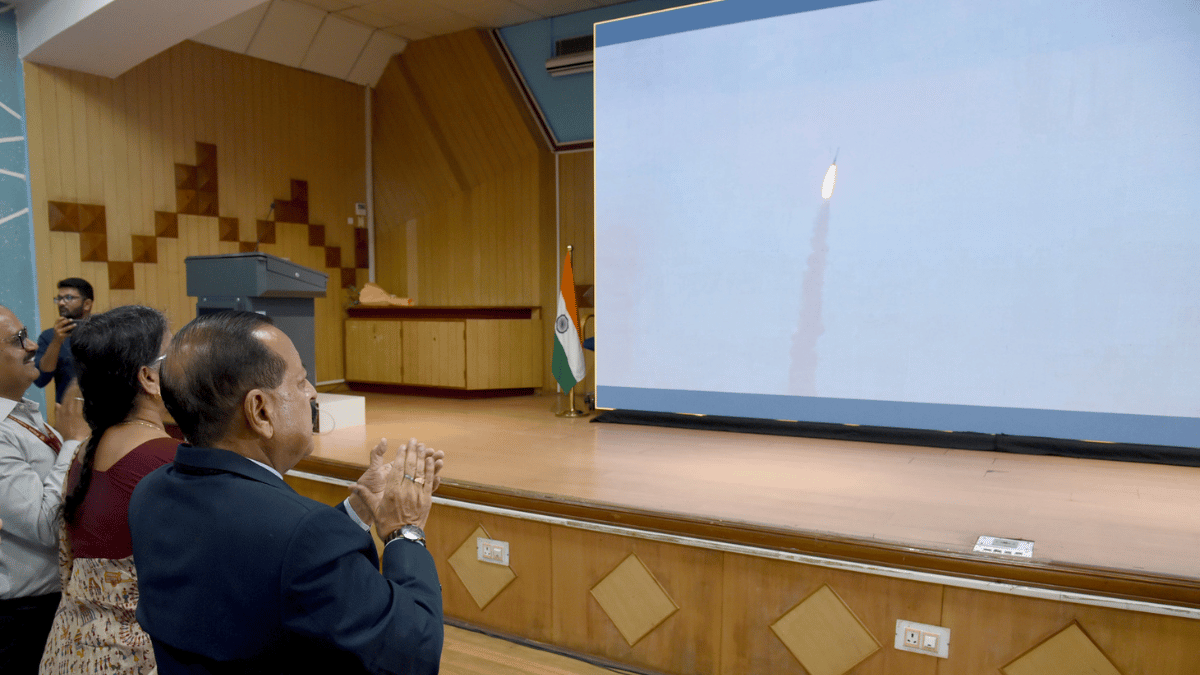
Skyroot Aerospace completes Mission Aagaman, successfully placing the Vikram-1 launch vehicle into Low Earth Orbit from the Satish Dhawan Space Centre in Sriharikota. This establishes the first instance of a private Indian enterprise achieving an orbital launch from domestic soil.
Why is a private company firing rockets from a government facility?
The mission serves as the direct result of the 2020 policy reforms that opened national space infrastructure to private participation. Instead of flying a dummy mass, standard practice for maiden missions, Skyroot flew actual experimental and customer payloads from domestic and international partners. This validates the commercial viability of India’s public-private space partnership framework involving ISRO, the Department of Space, and IN-SPACe.
Dr. Jitendra Singh notes this event moves the domestic space economy toward a projected USD 44 billion valuation over the next decade. The successful deployment proves that domestic start-ups can transition from conceptual engineering to executing globally competitive commercial orbital delivery services.
ⓘ Sponsored: Unbox Daily HQ earns a commission if you buy through these links, at no extra cost to you. Prices shown are subject to change, and the actual price on Amazon at the time of purchase may vary from what is displayed here.
The Breakdown
Standing approximately 22 metres tall, Vikram-1 relies on one of the country’s longest monolithic carbon-composite rocket stages. This material choice significantly reduces the vehicle’s overall mass while maintaining structural integrity during flight. The propulsion system features an Orbital Adjustment Module powered by a 100 per cent 3D-printed liquid engine, reducing manufacturing complexity and assembly time. Stage separation is handled by advanced ultra-low-shock pneumatic separation systems, designed to protect delicate commercial payloads from mechanical stress during staging. The maiden flight successfully validated the complete avionics, telemetry, navigation, and flight-control systems necessary for future commercial operation.
The Distinction
The primary differentiator of Vikram-1 is its structural and propulsion architecture, marking a departure from traditional state-built metallic rockets. It is India’s first all-carbon composite orbital rocket, replacing heavier conventional materials to maximise payload efficiency. Rather than relying on traditional manufacturing, the Orbital Adjustment Module uses a fully 3D-printed liquid engine. This shift from state-monopolised, heavy-lift manufacturing to a privately built, monolithic carbon-composite framework provides a lighter, commercially focused vehicle explicitly designed for rapid deployment of small commercial payloads.
The Snapshot
| Specification | Details |
| Vehicle | Vikram-1 |
| Developer | Skyroot Aerospace |
| Launch Location | Satish Dhawan Space Centre, Sriharikota |
| Mission Name | Mission Aagaman |
| Payload Capacity | Up to 350 kilograms |
| Target Orbit | Low Earth Orbit (LEO) |
| Vehicle Height | Approximately 22 metres |
| Launch Cost | Commercial pricing not yet public |
The Big Picture
Globally, state-run agencies traditionally controlled orbital access. Until 2020, India had virtually no private launch sector, relying entirely on national programmes for payload delivery. Today, the domestic market hosts over 400 space start-ups, its first space unicorn, and a space economy approaching USD 9 billion. Skyroot’s successful orbital insertion actively shifts India from being solely a provider of government-backed space access to a competitive hub for private, commercial spaceflight, aiming for a projected USD 44 billion valuation over the next decade.
The India Prospective
For Indian technology professionals and institutional investors watching the sector, Vikram-1 proves that domestic hardware start-ups can execute highly complex aerospace engineering entirely within the country. While retail consumers cannot purchase a rocket launch, this milestone signals massive incoming capital and job creation in the domestic space economy. It transforms India into a primary, independent destination for global satellite deployment without relying strictly on ISRO’s internal launch calendar.
The Inside Intel
Maiden orbital missions globally almost always carry dummy masses because the risk of vehicle failure remains exceedingly high during early testing. Skyroot bypassed this cautious tradition entirely. The company trusted it’s internal engineering enough to carry actual experimental technology demonstrations and commercial customer payloads from international partners on its very first orbital attempt, proving immense confidence in its domestic manufacturing.
The Unboxed Truth
Unbox Daily HQ considers this the definitive proof that Indian private aerospace can compete directly with established global players. For a commercial satellite operator evaluating international launch providers, Skyroot now offers a proven, domestically built alternative for reaching Low Earth Orbit. While the specific launch pricing remains confidential for commercial clients, the technological maturity displayed on a maiden flight offers immense operational value to private satellite companies seeking reliable timelines. The integration of 100 per cent 3D-printed liquid engines and all-carbon composite stages proves that Indian startups can conceive, develop, and successfully fly complex technologies without relying solely on state-owned manufacturing lines. This directly answers the global demand for reliable, technologically advanced commercial launch capabilities.
Best for: Commercial satellite operators and aerospace investors who require dedicated payload deployment to Low Earth Orbit.
Who Is This For: Perfect for 30 to 55-year-old aerospace executives and tech investors in Bengaluru or Hyderabad tracking the commercialisation of Indian space infrastructure.
The Checkout
Skyroot Aerospace – Official Website
The Source
Department of Space
The Query
The commercial launch pricing for Vikram-1 is not yet publicly disclosed by Skyroot Aerospace. However, the launch vehicle successfully completed its maiden orbital flight from the Satish Dhawan Space Centre in Sriharikota. Commercial satellite operators can now track the company for future deployment timelines.
Unlike traditional state-built metallic rockets, Vikram-1 is India’s first all-carbon composite orbital launch vehicle. It replaces heavier conventional materials with a lightweight monolithic carbon framework to maximise payload efficiency. Additionally, its orbital adjustment module utilises a fully 3D-printed liquid engine rather than conventionally manufactured propulsion systems.
Vikram-1 offers immense operational value as a proven, domestically built alternative for reaching Low Earth Orbit. The platform is ideal for commercial satellite operators and aerospace investors requiring dedicated payload deployment up to 350 kilograms. Its successful maiden flight validates critical flight-control systems, ensuring reliable deployment timelines outside the standard state launch calendar.