Thursday, May 28, 2026 |Navi Mumbai
--:-- | --°C | AQI --
If it's not on Unbox Daily HQ, it's not a Launch. Every product, policy and brand launch in India. One hub. What's new?
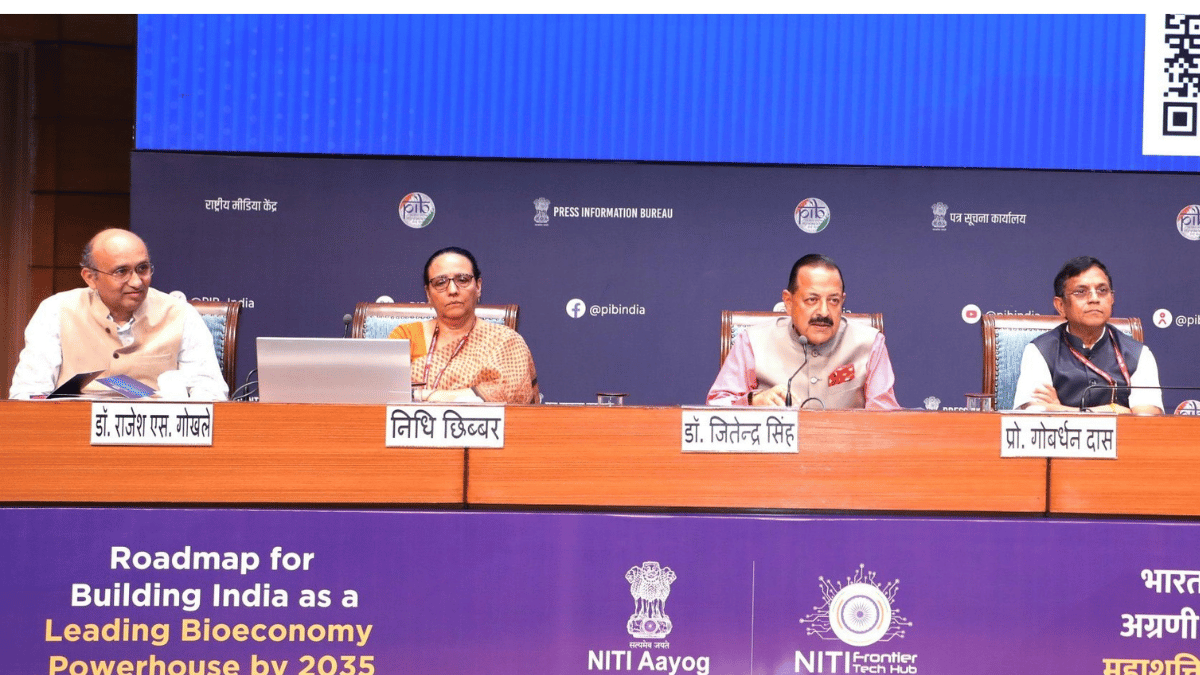
India introduces its first Engineering Biology graduation course alongside a roadmap for a USD 700 billion bioeconomy.
The Essentials
The Pulse
The Indian government targets a USD 700 billion bioeconomy by 2035 with the introduction of the country’s first Engineering Biology graduation course. This academic expansion addresses the immediate need for a specialised workforce capable of handling AI-driven biological research and sustainable food systems. The roadmap positions engineering biology as a foundational discipline, drawing a direct parallel to the role computer science played in India’s digital transition.
What does this policy mean for the Indian biotechnology sector? It shifts the national focus from following global pharmaceutical developments to designing indigenous proteins and living-cell-based medicines. The Ministry of Science and Technology indicates that this initiative requires active private-sector participation from the earliest stages of technology development.
The current bioeconomy valuation sits at roughly USD 95 billion, supported by more than 11,000 biotechnology start-ups and nearly 100 bio-incubators. The Department of Biotechnology framework seeks to scale this infrastructure to support environmental sustainability, precision healthcare, and clean fuels over the coming decade.
The Breakdown
ⓘ Sponsored: Unbox Daily HQ earns a commission if you buy through these links, at no extra cost to you. Prices shown are subject to change, and the actual price on Amazon at the time of purchase may vary from what is displayed here.
The structural execution of this roadmap relies on interdisciplinary proposals currently submitted by the Indian Institutes of Technology. These programmes pair engineering institutions directly with medical colleges. The financial architecture includes a proposed ₹50,000 crore Bioeconomy Growth Fund designed to support innovation-driven biomanufacturing. The curriculum and industry framework target specific applications: indigenous CAR-T cell therapies, gene-based treatments, and sustainable agricultural technologies. The strategic blueprint specifically links the BioE3 Policy to these academic and financial pipelines, ensuring that theoretical research translates directly into commercial healthcare and environmental applications.
The Distinction
The primary differentiator of this academic initiative is the formal integration of engineering principles with biological sciences and medical research at the undergraduate level. Previous academic structures treated biology and engineering as separate disciplines, forcing professionals to bridge the gap at the postgraduate or industry stage. This syllabus introduces intersectional training in synthetic biology, AI-enabled research, and living-cell-based medicine from the beginning. It creates a dedicated talent pipeline for bio-manufacturing rather than relying on lateral transitions from traditional computer science or pure biotechnology streams.
The Snapshot
| Metric | Detail |
| Initiative | Engineering Biology Graduation Course |
| Roadmap Target | USD 700 billion bioeconomy by 2035 |
| Current Valuation | USD 95 billion |
| Proposed Capital | ₹50,000 crore Bioeconomy Growth Fund |
| Current Start-ups | Over 11,000 |
| Active Bio-incubators | Nearly 100 |
| Participating Institutes | IITs and medical institutions |
The Big Picture
The global transition towards synthetic biology places heavy demands on technical talent. For the past decade, Indian academic institutions focused primarily on IT services and conventional medical degrees. This roadmap deliberately pivots the academic machinery toward biotechnology to capture a larger share of the global bio-manufacturing market. With the domestic bioeconomy growing 16-fold since 2014, formalising the intersection of AI and biology ensures the domestic talent pool does not fall behind international markets that already treat synthetic biology as a primary industrial sector.
The India Prospective
For Indian professionals and students, this course establishes a clear academic track into a high-value domestic industry. The integration of IITs with medical institutions means students no longer need to study abroad to access intersectional bio-engineering training. The proposed ₹50,000 crore growth fund indicates serious domestic capital waiting to absorb this new workforce, directly supporting local innovations in affordable gene therapies and clean fuels.
The Inside Intel
India’s bioeconomy already contributes 4.8 per cent to the national GDP, expanding from nearly USD 10 billion in 2014 to roughly USD 95 billion today. The country also supplied its indigenous DNA vaccine against COVID-19 to nearly 30 countries, highlighting an existing global distribution network ready for future bio-manufactured products.
The Unboxed Truth
Unbox Daily HQ considers this academic integration the most necessary pivot for Indian technical education this decade, not because of the funding promises, but because the syllabus aligns precisely with where global healthcare and manufacturing are heading.
This roadmap serves the incoming undergraduate student who possesses an aptitude for coding but wants to apply those skills to living systems rather than software applications. When compared to the traditional four-year computer science degree, an Engineering Biology qualification offers entry into an industry with significantly fewer saturated talent pools and a domestic growth rate of 15 to 18 per cent. This structural commitment to bio-manufacturing creates an environment where theoretical AI models can immediately test against physical biological research within the same institutional framework.
By connecting IIT engineering talent directly with medical research facilities, the government secures a pathway for indigenous, affordable healthcare solutions.
Best for: Science and technology students entering higher education who want to merge artificial intelligence with genetic and biological research.
Who Is This For: Perfect for 17 to 20-year-old undergraduates in India who seek a career in advanced bio-manufacturing and synthetic biology.
The Checkout
The Source
PIB.GOV
The Query
The Engineering Biology graduation course is currently entering the Indian academic system, with the Indian Institutes of Technology already submitting proposals for these interdisciplinary programmes. The broader roadmap aims to scale the national bioeconomy to USD 700 billion by 2035. This initiative is supported by a proposed ₹50,000 crore Bioeconomy Growth Fund.
The Engineering Biology graduation course integrates engineering principles directly with biological sciences and medical research at the undergraduate level. Unlike a traditional computer science degree, this syllabus provides intersectional training in synthetic biology and AI-enabled research from the start. It targets specialised bio-manufacturing rather than general software applications.
The Engineering Biology graduation course is highly worth pursuing for science and technology undergraduates aged 17 to 20 who want to merge artificial intelligence with genetic research. The qualification offers entry into a non-saturated industry growing at 15 to 18 per cent annually. It provides a direct pathway to high-skilled jobs backed by a proposed ₹50,000 crore growth fund.