Thursday, May 28, 2026 |Navi Mumbai
--:-- | --°C | AQI --
If it's not on Unbox Daily HQ, it's not a Launch. Every product, policy and brand launch in India. One hub. What's new?
Eight new structural policies permit private wagon designs and containerised bulk freight to cut supply chain costs.
The Essentials
The Pulse
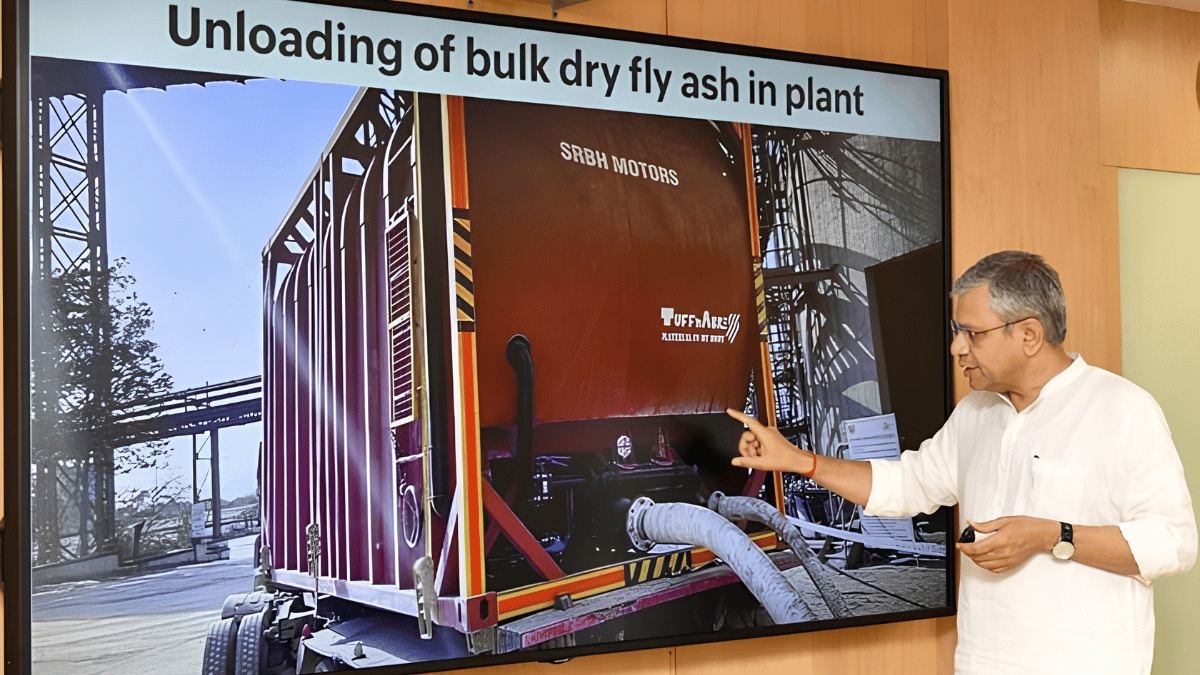
Indian Railways currently handles nearly 85 per cent of fertilizer transport domestically and moved 13 million tonnes of fly ash this financial year. To capture more non-bulk cargo and reduce heavy reliance on highway networks, the ministry has accelerated its regulatory changes, actively targeting 52 distinct structural adjustments within 52 weeks.
This latest batch of eight operational updates directly addresses the bureaucratic friction that routinely deters private investment in rail logistics. By moving away from restricted, category-based operating licences and state-mandated wagon designs, the immediate focus is placed entirely on lowering overall transit costs for agriculture, energy, and construction sectors.
The strategic shift acknowledges that expanding freight diversification requires private capital and customised infrastructure rather than standard government issue. Allowing industries to retain containers at transit points ensures that distribution can match local demand, rather than being dictated entirely by a freight train’s arrival schedule.
The Breakdown
ⓘ Sponsored: Unbox Daily HQ earns a commission if you buy through these links, at no extra cost to you. Prices shown are subject to change, and the actual price on Amazon at the time of purchase may vary from what is displayed here.
The operational overhaul covers eight distinct technical policies. First, fly ash moves into closed ISO containers with top-loading and pneumatic systems to stop dust pollution. Second, container train operators get a unified pan-India licence for a flat ₹25 crore over twenty years, removing older route-based categories. Third, fertilizer transit replaces fifty complex slabs with a direct per tonne per kilometre tariff, allowing container drop-offs to match local distributor capacity. Fourth, railway project artisans must secure QR-enabled skill certificates via practical testing in welding and masonry. Fifth, construction firms must provide a 10 per cent performance security upfront, carrying strict disqualifications if active litigation exceeds half their net worth. Sixth, private firms can design custom cargo wagons for commodities like steel, ending the state design monopoly. Seventh, oil companies can directly lease or own specialised petroleum tank wagons. Eighth, foodgrains adopt the simplified per tonne per kilometre rate inside sealed containers to eliminate transit contamination.
The Distinction
The primary differentiator of this regulatory shift is the absolute dismantling of a rigid state monopoly on equipment engineering and bulk movement. Competing historical frameworks required open wagons and strictly state-designed rolling stock for major commodities. This updated policy structure introduces independent private wagon design and mandatory containerisation to bulk goods like fly ash and foodgrains. It fundamentally shifts Indian rail transport from inflexible, rake-level handling to modular, container-level storage and distribution, something that allows individual companies to treat train stations as temporary warehouses rather than just immediate unloading zones.
The Snapshot
| Specification | Confirmed Detail |
| Initiative | Reform Express |
| Managing Authority | Ministry of Railways |
| Total Implemented Reforms | 17 |
| Container Train Licence Fee | ₹25 crore (Uniform Pan-India) |
| Licence Validity | 20 years (Extendable without fee) |
| Fly Ash Annual Rail Movement | 13 million tonnes |
| Freight Tariff Structure | Per tonne per kilometre basis |
| Performance Security | 10 per cent (Obtained at commencement) |
| Specialised Skilling | QR-enabled certificates for artisans |
| Land Acquisition Portal | Rail Bhoomi (Developed by CRIS) |
The Big Picture
India’s logistics sector relies heavily on diesel-dependent road transport, which consistently drives up end-consumer costs and national carbon output. By making private railway participation cheaper and authorising specialised tank wagons for oil and chemicals, Indian Railways directly competes with heavy-duty commercial road haulage. Major Indian freight corridors have historically struggled to attract non-bulk goods. This framework provides a viable corporate alternative that generates nearly 90 per cent lower carbon emissions, while attempting to replicate the point-to-point flexibility traditionally offered only by highway trucks.
The India Prospective
For a supply chain professional in Mumbai or Bengaluru managing national distribution, this signals a measurable operational shift. Cheaper container movement and faster wagon turnarounds mean lower overheads for cement, fertilizer, and FMCG distributors across India. This easing of regulations paves the way for better margins in domestic manufacturing and potentially more stable retail pricing for everyday bulk commodities that previously suffered high transit damages.
The Inside Intel
Until this policy update, the research and design of virtually all freight wagons were restricted entirely to the state-run Research Designs and Standards Organisation. This strict centralisation severely limited technical innovation, preventing private manufacturers and major industries from developing specialised equipment suited to their specific chemical or agricultural cargo requirements. Opening this process allows immediate field testing of prototype wagons built specifically for modern commercial needs.
The Unboxed Truth
Unbox Daily HQ considers this regulatory clearing a critical correction for India’s overburdened supply chains, not just because it modernises old rules, but because it treats rail freight as a flexible service rather than a rigid state utility. For operations directors handling national distribution, the ability to store sealed foodgrain containers at rake points instead of detaining entire trains alters the cost mathematics entirely. At a unified ₹25 crore for a 20-year pan-India licence, the barrier to entry for private logistics companies is structurally viable compared to the previous ₹50 crore restricted-route model. The actual value lies in allowing private enterprises to engineer and own specialised tank and freight wagons, bringing overdue customisation to a transport sector that historically forced industries to adapt to the train, rather than the train adapting to the industry.
Best for: Logistics operators and supply chain directors who require dedicated, scalable freight solutions across Indian manufacturing sectors
Who Is This For: Perfect for 32 to 55-year-old operations professionals and infrastructure investors in India who track national logistics efficiencies
The Checkout
Ministry of Railways – Official Portal
The Source
PIB.GOV
The Query
The unified pan-India container train operator licence costs a flat ₹25 crore in India. This replaces the previous category-based registration fees that reached up to ₹50 crore. The permit remains valid for twenty years and can be extended without any additional renewal fees.
The Reform Express policies introduce modular container-level storage and private wagon designs to lower supply chain costs. Unlike road transport, which relies on diesel-dependent trucks, this railway framework generates nearly 90 per cent lower carbon emissions. It also allows companies to store sealed containers at transit points to match local demand.
Yes, the Reform Express freight overhaul is highly viable for Indian logistics operators and supply chain directors. The reduction of the pan-India licence fee to ₹25 crore drastically lowers entry barriers compared to the old model. Allowing private wagon customisation provides long-term value that helps modernise commercial distribution networks.