Thursday, May 28, 2026 |Navi Mumbai
--:-- | --°C | AQI --
If it's not on Unbox Daily HQ, it's not a Launch. Every product, policy and brand launch in India. One hub. What's new?
The generation ceiling jumps to one million output tokens in a single pass to handle massive codebase migrations without chunking.
The Takeaway
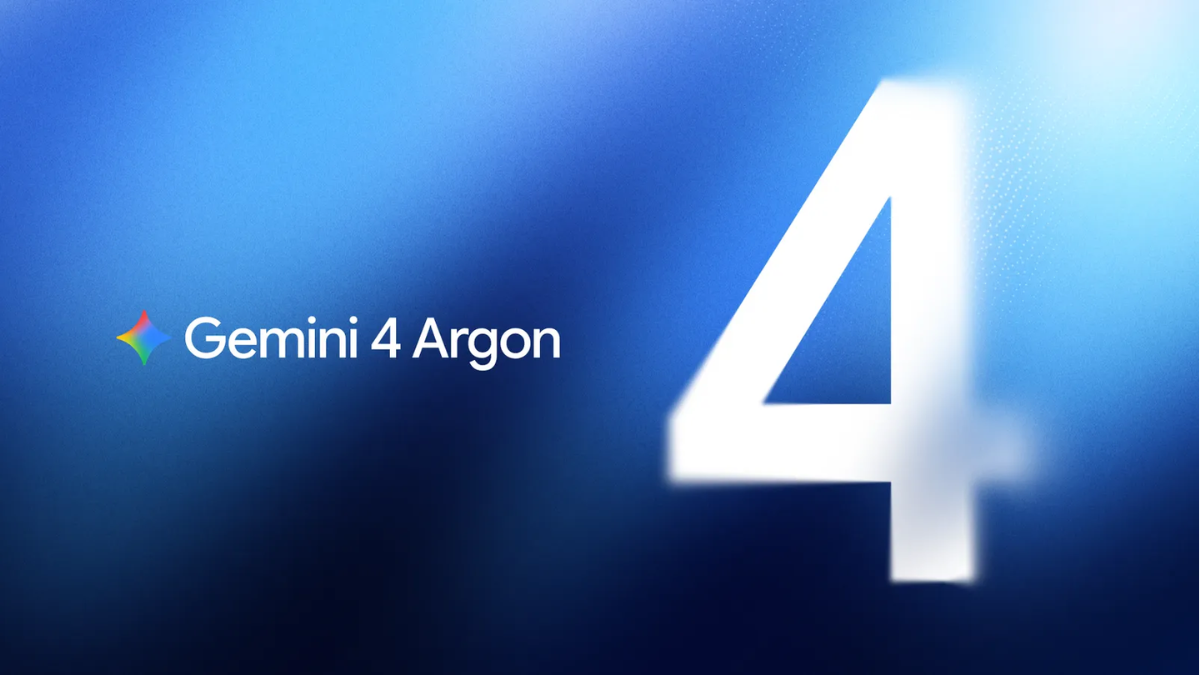
Google has introduced Gemini 4 Argon, a new frontier AI model designed for complex, long-running tasks across software engineering, enterprise knowledge work and cybersecurity defense. Google says the model is built to sustain deeper reasoning across workflows that require multiple steps, files and iterations.
The model’s most notable technical change is its 1-million-token output limit, up from 64,000 tokens on previous Gemini models. Google says the larger output capacity gives Argon more room to work through complex problems and generate substantially longer responses within a single trajectory.
Built for Large-Scale Engineering Tasks
Argon is already being used internally by Google teams for software engineering, research and optimisation work. Google says its agents are working on C/C++ to Rust migrations ranging from tens of thousands of lines of code to more than 800,000 lines in the Fuchsia OS Zircon kernel.
Google also reports that Argon agents helped optimise memory usage across its data centres, freeing more than 300 TiB of memory after deployment, with estimated total savings of 500 TiB to 1 PiB. These are Google’s reported internal results rather than independently reproduced benchmarks.
ⓘ Sponsored: Unbox Daily HQ earns a commission if you buy through these links, at no extra cost to you. Prices shown are subject to change, and the actual price on Amazon at the time of purchase may vary from what is displayed here.
In another internal example involving Google’s libgav1 video decoder, Argon replaced 32,000 lines of SIMD code in an existing Rust port. Google says the resulting decoder was 2.7 times faster than the previous Rust implementation while producing identical video output.
Cybersecurity Is a Major Focus
Argon’s initial rollout is focused on defensive cybersecurity. Google says the model can autonomously find, validate and patch critical software vulnerabilities.
Because of the model’s capabilities in cybersecurity, Google is taking a phased approach to availability. Argon is initially being rolled out to a set of trusted cyber defenders through the Fairwind Program, while Google participates in the US government’s voluntary pre-release model access process.
Google says it will use feedback from early users to improve safeguards before expanding access to developers, enterprises and consumers.
Gemini 4 Argon Pricing and Availability
Google has announced introductory pricing of $2 per million input tokens and $10 per million output tokens. Cached input tokens receive a 95% discount from the input-token price.
The model is not yet broadly available through the public API. Google says broader access will follow the initial trusted-cyber-defender rollout.
| Specification | Detail |
| Maximum output | 1 million tokens |
| Previous Gemini output limit | 64,000 tokens |
| Introductory input price | $2 per 1 million tokens |
| Introductory output price | $10 per 1 million tokens |
| Cached input discount | 95% |
| Initial access | Trusted cyber defenders through Fairwind |
| Broader availability | Planned for developers, enterprises and consumers |
What Makes Argon Different?
The 1-million-token output limit is the clearest technical distinction in Google’s announcement. Instead of stopping after a comparatively short response and requiring developers to continue the task through additional interactions, Argon is designed to sustain much longer trajectories for complex work.
A digital wardrobe update arrives in Google Photos
Google also reports strong results on software-engineering benchmarks. Argon scores 77.9% on DeepSWE v1.1, which evaluates real-world, long-horizon software engineering tasks.
The combination of long outputs, reasoning, multimodal capabilities and agentic workflows is aimed at tasks such as large codebase migrations, debugging, research and cybersecurity vulnerability remediation.
The Unboxed Truth
Gemini 4 Argon’s headline advantage is not simply another increase in benchmark scores. Its 1-million-token output ceiling is designed for jobs that require sustained, multi-step work, particularly large software-engineering and cybersecurity tasks.
However, availability remains limited during the initial rollout. Businesses will need to wait for broader access before they can evaluate Argon against their own workloads, costs and engineering workflows. Google’s internal examples show the model being used for ambitious projects, but those results should be viewed as company-reported outcomes rather than guarantees for every deployment.
Best for: Enterprise engineering, software migration, research and defensive cybersecurity workflows.
Courtesy: Google
Gemini 4 Argon has introductory API pricing of $2 per million input tokens and $10 per million output tokens. Google also offers a 95% discount on cached input tokens. The model is initially being made available to trusted cyber defenders through the Fairwind Program, with broader access for developers, enterprises and consumers planned later. Indian consumer pricing has not been announced.
Gemini 4 Argon’s headline advantage is its maximum output capacity of 1 million tokens in a single response. Its long-output design is aimed at complex, extended software-engineering and cybersecurity workflows. However, direct comparisons with other frontier models should consider benchmark methodology, pricing, availability, context limits and the specific workload rather than output capacity alone.
Gemini 4 Argon may be relevant for enterprises working on large-scale software engineering, code migration, research and defensive cybersecurity. Its 1-million-token output capacity is particularly suited to long-running tasks, but broader access is still being rolled out. Organisations should evaluate the model using their own workloads, security requirements and API costs before adopting it at scale. Human review and appropriate safeguards remain important when deploying AI-generated code in production environments.