Thursday, May 28, 2026 |Navi Mumbai
--:-- | --°C | AQI --
If it's not on Unbox Daily HQ, it's not a Launch. Every product, policy and brand launch in India. One hub. What's new?
The Pradhan Mantri Awas Yojana-Gramin package includes strict vehicle and income exclusions.
The Takeaway
The Union Government has sanctioned 3 lakh permanent rural houses worth ₹3,600 crore for Andhra Pradesh under Pradhan Mantri Awas Yojana-Gramin 2.0.
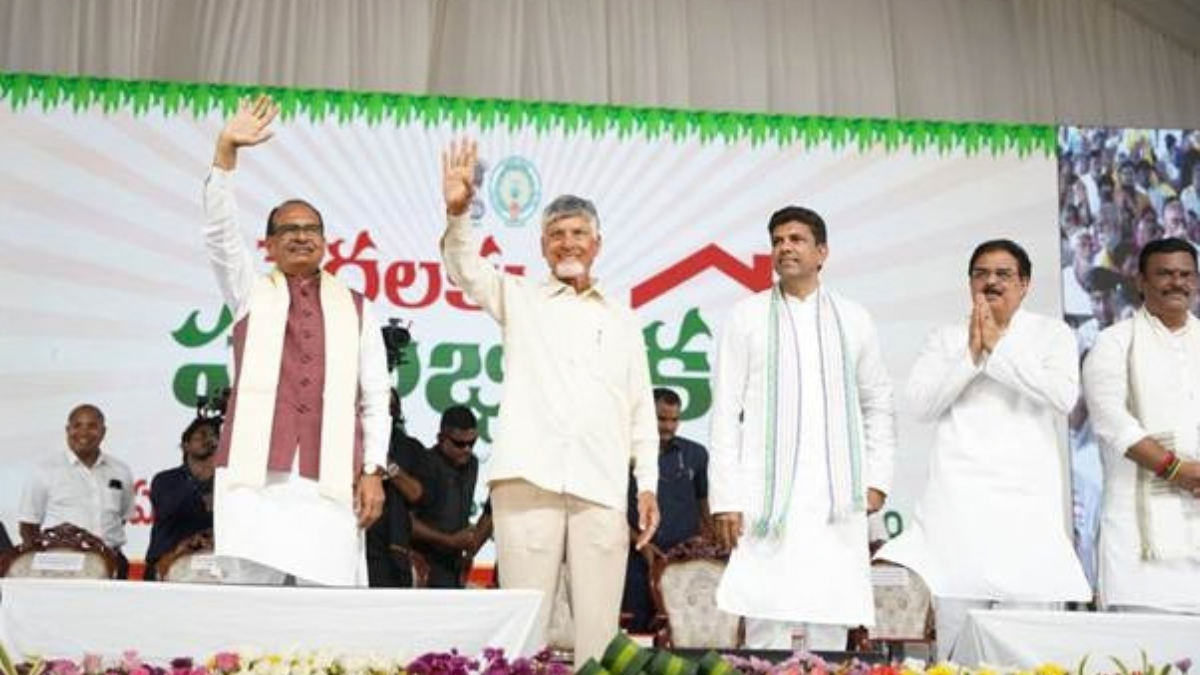
Union Minister for Agriculture and Rural Development Shivraj Singh Chouhan and Andhra Pradesh Chief Minister N. Chandrababu Naidu announced the housing initiative during an event in Burripalem, Guntur district, on October 4. The Centre described the allocation as the first instalment for 3 lakh houses and said additional allocations could follow as construction progresses.
The event also marked the launch of a ₹14-crore pilot project using 3D concrete-printing technology. According to the Centre, the project will construct 177 houses across Burripalem and Obulanayudupalem, with completion expected within six months. The project is being implemented jointly by the Union Ministry of Rural Development, CSIR-Central Building Research Institute and the Andhra Pradesh government.
Related: Monthly scholarship transfers reach 6,000 agriculture students
PMAY-G Housing Comes With Eligibility Conditions
ⓘ Sponsored: Unbox Daily HQ earns a commission if you buy through these links, at no extra cost to you. Prices shown are subject to change, and the actual price on Amazon at the time of purchase may vary from what is displayed here.
The 3 lakh-house allocation is aimed at eligible rural households under PMAY-G 2.0 rather than being an automatic housing entitlement for every rural family.
The scheme’s revised automatic-exclusion rules include ownership of a motorised three- or four-wheeler, mechanised agricultural equipment, a Kisan Credit Card with a credit limit of ₹50,000 or more, a government employee in the household, certain registered non-agricultural enterprises, monthly household income above ₹15,000, income-tax or professional-tax payment, and specified landholding thresholds.
Importantly, the revised rules removed motorised two-wheelers from the automatic-exclusion criteria. The current rules also specify exclusion for households owning 2.5 acres or more of irrigated land or 5 acres or more of unirrigated land.
This means eligibility depends on the complete set of scheme conditions rather than on ownership of a single type of vehicle or a simple five-acre test.
Andhra’s ₹20,000 Farmer Assistance
The state is also implementing the Annadata Sukhibhava–PM KISAN scheme. Andhra Pradesh government information says eligible farmer families can receive ₹20,000 a year, including the ₹6,000 provided under the central PM-KISAN programme.
The state’s agriculture department also states that landless cultivators can receive ₹20,000 annually from the state budget. Tenant cultivators with the required cultivation rights can also access benefits under the scheme, subject to eligibility requirements.
Therefore, the ₹20,000 assistance should not be described as a benefit available only to farmers owning five acres or less.
3D Concrete Printing Pilot Targets 177 Houses
The Burripalem project is being presented as a technology pilot for rural housing. The official announcement puts the project cost at ₹14 crore and the number of houses at 177.
The government says the technology is expected to reduce construction time, labour requirements and construction waste while supporting quality and durability. The stated completion timeline for the pilot is six months.
The supplied claim that official CBRI records show only 117 houses is therefore not supported by the latest official announcement or the current reporting on the project.
Amaravati Funding Includes Multilateral Loans
The broader Amaravati development programme is being financed through multilateral development institutions rather than solely through a direct central grant.
The World Bank approved an $800-million loan for the Amaravati Integrated Urban Development Program. The loan has a final maturity of 29 years, including a six-year grace period.
Separately, the Asian Development Bank approved a $788.8-million results-based loan for the Amaravati Inclusive and Sustainable Capital City Development Program. The ADB describes the programme as a loan-supported development initiative covering infrastructure and public services in the capital region.
Together, the World Bank and ADB financing totals nearly $1.59 billion. The World Bank also describes the overall first-phase government programme as a $1.78-billion programme, with the remainder coming from counterpart financing.
The financing should therefore be distinguished from a direct central grant. However, the specific 8–8.5% interest rate cited in the supplied copy is not established by the official World Bank and ADB sources reviewed here and should not be presented as a confirmed financing term.
What the New Housing Push Means for Andhra Pradesh
The October 4 announcements combine several strands of rural and urban development: PMAY-G housing allocations, experimentation with 3D construction technology, agricultural income support and continued multilateral financing for Amaravati.
For rural households, the most immediate programme is the 3 lakh-home PMAY-G allocation, while the 3D-printing pilot will test whether an alternative construction method can be deployed at scale. The agricultural assistance programme operates separately, with eligibility determined under its own rules.
The Unboxed Truth
The new Andhra Pradesh package combines housing allocations, technology trials and agricultural assistance, but the individual programmes have different eligibility and financing structures.
The 3 lakh PMAY-G houses are subject to scheme eligibility criteria, while the 3D-printing initiative is a 177-house pilot rather than a statewide construction model. The ₹20,000 agricultural assistance is also broader than a simple five-acre ownership rule, while Amaravati’s major external financing comes through World Bank and ADB loans with defined repayment terms.
Who Is This For: Eligible rural households seeking housing support, eligible farmers and cultivators seeking agricultural assistance, and communities affected by Andhra Pradesh’s broader rural and capital-region development programmes.
Courtesy: Press Information Bureau
For Andhra Pradesh, the Union Government has sanctioned ₹3,600 crore for 3 lakh rural houses under PMAY-G 2.0. Separately, a ₹14-crore pilot project is being implemented to test 3D concrete-printing technology for rural housing.
The ₹3,600-crore figure is the allocation announced for Andhra Pradesh and should not be described as the total national funding allocation for PMAY-G 2.0.
PMAY-G 2.0 includes revised eligibility and selection criteria for rural housing. The Andhra Pradesh announcement also includes a separate 3D concrete-printing pilot covering 177 houses, but this technology trial is not the standard construction method for every PMAY-G house.
The scheme has several automatic-exclusion criteria. These include ownership of a motorised three- or four-wheeler, certain agricultural machinery, a Kisan Credit Card with a credit limit of ₹50,000 or more, specified income levels and certain landholdings. Ownership of a motorised two-wheeler by itself is not an automatic exclusion under the revised criteria.
Eligible rural households seeking permanent housing can apply under PMAY-G 2.0, subject to the scheme’s eligibility and selection criteria.
Applicants should check their household’s complete eligibility rather than relying on a single condition such as vehicle ownership or landholding. The final selection depends on the applicable government criteria and verification process through the relevant local authorities.