Thursday, May 28, 2026 |Navi Mumbai
--:-- | --°C | AQI --
If it's not on Unbox Daily HQ, it's not a Launch. Every product, policy and brand launch in India. One hub. What's new?
Mphasis Tria uses causal reasoning and agentic execution to move corporate AI into actual accountable operations.
The Essentials
The Pulse
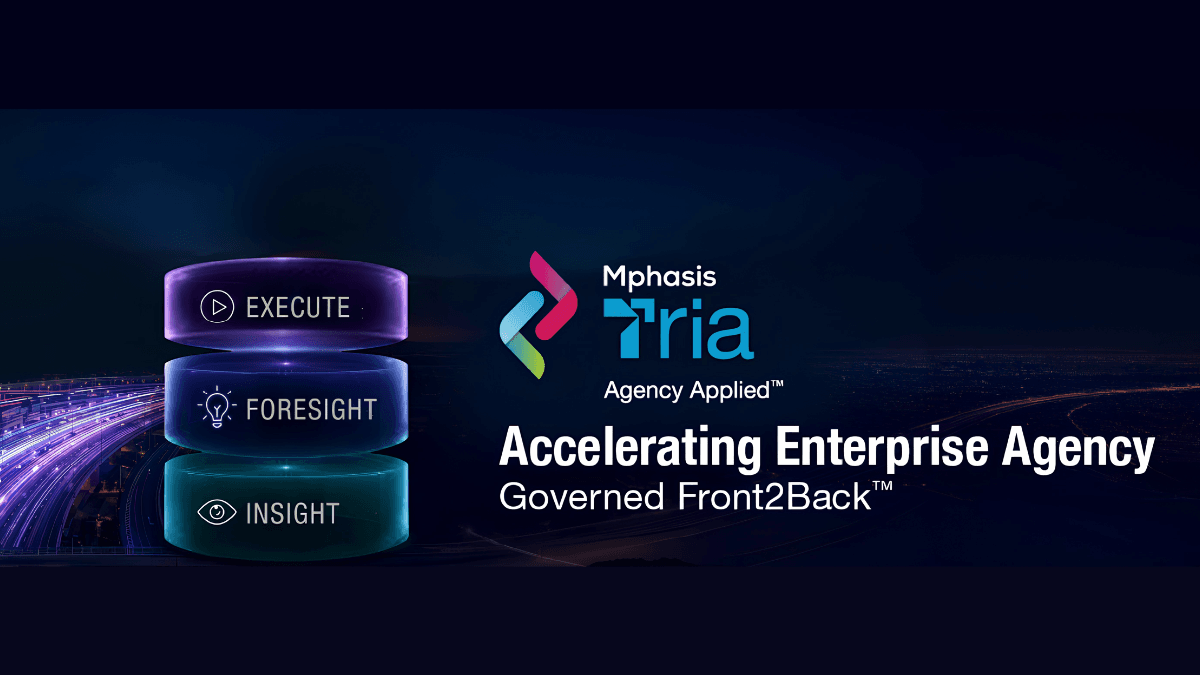
Mphasis has released Tria, an enterprise agency platform designed to move corporate artificial intelligence beyond pilot testing and into accountable operations. Built around a three-layer architecture of insight, foresight, and execution, the system connects directly to your existing business constraints and operational data.
Most businesses have no shortage of dashboards or language models. What they struggle with is making those models do actual work without breaking internal rules. Tria addresses this by incorporating Continuum AI, a decision engine Mphasis recently acquired from Theory and Practice, which sits between the data pool and the final execution layer. The platform is launching globally, though a specific India timeline has not yet been confirmed.
If you are wondering what an enterprise agency platform actually does, it is software that evaluates a business problem, decides on the best course of action based on company rules, and autonomously executes that decision across your technology stack. Mphasis is deploying this through two distinct product lines: Modernize, which rebuilds legacy systems, and Optimize, which tunes current commercial performance.
The Snapshot
ⓘ Sponsored: Unbox Daily HQ earns a commission if you buy through these links, at no extra cost to you. Prices shown are subject to change, and the actual price on Amazon at the time of purchase may vary from what is displayed here.
| Specification | Details |
| Product | Mphasis Tria |
| Developer | Mphasis |
| Architecture | Insight, Foresight, and Execute layers |
| Integrated Technology | Continuum AI and NeoIP |
| Core Product Lines | Mphasis Modernize and Mphasis Optimize |
| Target Audience | Enterprise technology and operations |
| India Price | Global: Outcome-based pricing – India price not yet confirmed |
| Availability | Available globally – India: Not yet confirmed |
The Big Picture
The enterprise artificial intelligence market is rapidly shifting from generative text tools to agentic systems that can perform actual workflows. Indian technology service providers like TCS and Infosys have spent the past year building conversational interfaces, but the current mandate is operational accountability. By integrating causal reasoning directly into the execution layer, Mphasis aims to solve the compliance risks that keep corporate boards from trusting automated systems. The inclusion of the NeoIP suite indicates a shift toward proprietary, industry-specific knowledge graphs rather than relying purely on generic foundational models.
The India Prospective
For IT leaders and operations managers in Bengaluru or Mumbai, Tria represents a shift in how managed services are delivered. Rather than paying for billable hours to maintain legacy stacks, Indian enterprises can deploy the Modernize and Optimize lines to automate process improvements. While consumer pricing is not applicable here, the platform is already being pitched across enterprise transformation engagements, making it highly relevant for local corporate IT budgets shifting towards outcome-based vendor contracts.
The Inside Intel
The crucial foresight layer of Tria is powered entirely by Continuum AI, a platform Mphasis secured through its recent acquisition of Theory and Practice. This specific component is what turns standard data processing into an integrated sense-decide-act system, allowing the software to simulate business outcomes and run causal reasoning before it actually commits to executing a change.
The Unboxed Truth
Unbox Daily HQ. suggests tracking this platform if you manage corporate technology budgets or digital transformation teams. This is not an off-the-shelf software product you can buy on a credit card, but rather a structural upgrade for how your company operates. If your current artificial intelligence experiments are stuck generating text summaries instead of executing actual tasks, Tria offers a governed pathway to actual automation. If and when this reaches India, expect entirely outcome-based pricing that serves as a vital development for operations leaders to monitor closely. The lack of transparent public pricing is standard for this tier of enterprise software, but the focus on measurable economic outcomes makes it worth a vendor consultation.
Best for: Mid-level IT directors and operations managers who need to justify enterprise artificial intelligence budgets with actual operational results
Who Is This For: Perfect for 30 to 55-year-old technology leaders in corporate environments who want automated systems that follow strict internal governance
The Checkout
The Source
Mphasis Global
The official India price for the platform has not yet been confirmed as it follows an outcome-based pricing model rather than standard public rates. The system is currently rolling out globally across enterprise transformation engagements, though a specific local timeline for India remains unconfirmed. Corporate technology teams will need to request a direct vendor consultation for specific commercial details.
While traditional Indian service providers like TCS and Infosys have focused on building conversational interfaces and basic text summaries, this platform integrates causal reasoning directly into its execution layer. It relies on a specialised three-layer architecture powered by Continuum AI and the NeoIP suite to run simulations and enforce strict internal governance before deploying automated workflows. This structure allows corporate teams to move past simple chatbots and execute accountable business process changes without breaking compliance rules.
This platform is designed specifically for mid-level IT directors, operations managers, and corporate technology leaders aged 30 to 55 who manage substantial digital transformation budgets. It suits organisations whose current artificial intelligence experiments are stuck in pilot phases and need automated systems that deliver measurable operational results. Because it is a structural enterprise upgrade rather than off-the-shelf software, it is best for teams requiring strict governance over automated tasks.