Thursday, May 28, 2026 |Navi Mumbai
--:-- | --°C | AQI --
If it's not on Unbox Daily HQ, it's not a Launch. Every product, policy and brand launch in India. One hub. What's new?
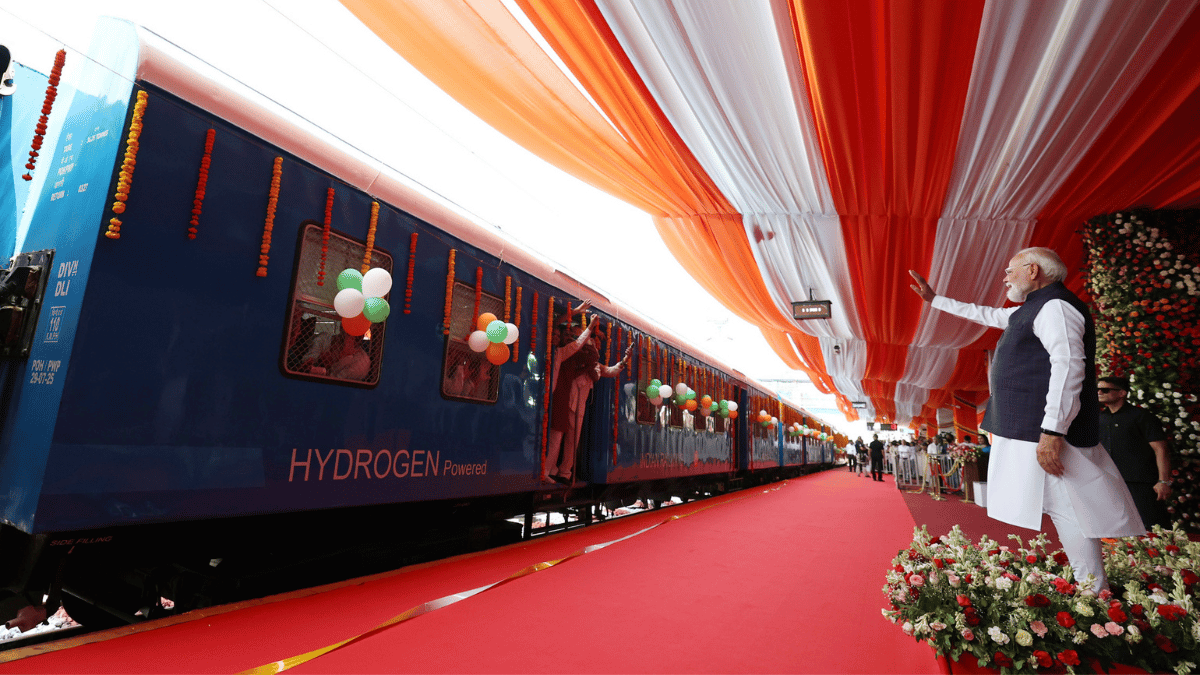
The 10-coach passenger train runs the 89-kilometre Jind-Sonipat route entirely on hydrogen fuel cells.
The Essentials
The Pulse
India’s first indigenous, completely smoke-free hydrogen train is now running passenger service on the 89-kilometre Jind-Sonipat stretch. This rollout shifts Indian Railways away from relying strictly on overhead electrification for its green transition.
For daily commuters in Haryana, the immediate impact is a quieter, tailpipe-free ride. A hydrogen train works by replacing the traditional diesel engine with a fuel cell that generates electricity onboard through a chemical reaction. This architecture makes the locomotive entirely self-sufficient on non-electrified routes.
The government built this under the Make in India initiative, using it as a pilot to test whether hydrogen can scale across the national network. To ensure it remains operational rather than just a showpiece, a dedicated 3,000-kilogram hydrogen storage and refuelling facility has been established directly in Jind. This localised maintenance approach ensures the train can run its daily two-hour routes without waiting on metropolitan supply chains.
The Breakdown
ⓘ Sponsored: Unbox Daily HQ earns a commission if you buy through these links, at no extra cost to you. Prices shown are subject to change, and the actual price on Amazon at the time of purchase may vary from what is displayed here.
The technical architecture of this 10-coach train relies on two driving power cars and eight passenger trailers. Each power car houses hydrogen fuel cells, lithium iron phosphate batteries, and heavily secured hydrogen storage cylinders. The combined system produces 1,200 kilowatts of energy per car, netting a 3,200-horsepower output.
While the design allows for 110 kmph, operational speed on the Jind-Sonipat section is capped at 75 kmph. Because hydrogen is highly flammable, the structural build includes 15 leak detectors, seven heat detectors, and automated safety cut-offs integrated directly into the locomotive’s ventilation system.
The Distinction
The primary differentiator of this locomotive is its onboard electricity generation via proton-exchange membrane fuel cells. Competing green rail initiatives rely exclusively on overhead track electrification, which requires massive infrastructure spending and visual pollution. This train introduces a self-contained power architecture that pulls hydrogen from onboard cylinders and oxygen from the ambient air, emitting only water vapour. By operating independently of the electrical grid, this setup offers genuine zero-emission transit for regional routes where overhead wiring remains economically unviable.
The Snapshot
| Feature | Detail |
| Locomotive Type | Hydrogen Fuel Cell (PEMFC) |
| Operational Route | Jind to Sonipat (89 kilometres) |
| Configuration | 10 coaches (2 power cars, 8 trailers) |
| Propulsion System | 3,200 horsepower |
| Operational Speed | 75 kmph (110 kmph design speed) |
| Passenger Capacity | 2,600 passengers |
| Refuelling Base | 3,000 kg capacity plant in Jind |
| Emissions | Water vapour and heat only |
The Big Picture
Germany, Japan, and the United States currently dominate the testing of hydrogen railway technology. Most of those global prototypes max out at three or four passenger coaches. Indian Railways bypassed the small-scale testing phase by deploying a full 10-coach transit vehicle on its first attempt. This aggressive scaling puts India ahead of regional competitors in activating heavy green transit for tier-two routes that traditional electric infrastructure has not yet reached. The move specifically challenges established diesel locomotive manufacturers serving the subcontinent.
The India Prospective
For Indian transport watchers, this rollout proves that advanced zero-emission mobility does not have to debut in Mumbai or Delhi. The massive regional investment turns Haryana into the nation’s premier testing ground for green hydrogen. Commuters who currently rely on ageing diesel-electric multiple units (DEMU) now have a cleaner, quieter alternative, setting a new baseline for what regional branch lines across the country should look like.
The Inside Intel
The most surprising element is not the train itself, but the backend infrastructure required to keep it moving. The new facility in Jind can store 3,000 kilograms of hydrogen at a time, making it the largest railway hydrogen refuelling station in the country. This setup effectively turns a tier-two city into India’s central hub for alternative railway fuels.
The Unboxed Truth
Unbox Daily HQ considers this the most important Indian transit rollout of the year, not just because of the fuel cell technology, but because of the aggressive passenger scale.
This is explicitly for the 34-year-old regional trader travelling between Jind and Sonipat who currently tolerates the noise and exhaust of ageing diesel locomotives. At regular ticket pricing, accessing a globally advanced zero-emission transit system offers incredible daily value. For a route that handles heavy commuter traffic, running completely smoke-free without waiting a decade for overhead track electrification is an immediate quality-of-life upgrade.
The one thing that makes this rollout globally distinct is the sheer engine output. Pushing 3,200 horsepower through a 10-coach setup on day one outpaces the cautious, three-coach prototypes currently running in Germany and Japan.
Best for: The regional trader in Haryana who commutes two hours daily on the Jind-Sonipat branch line.
Who Is This For: Perfect for 28 to 55-year-old regional professionals in Haryana who rely on branch-line rail networks for their daily transit.
The Checkout
Ministry of Railways – Government of India
The Source
Government of India
The Query
Yes, India’s first hydrogen passenger train is available and operating on the 90-kilometre route between Jind and Sonipat in Haryana. The service is active and charges standard ticket fares for regional commuters. A dedicated 3,000-kilogram capacity refuelling plant in Jind handles daily maintenance.
India’s hydrogen train deploys a full 10-coach configuration, whereas German and Japanese prototypes are capped at three or four coaches. The system generates 3,200 horsepower using internal fuel cells to create electricity onboard. It operates entirely smoke-free on non-electrified branch lines by emitting only water vapour.
Yes, India’s first hydrogen train is highly worth using for regional professionals and traders commuting along the Jind-Sonipat corridor. At standard regional ticket fares, it provides an honest value alternative to noisy diesel transit. The emission-free operation eliminates traditional exhaust smoke while cutting down daily travel discomfort.