Thursday, May 28, 2026 |Navi Mumbai
--:-- | --°C | AQI --
If it's not on Unbox Daily HQ, it's not a Launch. Every product, policy and brand launch in India. One hub. What's new?
The law ministry digitises decades of legal judgments into a public Hindi database at vsp.gov.in for immediate access.
The Essentials
The Pulse
For citizens asking how to read Supreme Court rulings in Hindi, the e-VSP portal acts as a direct search engine for translated official judgments. The Ministry of Law and Justice provides direct access to its Hindi legal archives through www.vsp.gov.in. Developed in collaboration with the National Informatics Centre, the platform digitises the extensive catalogue of the Vidhi Sahitya Prakashan.
This move addresses a long-standing barrier in the Indian legal framework. While court proceedings heavily rely on English, a vast majority of the population requires these documents in their primary language. By moving these reference materials to a public server, the government shifts the balance towards linguistic inclusivity.
The project aligns with broader digitisation efforts across federal departments. It aims to broaden the geographic reach of Hindi legal texts, ensuring equal access for researchers outside metropolitan areas. The objective is to modernise how an upcoming cohort of legal professionals interacts with official texts, establishing Hindi as a practical medium for judicial discourse.
The Breakdown
ⓘ Sponsored: Unbox Daily HQ earns a commission if you buy through these links, at no extra cost to you. Prices shown are subject to change, and the actual price on Amazon at the time of purchase may vary from what is displayed here.
The digital infrastructure relies on the National Informatics Centre framework to host the repository. The architecture consolidates multiple publication types onto a single domain interface. The database directly indexes High Court and Supreme Court judgments, academic law journals, and institutional reference books published by the Legislative Department. The user interface prioritises searchability, allowing researchers to retrieve specific legislative documents without physical mediators. By hosting the content on a central government server, the platform ensures that the downloaded digital copies retain the official legal validity of their physical counterparts.
The Distinction
The primary differentiator of the e-VSP portal is its structural consolidation of translated legal literature. Prior to this, finding official Hindi translations of Supreme Court and High Court judgments required navigating fragmented physical libraries or separate departmental archives. This platform integrates the entire Vidhi Sahitya Prakashan catalogue into a single digital architecture. It is not just a standard government website, but a targeted infrastructure designed to make legal terminology comprehensible to the public, shifting Hindi legal research from a physical archival process to an instant online query.
The Snapshot
| Specification | Detail |
| Domain | www.vsp.gov.in |
| Developer | National Informatics Centre (NIC) |
| Content Category | Legal judgments, journals, and reference books |
| Language Focus | Hindi |
| Operating Body | Vidhi Sahitya Prakashan, Legislative Department |
| Target Users | Lawyers, judicial officers, teachers, students, citizens |
The Big Picture
India’s legal tech sector typically focuses on English-language case management and AI summarisation tools. Very few platforms invest in native-language legal architecture. By digitising the Vidhi Sahitya Prakashan archives, the government fills a void that private players like Manupatra or SCC Online often treat as a secondary feature. This initiative proves that digital inclusion requires more than just internet access; it requires institutional knowledge to be formatted in the language people actually speak, creating a foundation for future local-language legal technologies.
The India Prospective
For the Indian citizen, this platform democratises access to the law. A tenant in Lucknow or a small-business owner in Indore no longer needs to rely entirely on an English-speaking advocate to interpret a Supreme Court ruling that affects their livelihood. With the platform accessible via standard smartphone browsers on 4G or 5G networks, complex constitutional rights and legal precedents are now instantly available to anyone who reads Hindi.
The Inside Intel
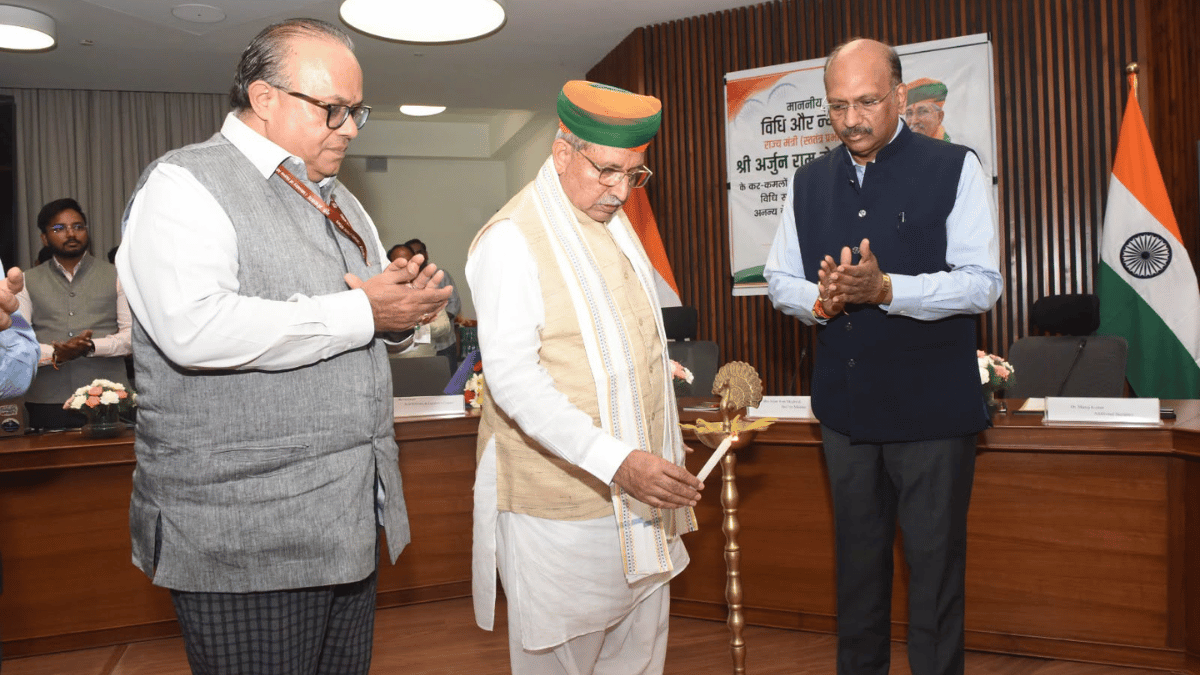
The inauguration at Kartavya Bhawan-2 bypassed standard bureaucratic ribbon-cutting, integrating cultural performances directly into the technical rollout. Students from Delhi Public School, Mathura Road, and Hansraj College opened the technical presentation with a Saraswati Vandana and a Bharat Natyam routine, a deliberate choice by the Law Minister to connect digital legal infrastructure with civilisational heritage.
The Unboxed Truth
Unbox Daily HQ views this as a vital infrastructure update that should have happened a decade ago. Legal knowledge is practically useless if the people governed by it cannot read it. By putting the official Vidhi Sahitya Prakashan catalogue online, the government removes the artificial barrier between the courts and the public.
Consider a young law student in a tier-two city preparing for judicial services exams. Previously, accessing official Hindi legal journals meant ordering physical copies or visiting metropolitan libraries, costing both time and money. Now, they can access the same Supreme Court rulings as a Delhi-based lawyer, directly on their phone. While private legal databases charge hefty annual subscription fees, this centralisation provides the essential foundational texts directly to the public for free. The true value here is not just convenience, but the standardisation of official Hindi legal terminology across the country.
Best for: A Hindi-medium law student or independent advocate who needs immediate access to official court judgments without paying for private legal databases.
Who Is This For: Perfect for 20 to 45-year-old legal professionals, researchers, and citizens in Hindi-speaking states who require direct access to unmediated government legal literature.
The Checkout
The Source
Ministry of Law and Justice
The Query
Yes, the e-VSP portal is available in India and went live globally on 15 July 2026. The platform is completely free to access and is hosted on the official www.vsp.gov.in domain. Citizens can use the platform to download Hindi legal publications, journals, and court judgments directly.
Unlike private platforms like Manupatra or SCC Online that treat local languages as a secondary feature and charge subscription fees, the e-VSP portal provides central, free digital access to official Hindi legal texts. It consolidates translated Supreme Court and High Court judgments into one official repository. This infrastructure allows users to retrieve certified legislative documents instantly.
The e-VSP portal is highly worth using as it offers free access to foundational legal texts that usually require expensive annual database subscriptions. It is perfect for Hindi-medium law students and independent advocates who need immediate, unmediated court judgments. The platform eliminates physical archiving barriers, delivering direct value for academic and professional legal research.