Thursday, May 28, 2026 |Navi Mumbai
--:-- | --°C | AQI --
If it's not on Unbox Daily HQ, it's not a Launch. Every product, policy and brand launch in India. One hub. What's new?
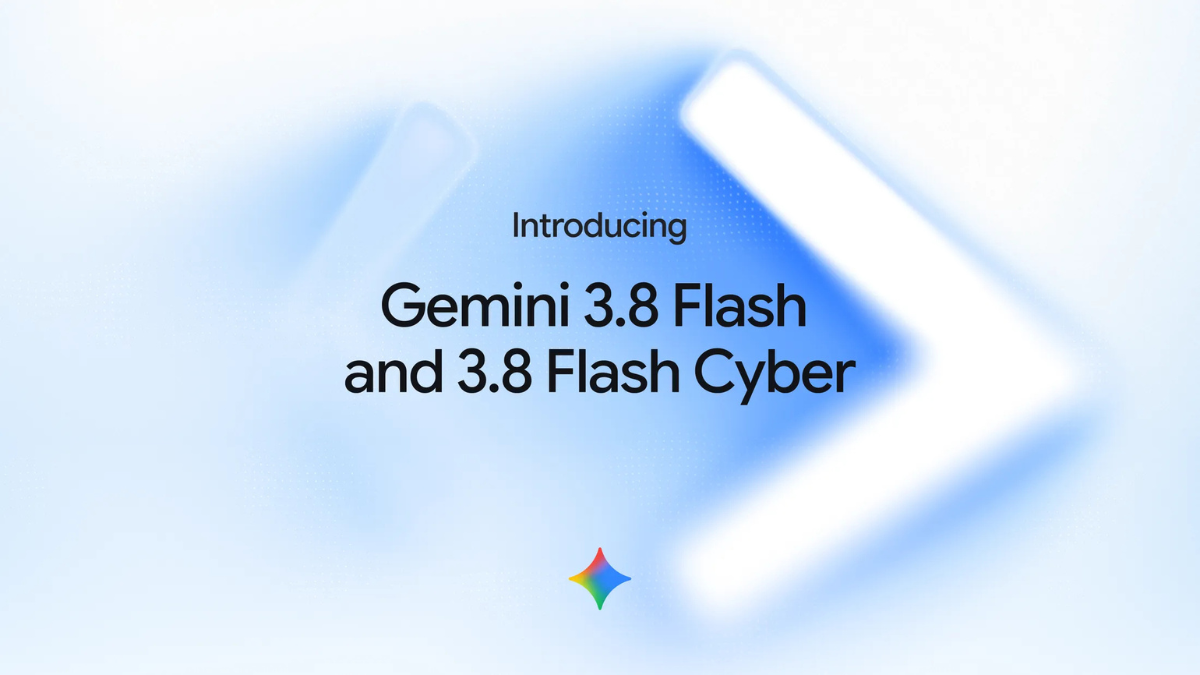
The Gemini 3.8 Flash update splits into two distinct paths for long-horizon software engineering and enterprise security.
The Takeaway
Google delivers two distinct generative reasoning systems today. This update arrives a mere three weeks after the previous major iteration. The tech giant moves fast. Developers receive a standard AI variant alongside a highly restricted defensive programming build. The standard model targets general software engineering and complex reasoning tasks across fields like corporate law. The cybersecurity version completely ignores offensive exploitation. It focuses entirely on automated vulnerability discovery and patching.
The standard system demonstrates significant proficiency across multiple academic and professional benchmarks. It scores 54.9 percent on HLE-Verified logic tests. It also beats older models on both the Vals Finance Agent V2 and Harvey’s Legal Agent Benchmark. The restricted security version handles autonomous vulnerability discovery across 20 different programming languages. It recently scored a 47.2 percent pass rate on the Collinear CWE-Bench for patching capabilities.
The defining structural shift for the standard system is its built-in diligence. It actively works harder by looping through logical stages rather than delivering a single-shot response. That extra effort means it calls internal tools iteratively when faced with complex requests. Developers can use it to build fully functional 3D interactive applications from a single text prompt. The security variant separates itself by prioritising defensive remediation over general capabilities.
Gemini 3.8 Flash pricing and specifications
| Feature | Detail |
| Standard input cost | $0.75 per million tokens |
| Standard output cost | $3.75 per million tokens |
| Cyber pricing | Unconfirmed, stated as lower than frontier models |
| Standard availability | General access via API and Enterprise tiers |
| Cyber access | Fairwind Programme only |
| Patching performance | 47.2 percent pass rate on CWE-Bench |
| Security protocol | Strict CBRN misuse protections on standard tier |
These new systems directly challenge more expensive frontier models on complex logic puzzles. The standard edition already outperforms larger competitors on the DeepSWE engineering benchmark. The cyber variant produces correct patches at a significantly higher rate than leading commercial alternatives.
ⓘ Sponsored: Unbox Daily HQ earns a commission if you buy through these links, at no extra cost to you. Prices shown are subject to change, and the actual price on Amazon at the time of purchase may vary from what is displayed here.
Local enterprise IT departments can integrate the standard model immediately. Faster API performance arrives alongside half-price introductory token costs for teams building autonomous workflows. The flat pricing structure keeps advanced reasoning accessible for smaller Indian coding agencies. Testing the specialised security tools requires domestic government bodies or critical infrastructure operators to clear the new onboarding process first. Google’s own cloud research team actually used the cyber variant to find a critical foundational flaw in under two hours.
The Unboxed Truth
Unbox Daily HQ appreciates the transparency of the Gemini 3.8 Flash rollout. You are no longer just paying for a quick text answer. You are paying for the time the software spends thinking about your problem in a loop. The baseline cost remains highly competitive for the local market. It runs significantly cheaper than hiring a freelance coder for a weekend debugging session. The restricted cyber variant acts as a necessary guardrail. It forces defenders to prioritise fixing security holes over finding them to exploit.
Best for: Enterprise development teams running complex automated coding workflows.
Who Is This For: Software engineers and system administrators aged 25 to 45.
Courtesy: Google
Gemini 3.8 Flash costs $0.75 per million input tokens and $3.75 per million output tokens globally. Pricing for the specialised Cyber variant remains unconfirmed, though access requires approval through the Fairwind Programme. Indian development agencies can access the standard model immediately at these flat rates through Google’s API.
Gemini 3.8 Flash operates with built-in diligence by running autonomous iterative reasoning loops rather than delivering single-shot text answers. This active multi-step reasoning allows developers to construct fully functional 3D applications from a single prompt. It outperforms larger competitors on the DeepSWE software engineering benchmark while maintaining standard pricing.
Gemini 3.8 Flash is worth buying for software engineers and system administrators aged 25 to 45 running complex automated workflows. The system provides strong value because the baseline running cost remains significantly cheaper than hiring a freelance coder. Indian development agencies gain dependable multi-step reasoning without paying the higher fees of larger models.