Thursday, May 28, 2026 |Navi Mumbai
--:-- | --°C | AQI --
If it's not on Unbox Daily HQ, it's not a Launch. Every product, policy and brand launch in India. One hub. What's new?
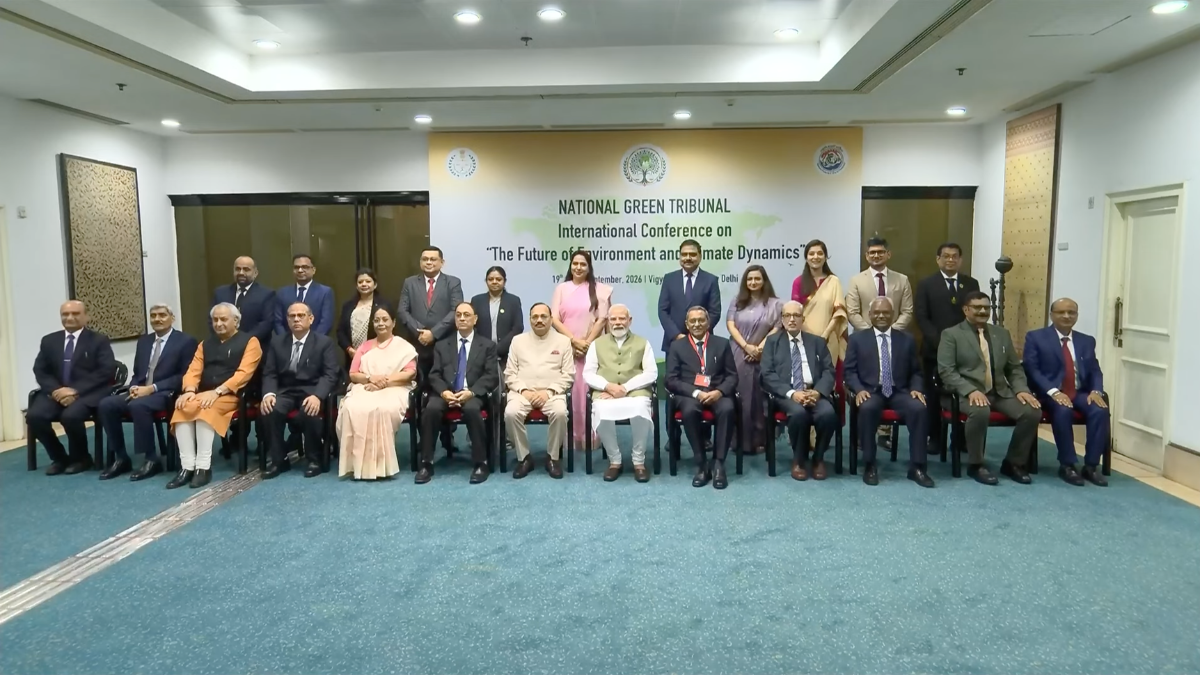
The International Conference on The Future of Environment and Climate Dynamics brings together judges from 17 nations.
The Takeaway
National Green Tribunal hosts the event at Vigyan Bhawan. Judicial delegates representing 17 foreign nations assemble in New Delhi alongside Indian legal magistrates. Sessions run across two days. Discussions focus on resolving persistent legal gaps between policy formulation, executive implementation, and environmental enforcement across participating international jurisdictions.
The participant list includes Supreme Court members, High Court benches, and District Court officers. State Environment Impact Assessment Authorities join State Wetland Authorities to evaluate regional administrative policies. Ministry secretaries and State Legal Services Authorities fill out the working groups. Access remains strictly limited to invited delegates without public entry.
Standard international climate meetings usually focus on scientific data or long-term carbon commitments. This summit targets the direct mechanics of courtroom adjudication and statutory compliance. Organizing four technical panels, the event helps jurists standardize environmental governance practices.
International Conference on The Future of Environment and Climate Dynamics details
| Metric | Details |
| Organising Body | National Green Tribunal |
| Event Duration | 19 to 20 September 2026 |
| Venue Location | Vigyan Bhawan, New Delhi |
| Global Participation | Delegations from 17 Nations |
Environmental litigation in India frequently encounters administrative bottlenecks and conflicting local mandates. Developing uniform judicial standards accelerates statutory approvals and strengthens ecological protection. These clear legal frameworks become critical as tools like the new climate data pool opening for 100 Indian founders begin supplying hyperlocal environmental metrics. Strong courtroom oversight ensures regional agencies evaluate development proposals without unnecessary delay.
ⓘ Sponsored: Unbox Daily HQ earns a commission if you buy through these links, at no extra cost to you. Prices shown are subject to change, and the actual price on Amazon at the time of purchase may vary from what is displayed here.
The Unboxed Truth
Unbox Daily HQ views the International Conference on The Future of Environment and Climate Dynamics as an essential shift toward practical legal enforcement. Climate pledges mean very little when local courts lack clear mechanisms to penalise policy violations. Bringing jurists together helps align courtroom decisions with modern scientific standards. This summit directly targets the legal friction that slows down environmental clearances across Indian states.
Best for: Policy analysts tracking environmental compliance and legal enforcement.
Who Is This For: Legal professionals and administrative officers aged 30 to 55.
Courtesy: National Green Tribunal
Access to the International Conference on The Future of Environment and Climate Dynamics is strictly restricted to invited delegates and official international representatives. There is no public entry, registration portal, or public ticketing available for the event. The summit takes place at Vigyan Bhawan in New Delhi on 19 and 20 September 2026.
This conference targets courtroom adjudication and legal enforcement mechanics rather than focusing on scientific data or carbon promises. It provides a dedicated space for jurists to align legal perspectives with administrative policies. The event brings together judicial representatives from 17 nations in New Delhi.
The conference is essential for legal professionals, administrative officers, and policy analysts aged 30 to 55. It delivers practical value by addressing the legal friction that delays statutory environmental clearances. Unified judicial standards will help speed up regulatory decisions across Indian states.