Thursday, May 28, 2026 |Navi Mumbai
--:-- | --°C | AQI --
If it's not on Unbox Daily HQ, it's not a Launch. Every product, policy and brand launch in India. One hub. What's new?
A massive agricultural push delivers zero-interest loans and faster dairy payouts across 32 districts.
The Takeaway
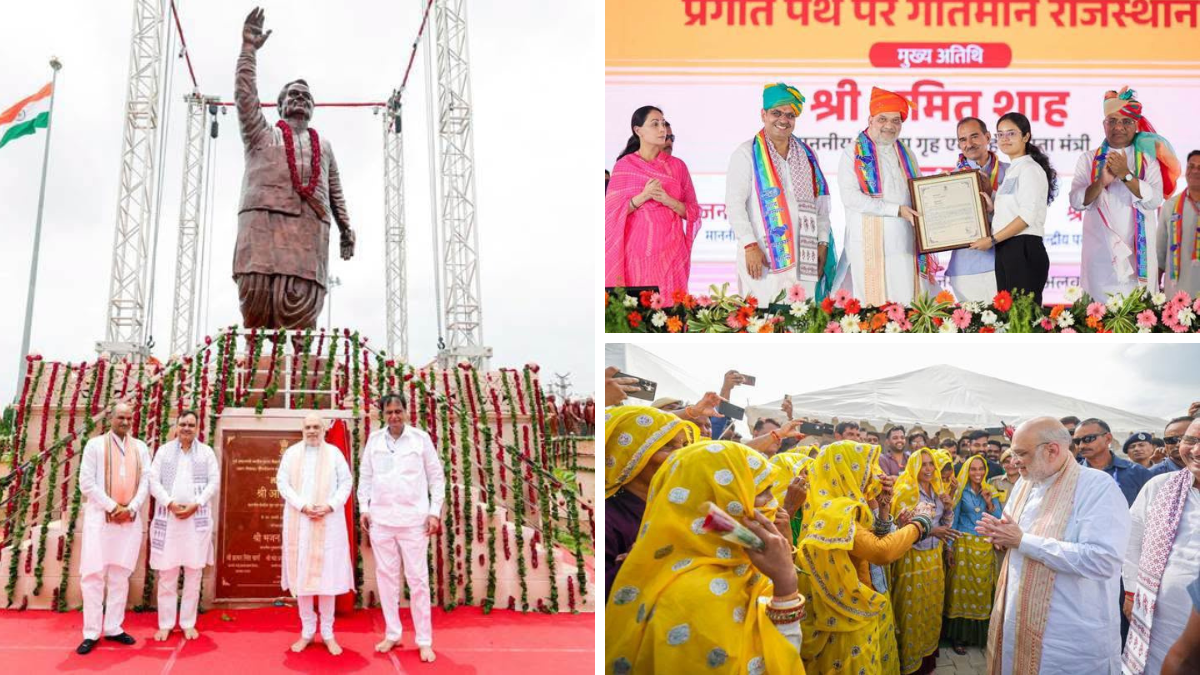
Ministry of Home Affairs outlines the massive development initiative launched across the state. The financial framework divides into two distinct geographical zones. Northern projects originating from Alwar require exactly ₹6,453 crore of the total budget. Southern construction based out of Chittorgarh utilises the remaining ₹5,755 crore.
The Alwar portion encompasses 954 individual development works heavily focused on agricultural expansion. A dedicated ₹500 crore fund specifically supports local cattle rearers. Four separate processing sites are now commissioned across Bhilwara, Jaipur, Pali, and Rajsamand. The Chittorgarh portfolio manages 944 separate projects.
The primary shift here is an aggressive physical expansion of local dairy processing capacities to accelerate cash cycles. Upgrading the main Alwar facility to handle 3 lakh litres daily creates a highly predictable income route compared to traditional crop sales. This site will eventually scale to process 5 lakh litres every single day.
Rajasthan development project financial allocations
| Sector | Details |
| Saras Dairy plant network | ₹274 crore combined project cost |
| Crop insurance transfer | ₹152 crore via direct benefit transfer |
| Mukhyamantri Kisan Samman Nidhi | ₹667 crore disbursed to 67 lakh farmers |
| Completed storage units | 62 small facilities and 100 high-capacity sites |
| Har Ghar Jal reach | 64 lakh state households |
Financial schemes have bypassed typical administrative delays to reach rural agricultural workers directly. This push for direct citizen access mirrors The digital shift making Rashtrapati Bhavan truly public, where online e-Upahaar auctions and multilingual audio guides engage people directly. The broader governmental mandate demands that absolutely no local village operates without an active cooperative presence. Rajasthan currently manages 44,000 such societies. Storage infrastructure is also scaling up to support better market timing. The administration plans to construct 50 additional high-capacity warehouses during the upcoming 2026 to 2027 fiscal year. Furthermore, the national Scheduled Tribe component budget has grown from a baseline of ₹25,000 crore to ₹1.25 lakh crore.
ⓘ Sponsored: Unbox Daily HQ earns a commission if you buy through these links, at no extra cost to you. Prices shown are subject to change, and the actual price on Amazon at the time of purchase may vary from what is displayed here.
The Unboxed Truth
Weighing the scale of this policy requires looking at how rural liquidity actually functions. Unbox Daily HQ finds the most value in how these specific frameworks eliminate predatory wait times for agricultural workers. You need predictable capital to bypass expensive local lenders. Upgrading local processing capacities directly replaces exploitative debt cycles. The phased capacity limits on the primary milk facility mean maximum output will take time to materialise. The underlying foundation is now firmly established.
Best for: Livestock rearers seeking reliable income avenues.
Who Is This For: Rural agricultural workers aged 25 to 45 years.
Courtesy: Ministry of Home Affairs
The Rajasthan cooperative infrastructure package carries a confirmed capital outlay of ₹11,953 crore across 32 districts. The northern portfolio based in Alwar accounts for ₹6,453 crore, whilst the southern Chittorgarh projects utilise ₹5,755 crore. All development works were officially launched on 16 August 2026 across Rajasthan.
The initiative guarantees milk payments to participating livestock rearers within a strict seven-day cycle. Expanding the central Alwar processing plant to handle 3 lakh litres daily establishes a reliable alternative to traditional seasonal earnings. This structural upgrade eliminates long payment delays and secures immediate cash liquidity for rural farming households across Rajasthan.
The package is highly beneficial for livestock rearers and rural agricultural workers aged 25 to 45 years. Providing zero-interest loans across four new district cooperative banks and quick milk clearances directly replaces predatory debt cycles. It ensures predictable capital for families looking to bypass expensive local moneylenders.