Thursday, May 28, 2026 |Navi Mumbai
--:-- | --°C | AQI --
If it's not on Unbox Daily HQ, it's not a Launch. Every product, policy and brand launch in India. One hub. What's new?
The central government introduces National Coastal Mission 2.0 to manage development, leaving the actual heavy lifting to state administrations.
The Takeaway
The Union government has launched the implementation guidelines for National Coastal Mission 2.0, bringing a ₹767 crore framework for India’s coastal regions into a new phase.
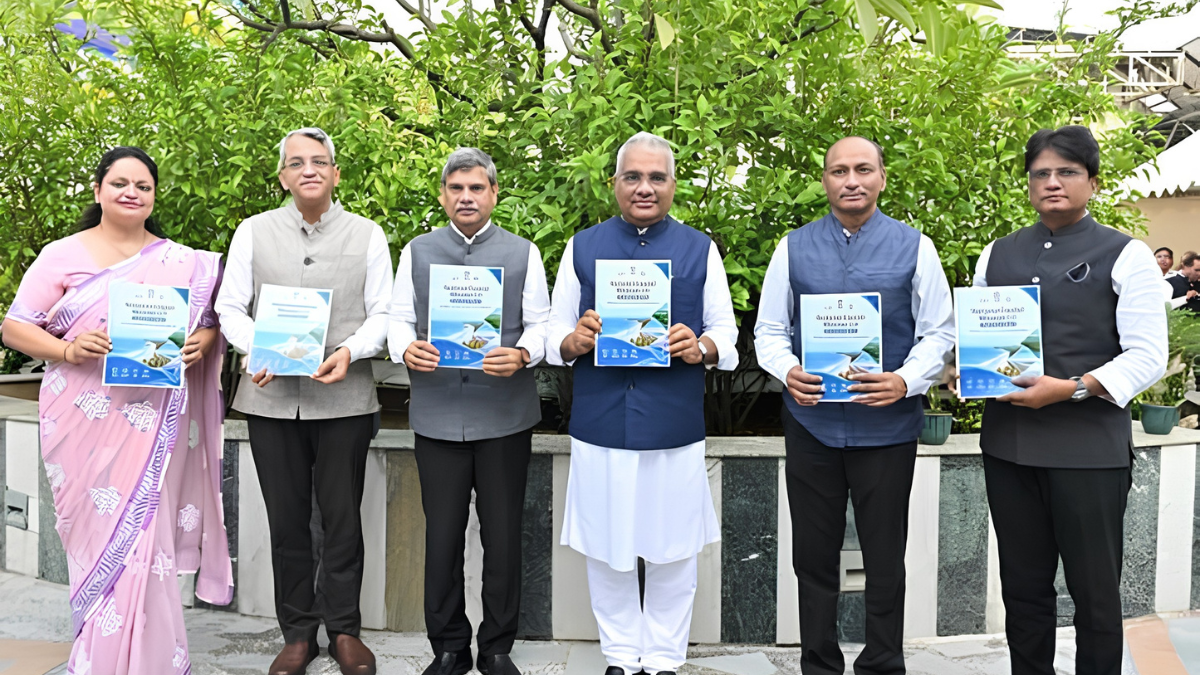
Union Environment Minister Bhupender Yadav launched the guidelines in New Delhi on September 30, 2026. The Central Sector Scheme will be implemented from 2025-26 to 2030-31 across India’s nine coastal states and four Union Territories.
The mission is aimed at strengthening the resilience and sustainability of India’s coastal regions while supporting the country’s Blue Economy. Its scope includes vulnerability assessments, ecosystem restoration, pollution management, biodiversity conservation, sustainable tourism, spatial planning, research and capacity building.
₹767 Crore Is a Multi-Year Outlay
The ₹767 crore figure is the approved overall outlay for the mission period, not an upfront payment to coastal states.
ⓘ Sponsored: Unbox Daily HQ earns a commission if you buy through these links, at no extra cost to you. Prices shown are subject to change, and the actual price on Amazon at the time of purchase may vary from what is displayed here.
The programme runs from 2025-26 through 2030-31, meaning the allocation is spread across the full implementation period rather than being released as a single ₹767 crore payout.
Key figures for National Coastal Mission 2.0
| Policy Marker | Details |
| Total Budget | ₹767 crore |
| Timeline | 2025-26 to 2030-31 |
| Geographic Scope | 9 states, 4 union territories |
| Funding Type | Central Sector Scheme |
The Ministry of Environment, Forest and Climate Change has also published the detailed implementation guidelines for the mission.
What Changes Under National Coastal Mission 2.0?
The new framework expands the mission’s focus beyond individual conservation interventions.
The government says NCM 2.0 will support coastal vulnerability assessments, ecosystem restoration, pollution management, biodiversity conservation, sustainable tourism, spatial planning, research and capacity building. It is also intended to improve coordination between the Centre, coastal states and UTs and strengthen monitoring and accountability.
The framework therefore combines environmental protection with planning for sustainable economic activity along India’s coastline. India targets 12000 km coastline security in new national strategy provides another angle on how marine policy is evolving. That parallel framework links ocean observation, deep-sea mining, and coastal surveillance into one overarching strategy.
States and UTs Have a Key Role
Although NCM 2.0 is a Central Sector Scheme, implementation involves active participation from coastal states, UTs and other stakeholders. The government describes the framework as a whole-of-government approach designed to clarify institutional responsibilities and improve coordination.
This means the ₹767 crore allocation should not be interpreted as an automatic cash transfer to every coastal state or UT.
Projects and activities have to fit within the mission’s framework and implementation mechanisms. States and UT administrations remain important participants in identifying and implementing coastal interventions.
Ease of Doing Business Is Also Part of the Framework
The environmental focus does not mean the guidelines are limited to conservation projects.
The government explicitly says NCM 2.0 will promote ease of doing business through a clear and streamlined implementation framework. The guidelines aim to streamline processes, clarify institutional responsibilities and improve transparency, monitoring and accountability.
However, this should not be interpreted as a blanket relaxation of environmental regulations or statutory clearances for commercial developers.
The mission’s planning and funding framework operates alongside existing regulatory requirements. In other words, streamlining implementation does not automatically remove the need for applicable environmental or coastal approvals.
What Happens to the Earlier Mission?
National Coastal Mission 2.0 represents the next phase of the government’s coastal-management programme.
The broader National Coastal Mission framework has previously supported areas including conservation of coastal ecosystems, research, capacity building and sustainable coastal development. The new phase expands the policy emphasis to integrated planning, resilience and Blue Economy-related objectives.
The government’s current material describes NCM 2.0 as a framework for coordinated coastal development rather than simply a continuation of one individual conservation programme.
Who Benefits From the ₹767 Crore Framework?
The immediate beneficiaries are not individual citizens receiving direct cash assistance.
The mission is structured around projects and institutional activities covering coastal ecosystems, infrastructure and planning, pollution management, research, capacity building and sustainable tourism.
Coastal communities can benefit indirectly through improved ecosystem resilience, pollution management, climate adaptation and sustainable livelihood-related interventions. The government also identifies coastal resilience and sustainable development as central objectives of the mission.
States, UT administrations and implementing agencies will play an important role in translating the central framework into projects on the ground.
For businesses, the potential relevance lies primarily in clearer planning and implementation processes rather than an automatic financial benefit.
The Broader Coastal Strategy
NCM 2.0 comes as India expands its approach to coastal and marine management.
The framework connects environmental conservation with spatial planning, sustainable tourism, pollution control, climate resilience and Blue Economy development. This reflects a shift toward managing coastal regions as interconnected ecological and economic systems rather than treating individual environmental issues in isolation.
The government has also highlighted the importance of coordinated planning and convergence with existing schemes. The new guidelines are intended to create clearer institutional responsibilities and strengthen monitoring of implementation.
What Coastal States Need to Watch
For state governments and implementing agencies, the key issue will be turning the framework into viable projects.
The availability of a ₹767 crore central outlay does not mean every proposed coastal project will automatically receive funding. Projects have to operate within the mission’s guidelines, institutional structure and approval mechanisms.
Implementation capacity, project preparation, environmental safeguards, monitoring and long-term maintenance will therefore remain important factors in determining how much impact the mission produces on the ground.
The Unboxed Truth
National Coastal Mission 2.0 is more than a ₹767 crore environmental allocation. It creates a multi-year framework linking coastal conservation with resilience, spatial planning, sustainable tourism and Blue Economy development.
The important distinction is between the approved central outlay and actual project-level implementation. The money provides the financial framework, but the eventual impact will depend on the quality of projects, coordination between government agencies, environmental safeguards and how effectively the planned interventions are implemented across India’s coastal regions.
Best for: State and UT coastal-planning agencies, environmental institutions, researchers, conservation organisations and developers involved in projects that fall within the mission’s framework.
Courtesy: Press Information Bureau
National Coastal Mission 2.0 has an approved outlay of ₹767 crore for the period from 2025-26 to 2030-31. This is a Central Sector Scheme covering India’s nine coastal states and four Union Territories.
The allocation is a multi-year central outlay rather than an upfront payment to individual states or Union Territories. Implementation will cover areas including coastal resilience, ecosystem restoration, pollution management, biodiversity conservation, sustainable tourism, spatial planning, research and capacity building.
National Coastal Mission 2.0 expands the scope of India’s coastal-management framework. While the earlier mission supported coastal ecosystem conservation and related activities, the new framework takes a broader approach covering coastal vulnerability and resilience, ecosystem restoration, pollution management, biodiversity, sustainable tourism, spatial planning, research and capacity building.
The new framework also places greater emphasis on coordinated implementation, institutional responsibilities, monitoring and sustainable Blue Economy development.
Therefore, NCM 2.0 should not be characterised as being focused only on commercial development. Its stated objectives combine environmental protection with sustainable economic and coastal development.
National Coastal Mission 2.0 is primarily relevant to state and Union Territory coastal-planning agencies, environmental institutions, implementing agencies, researchers, conservation organisations and stakeholders involved in coastal development and sustainable tourism.
The framework is intended to support projects and institutional activities related to coastal resilience, ecosystem conservation, pollution management, spatial planning and sustainable development.
While the guidelines include a goal of promoting ease of doing business through a clearer and streamlined implementation framework, this should not be interpreted as a blanket relaxation of environmental clearances or as a direct financial scheme for commercial developers.
Final verdict: The mission is most relevant to organisations and authorities involved in planning, protecting and sustainably developing India’s coastal regions, rather than to a specific age group or a single category of commercial developer.