Thursday, May 28, 2026 |Navi Mumbai
--:-- | --°C | AQI --
If it's not on Unbox Daily HQ, it's not a Launch. Every product, policy and brand launch in India. One hub. What's new?
The JSW Group enters commercial mobility with a captive fleet strategy.
The Takeaway
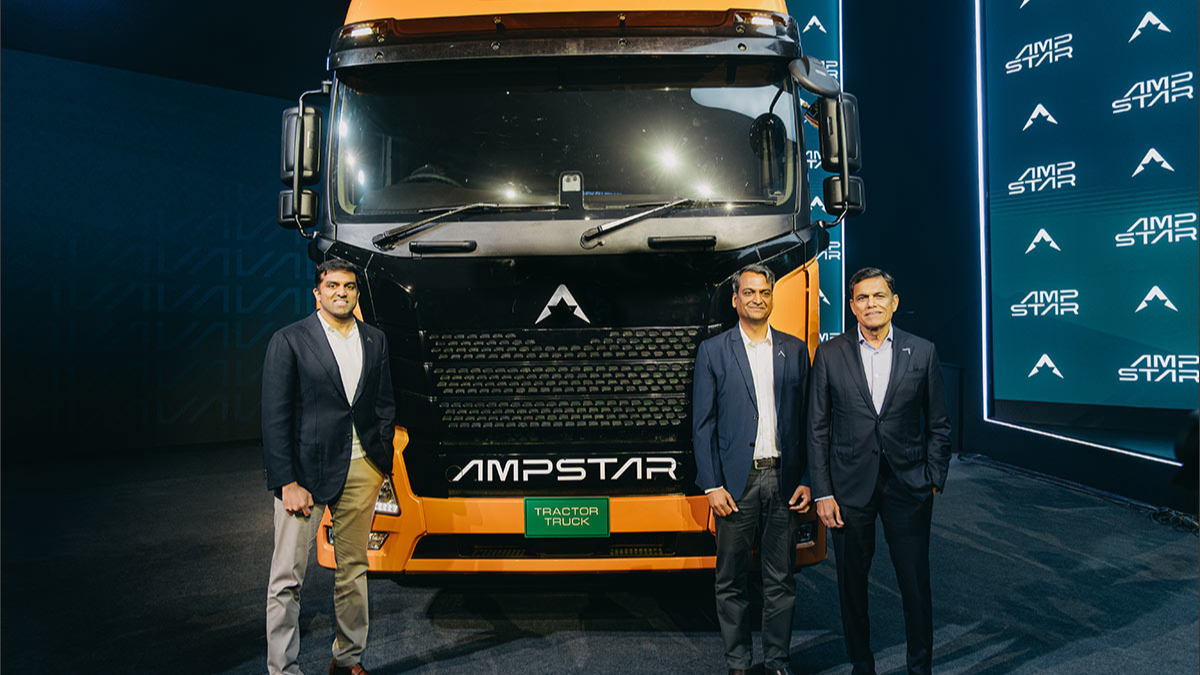
AMPSTAR enters the heavy transport market with a dedicated business to business rollout. The company confirmed its new automotive division in late September 2026. Operations kick off this October at a new 90-acre manufacturing hub in Chhatrapati Sambhajinagar, scaled for 15,000 commercial vehicles annually. Product lines span 7 to 18 metre passenger buses alongside a flagship 55-tonne electric tractor trailer. Motor configurations range between 150 kW and 500 kW. Upfront vehicle costs remain unannounced. Fleet managers will offset capital expenses using Battery as a Service agreements. This leasing approach is gaining traction across categories, much like how the New Hector Tomahawk EV battery rental option starts at Rs 13.99 lakh in the passenger SUV segment.
The genuine corporate strategy relies on captive fleets rather than public highway dominance. By deploying these trucks within their own massive steel and cement supply chains, the company guarantees immediate volume. They can build localised charging hubs along their fixed routes and avoid the national highway infrastructure deficit completely.
Financial projections present a familiar narrative hurdle. Internal trials hint at a freight expense of Rs 465 per tonne, undercutting the standard Rs 580 per tonne diesel average. We must label this an aspirational claim. That economic advantage depends entirely on highly controlled environments like dedicated industrial corridors. It will likely fail to translate into unpredictable public highway logistics.
The brand also cites reported figures of a seven minute battery swap time. The campaign frames this rapid turnaround as a settled logistical fact. Whether that holds up in daily use is a separate question. Scaling a seven minute swap in dusty Indian logistics hubs outside controlled conditions is incredibly difficult. This remains another purely aspirational claim.
AMPSTAR launch parameters at a glance
ⓘ Sponsored: Unbox Daily HQ earns a commission if you buy through these links, at no extra cost to you. Prices shown are subject to change, and the actual price on Amazon at the time of purchase may vary from what is displayed here.
| Metric | Detail |
| Vehicle types | 55-tonne trucks, commercial buses |
| Power output | 150 kW to 500 kW |
| Plant location | Chhatrapati Sambhajinagar |
| Annual capacity | 15,000 units |
| Acquisition modes | Purchase or BaaS |
This segment is historically unforgiving. In the heavy freight space, these vehicles will compete directly against legacy diesel workhorses and early electric pilots from Tata Motors and Infraprime Logistics. Entrenched competition exists in the passenger segment from Olectra Greentech and Switch Mobility. The BaaS option will be the crucial differentiator required to offset the massive initial capital expenditure of heavy electric trucks.
Indian highway logistics break fragile engineering. Heavy electric vehicles pulling 55-tonne payloads in peak 45 degree Celsius summer heat face severe thermal throttling. The brand mentions a double cooling battery system alongside a high strength monocoque chassis. We must label this an aspirational claim until independent fleet operators validate actual range under these extreme physical realities. Service infrastructure presents another hurdle. Any breakdown occurring far from dedicated support depots guarantees extended downtime. Diesel repair centres exist everywhere. High voltage battery technicians do not.
There is one genuinely promising technical inclusion for our coastal climates. The new Maharashtra facility features the country’s initial pre-treatment and electro-deposition paint mechanism for commercial buses. This anti corrosion technology should materially improve the rust resistance of bus bodies in our humid and monsoon heavy coastal environments.
The Unboxed Truth
Unbox Daily HQ views this launch through a strictly pragmatic lens. If you operate a point to point logistics firm with dedicated depots, the AMPSTAR fleet network warrants your attention. It completely removes the anxiety of public charging infrastructure by localising the energy supply. If you rely on unpredictable public routes, this closed loop system will not serve your immediate needs. This commercial vehicle belongs in your business only if you can control every variable of the journey.
Best for: Logistics managers and fleet owners aged 35 to 55 operating predictable industrial freight corridors.
Courtesy: JSW Greentech
Commercial production of AMPSTAR electric vehicles begins in October 2026 at a new facility in Chhatrapati Sambhajinagar. Upfront purchase prices remain unannounced, but fleet buyers can acquire vehicles through Battery as a Service leasing models. Initial deliveries focus strictly on captive business operations rather than public commercial sales across India.
Unlike Tata Motors, which targets broader commercial fleets, AMPSTAR relies on captive industrial routes within JSW supply chains to secure guaranteed operating volume. This closed network allows dedicated charging hubs at terminal depots. The strategy bypasses the severe shortage of public high-voltage highway chargers currently slowing electric haulage across India.
AMPSTAR is worth buying only for logistics managers and fleet owners operating predictable industrial corridors with dedicated depots. The localised charging model removes reliance on public infrastructure and controls operating expenses effectively. It is the wrong investment for operators navigating unpredictable long-haul routes across varied Indian highways.