Thursday, May 28, 2026 |Navi Mumbai
--:-- | --°C | AQI --
If it's not on Unbox Daily HQ, it's not a Launch. Every product, policy and brand launch in India. One hub. What's new?
Twenty-four companies plan facilities in the Gwalior Telecom Manufacturing Zone, but full financial benefits demand massive upfront capital.
The Takeaway
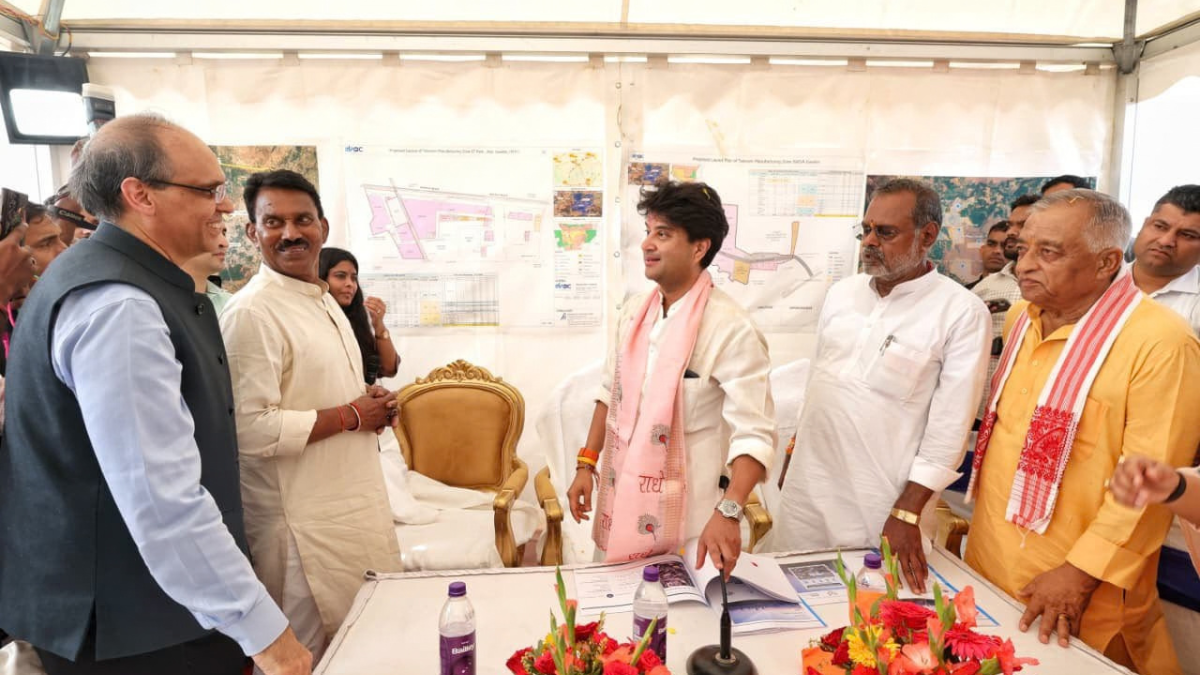
Telecom Manufacturing Zone in Gwalior passed a major site inspection on September 20. Union Minister Jyotiraditya Scindia reviewed the designated acreage across the local IT Park and the Counter Magnet City (SADA). Officials want two dozen electronics production units operating here. The central government is funding the initial core infrastructure completely with a ₹493 crore allocation.
Phase one plans will absorb 170 acres immediately. The Department of Telecommunications (DoT) holds a 49 percent equity stake in the governing special purpose vehicle (SPV). The Madhya Pradesh government controls the remaining 51 percent. A separate ₹500 crore central package will build a common testing lab directly inside the compound. Planners expect the site to eventually generate 18,000 direct jobs.
These job creation numbers rely heavily on state incentives that carry strict conditions. The promised 50 percent capital subsidy on fixed investments tops out at ₹200 crore. Crucially, the offer of ₹5,000 per month for every worker over five years is restricted solely to eligible mega projects. Smaller component startups cannot access these top-tier perks. They will face noticeably higher out-of-pocket setup expenses. Land is also not freehold. Companies must operate on a 30-year lease structure priced at a nominal one rupee per square metre annually.
Telecom Manufacturing Zone Fast Facts
| Metric | Detail |
| Phase 1 Land Area | 170 acres |
| Proposed Investment | ₹5,500 crore |
| SPV Equity Split | 51% MP Govt, 49% DoT |
| Core Infrastructure Fund | ₹493 crore (Central) |
| Testing Lab Package | ₹500 crore |
India is aggressively pushing to become an exporter through the India Semiconductor Mission. This strategy requires localised production of routers and optical fibre. Readers tracking these developments might recall how the fourth advanced telecom research centre opens in Hyderabad. That new facility focuses on developing 6G networks and quantum communication systems directly within the country. The Gwalior site provides the physical factory capacity to complement those scientific research efforts.
ⓘ Sponsored: Unbox Daily HQ earns a commission if you buy through these links, at no extra cost to you. Prices shown are subject to change, and the actual price on Amazon at the time of purchase may vary from what is displayed here.
Heavyweight telecom hardware makers benefit most from this development. Companies like Dixon Technologies and HFCL have the balance sheets to qualify for maximum capital support. It also serves the Madhya Pradesh authorities. They finally have an anchor industrial tenant to populate SADA. The area was originally mapped out in 1992 to decongest Delhi. It struggled for three decades to attract real economic drivers and was widely documented as vacant.
The touted ₹5,500 crore figure represents non-binding initial commitments rather than finalised financial closures. Local media reports indicate that final spatial assignments remain pending. Allocations will only begin after an upcoming final investor roadshow concludes in Mangaluru.
The Unboxed Truth
Unbox Daily HQ checks the viability of every major industrial announcement. The Telecom Manufacturing Zone gives large corporations a heavily subsidised base to build hardware. However, the supporting logistics are not fully ready. The highlighted 120-kilometre Agra-Gwalior highway is still acquiring land across three states. It will not reach full operation until late 2028. Early tenants will navigate localised logistical friction during their critical first years of production. This article is for informational purposes only and does not constitute investment advice. Please consult a registered financial adviser before making any investment decisions.
Best for: Large-scale telecom hardware manufacturers.
Who is this for: Corporate site selectors and supply chain executives (30 to 55 years old).
Courtesy: Press Information Bureau
The central government allocates 493 crore rupees for core infrastructure and 500 crore rupees for a common testing lab. Overall, two dozen applying companies outline 5,500 crore rupees in potential investment. Phase one covers 170 acres across the IT Park and Counter Magnet City in Gwalior.
The zone provides physical factory capacity to complement telecom research facilities like the fourth advanced telecom research centre in Hyderabad. It operates as a dedicated ecosystem under a special purpose vehicle split between the state government and the Department of Telecommunications. Tenants also receive state capital subsidies capped at 200 crore rupees.
The zone is worth setting up in for large-scale telecom hardware manufacturers with massive upfront capital. Anchor tenants benefit from heavily subsidised infrastructure and substantial state capital assistance. However, smaller component startups cannot access the highest subsidies and the connecting Agra-Gwalior highway will not be operational until late 2028.