Thursday, May 28, 2026 |Navi Mumbai
--:-- | --°C | AQI --
If it's not on Unbox Daily HQ, it's not a Launch. Every product, policy and brand launch in India. One hub. What's new?
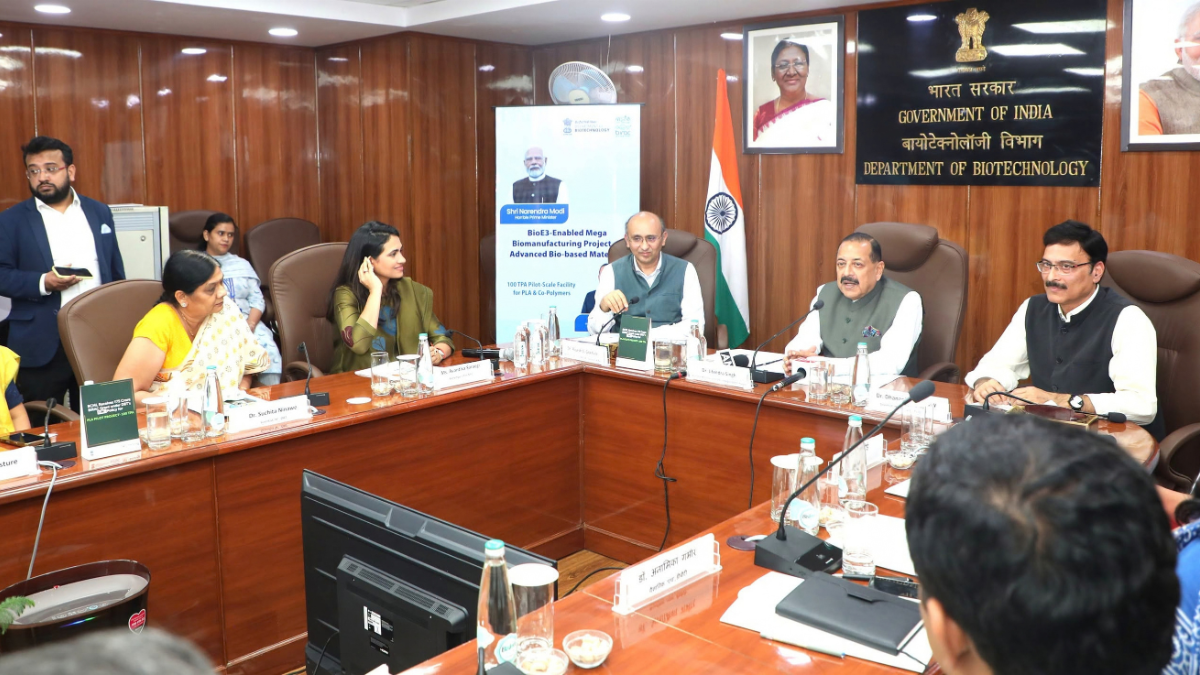
The BioE3 scheme backs a bioplastics testing facility in Uttar Pradesh.
The Takeaway
The BioE3 initiative funding provides a ₹75 crore grant from the Biotechnology Industry Research Assistance Council. The money supports a small pilot facility in Uttar Pradesh. This plant will produce 100 tonnes of Polylactic Acid per year. Biotech platform BIO-NIVESH links startups to investors.
The Ministry of Science and Technology frames this project as a massive shift in manufacturing. Officials claim it will solve environmental pollution while creating a fresh value chain. The stated goal is to convert agricultural resources like sugarcane into high-value bioplastics.
The official announcement leans heavily on the word biodegradable. That term suggests a plastic cup will naturally dissolve in soil or water. The reality is far more rigid. Polylactic Acid strictly requires sustained temperatures above 60 degrees Celsius and specific microbes to break down. You cannot put it in a home compost bin. If it ends up in a standard plastic recycling batch, it ruins the entire lot.
Production scale and project costs
| Metric | Value |
| Government Grant | ₹75 crore |
| Pilot Capacity | 100 Tonnes Per Annum |
| BCML Commercial Investment | ₹3,080 crore |
| Full Commercial Capacity | 80,000 Tonnes Per Annum |
| Target Launch | Q2 to Q3 2026-2027 |
Balrampur Chini Mills Limited is India’s second-largest sugar manufacturer. They have successfully shifted massive amounts of sugarcane into the ethanol market over the last decade. They are now trying to replicate that success with bioplastics. The company recently signed an agreement with the Lucknow Cantonment Board to test localized industrial composting. This shows they know the waste infrastructure is the real hurdle.
ⓘ Sponsored: Unbox Daily HQ earns a commission if you buy through these links, at no extra cost to you. Prices shown are subject to change, and the actual price on Amazon at the time of purchase may vary from what is displayed here.
This project directly benefits major agricultural conglomerates. It gives them a profitable new outlet for sugarcane. It does not immediately help the average citizen who wants a litter-friendly product. Until your local municipality builds dedicated high-heat composting facilities, throwing away a Polylactic Acid container is exactly like throwing away conventional plastic.
Producing one kilogram of this bioplastic requires about 1.7 kilograms of raw sugar. It is an agricultural product disguised as a waste management solution. The material also melts at 50 degrees Celsius, making it useless for hot tea or coffee.
The Unboxed Truth
We read the government press releases at Unbox Daily HQ so you can skip them. The BioE3 initiative treats Polylactic Acid as a magic bullet for plastic pollution. The science tells a different story. This is a brilliant financial move for sugar producers looking to diversify their income streams. It is a terrible solution for urban waste management unless cities spend billions upgrading their trash sorting systems. You are not getting a magic cup that melts harmlessly into the earth. You are getting a highly specific industrial material that requires a perfectly controlled environment to dispose of safely.
Who Is This For: Agribusiness professionals and commodity investors aged 30 to 55.
This article is for informational purposes only and does not constitute investment advice. Please consult a registered financial adviser before making any investment decisions.
Courtesy: Press Information Bureau
The Biotechnology Industry Research Assistance Council provided a ₹75 crore grant for the Balrampur Chini Mills PLA pilot project. This government capital funds a pilot facility in Kumbhi, Uttar Pradesh, capped at an annual output of 100 tonnes. The project serves as a state-subsidised testing sandbox rather than an immediate mass commercial rollout across India.
Balrampur Chini Mills PLA is a sugarcane-derived bioplastic designed to replace traditional petrochemical materials. Unlike regular PET plastics, it requires specialised industrial composting facilities maintaining temperatures above 58 degrees Celsius to break down properly. Standard Indian municipal waste management systems currently lack this processing infrastructure, meaning discarded PLA cannot degrade in normal local landfills.
The Balrampur Chini Mills PLA pilot project is worth adopting specifically for commercial packaging firms seeking domestic ESG-compliant materials. This initiative provides corporate procurement officers aged 30 to 55 with access to locally tested biopolymer options. However, it functions as a corporate subsidy that does not solve street-level plastic waste issues in Indian municipal waste streams.