Thursday, May 28, 2026 |Navi Mumbai
--:-- | --°C | AQI --
If it's not on Unbox Daily HQ, it's not a Launch. Every product, policy and brand launch in India. One hub. What's new?
The Institute of Archaeology updates its curriculum to combine fieldwork with administrative skills.
The Takeaway
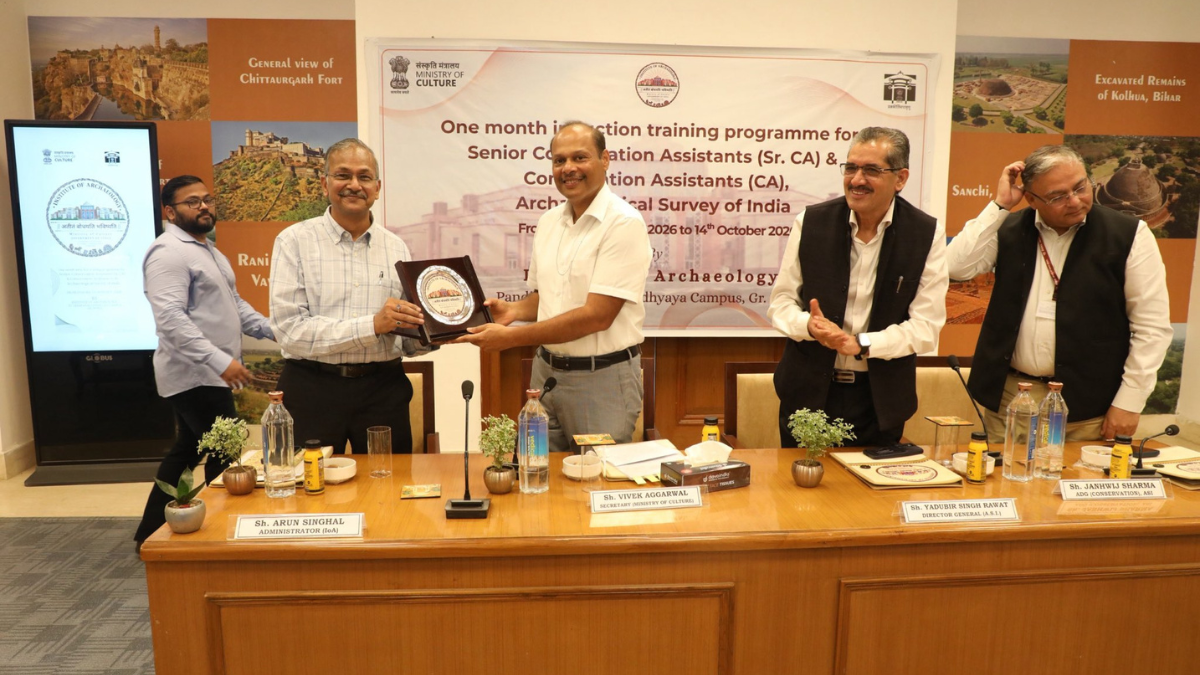
Ministry of Culture inaugurated a fresh Induction Training Programme at the Institute of Archaeology in Greater Noida. This government module serves 53 recently hired Senior Conservation Assistants and Conservation Assistants. They represent different archaeological circles nationwide. The initiative successfully expands the 25-acre Pt. Deendayal Upadhyaya Campus operations far beyond its traditional Post Graduate Diploma cohort of 15 students.
The updated syllabus moves past pure academic history to address daily civil service duties. Trainees will study Government Financial Rules and departmental inquiry procedures. The curriculum also covers establishment protocols to build better operational leadership early in their careers.
This specific Induction Training Programme treats protected historical monuments as active economic assets rather than static ruins. Officers learn to build local employment opportunities using public-private partnerships. The course outlines distinct strategies for light-and-sound shows and curated heritage walks to boost national income through tourism.
Induction Training Programme details
| Feature | Fact |
| Location | Pt. Deendayal Upadhyaya Campus |
| Facility size | 25 acres |
| Class size | 53 new officers |
| Duration | One month |
| Core philosophy | Minimum intervention and maximum retention |
Indian heritage departments often struggle with deep bureaucracy when managing historical sites. This administrative friction is similar to the challenges seen when how India is training for future nuclear and chemical risks required specialized government coordination. The new Induction Training Programme addresses those operational bottlenecks by teaching recruits legal and financial systems directly. Future phases will offer refresher courses for current in-service staff and regional state archaeology officials across the country.
ⓘ Sponsored: Unbox Daily HQ earns a commission if you buy through these links, at no extra cost to you. Prices shown are subject to change, and the actual price on Amazon at the time of purchase may vary from what is displayed here.
The Director General of the department mandated a strict conservation strategy for all future site work. The campus will also host public cultural events and educate local students about the life of Pandit Deendayal Upadhyaya.
The Unboxed Truth
Unbox Daily HQ views this Induction Training Programme as a highly practical upgrade for managing Indian heritage sites efficiently. By teaching conservationists financial regulations and site administration directly, the government gives you leaders who can cut through red tape before field operations begin. The explicit focus on a monument economy ensures you learn to treat these historical locations as active revenue generators.
Best for: Newly appointed heritage managers needing administrative preparation.
Who Is This For: Civil servants aged 22 to 40 working in cultural preservation.
Courtesy: Ministry of Culture
The module serves exactly 53 recently hired Senior Conservation Assistants and Conservation Assistants within the government. Trainees attend the intensive one-month curriculum at the 25-acre Pt. Deendayal Upadhyaya Campus located in Greater Noida. Future phases will expand access to regional state archaeology officials across the country.
The curriculum successfully moves past pure academic history to directly address daily civil service duties and administrative law. Officers receive practical instruction in Government Financial Rules, departmental inquiry procedures, and establishment protocols to build operational leadership early. It uniquely treats protected historical monuments as active economic assets rather than static ruins.
The course is a highly practical upgrade for newly appointed heritage managers needing administrative preparation. It equips civil servants aged 22 to 40 working in cultural preservation with the financial regulations required to cut through red tape. This explicit focus creates capable leaders who treat historical locations as active revenue generators.