Thursday, May 28, 2026 |Navi Mumbai
--:-- | --°C | AQI --
If it's not on Unbox Daily HQ, it's not a Launch. Every product, policy and brand launch in India. One hub. What's new?
The civic initiative delivers heavily discounted nutrition to vulnerable urban populations.
The Takeaway
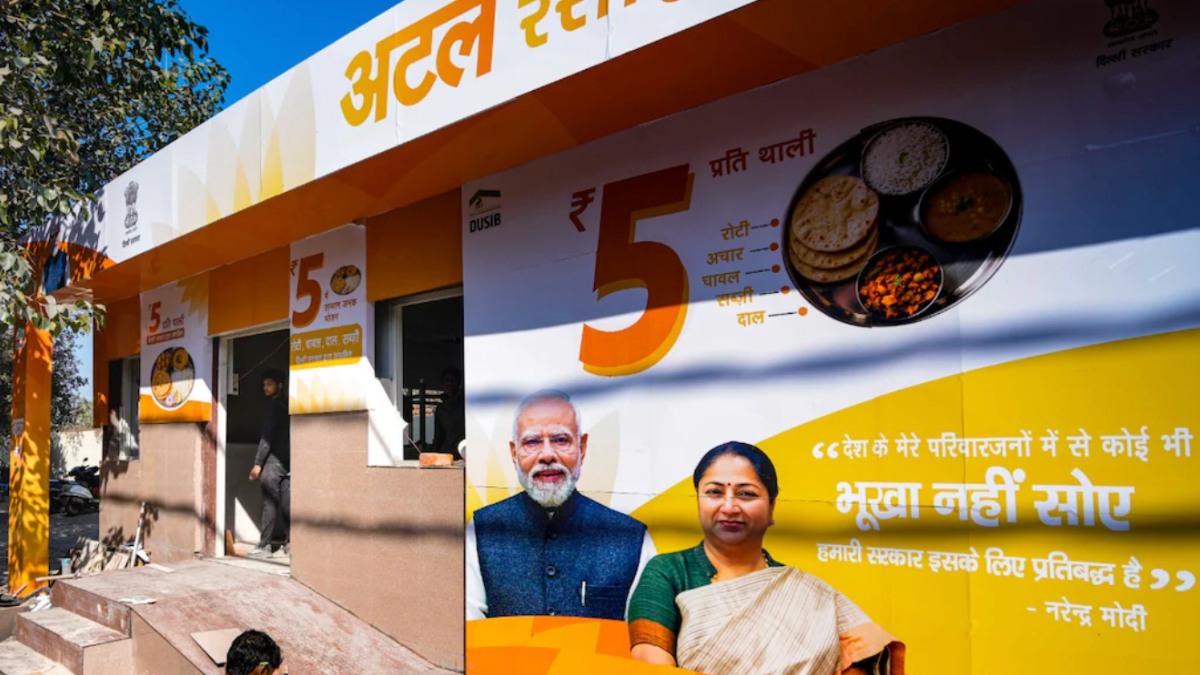
Delhi Urban Shelter Improvement Board manages the rollout of this civic scheme. Chief Minister Rekha Gupta and former Vice President M. Venkaiah Naidu recently inaugurated the latest facilities. The system specifically serves out-of-town labourers seeking employment and patients receiving medical care. It is a massive undertaking.
These structures are strategically located outside major medical centres including the All India Institute of Medical Sciences (AIIMS) and Lok Nayak Jai Prakash (LNJP) Hospital. The distribution network also covers the Janakpuri and Vikaspuri neighbourhoods. Additional sites operate at high-footfall transit zones like the Delhi University Metro Station and Anand Vihar Railway Station.
The standout element of this effort is its execution scale under the Antyodaya principle of serving the most vulnerable. Speed was clearly a priority. To guarantee hygiene and maintain operational transparency, the government mandates closed-circuit television (CCTV) surveillance across all distribution points. Digital tokens and computerised billing manage daily access to prevent pilferage.
Atal Canteen network details and meal pricing
| Feature | Confirmed detail |
| Meal price | ₹5 per plate |
| Total operational scale | 100 canteens |
| Menu contents | Dal, rice, roti, and sabzi |
| Operating days | Seven days a week |
| Meals served | Lunch and dinner |
| Estimated daily capacity | One lakh people |
| Initial launch date | December 25, 2025 |
The initiative addresses urban food insecurity for millions of migrant workers in Indian metropolitan areas. Placing these subsidised outlets directly next to public infrastructure means the poorest demographics can access nutrition without spending heavily on transport. Officials anticipate these specific locations will experience extreme demand and potential crowding during peak hours.
ⓘ Sponsored: Unbox Daily HQ earns a commission if you buy through these links, at no extra cost to you. Prices shown are subject to change, and the actual price on Amazon at the time of purchase may vary from what is displayed here.
The Unboxed Truth
The speed of this rollout stands out to Unbox Daily HQ. Paying for a full plate here costs less than a regular cup of roadside chai. The true test will be maintaining ingredient quality as daily footfall pushes the system to its absolute limits. However, the sheer density of the distribution network provides an immediate safety net for the most disadvantaged residents of the capital.
Best for: Finding an ultra-affordable meal near major public transport hubs.
Who Is This For: Migrant workers and daily wage earners aged 18 to 40.
Courtesy: Delhi Urban Shelter Improvement Board
A complete meal at an Atal Canteen costs exactly ₹5 per plate. Each plate includes a fixed portion of dal, rice, roti, and sabzi served twice daily for lunch and dinner. Digital tokens manage daily distribution across 100 operational outlets throughout Delhi.
The network sets itself apart through rapid operational scaling and digital tracking. Outlets utilise computerised billing, digital tokens, and closed-circuit television surveillance to maintain transparency across high-footfall locations. This framework enables the civic programme to feed an estimated one lakh people every single day.
Yes, the meals offer unbeatable value at a price lower than a standard cup of tea. The facilities are ideal for daily wage earners and migrant workers aged 18 to 40 who need nutritious food near major transit hubs. While peak hours bring crowding, the service provides an essential safety net.