Thursday, May 28, 2026 |Navi Mumbai
--:-- | --°C | AQI --
If it's not on Unbox Daily HQ, it's not a Launch. Every product, policy and brand launch in India. One hub. What's new?
Centre rolls out a competitive portal to accelerate airport construction across smaller towns.
The Takeaway
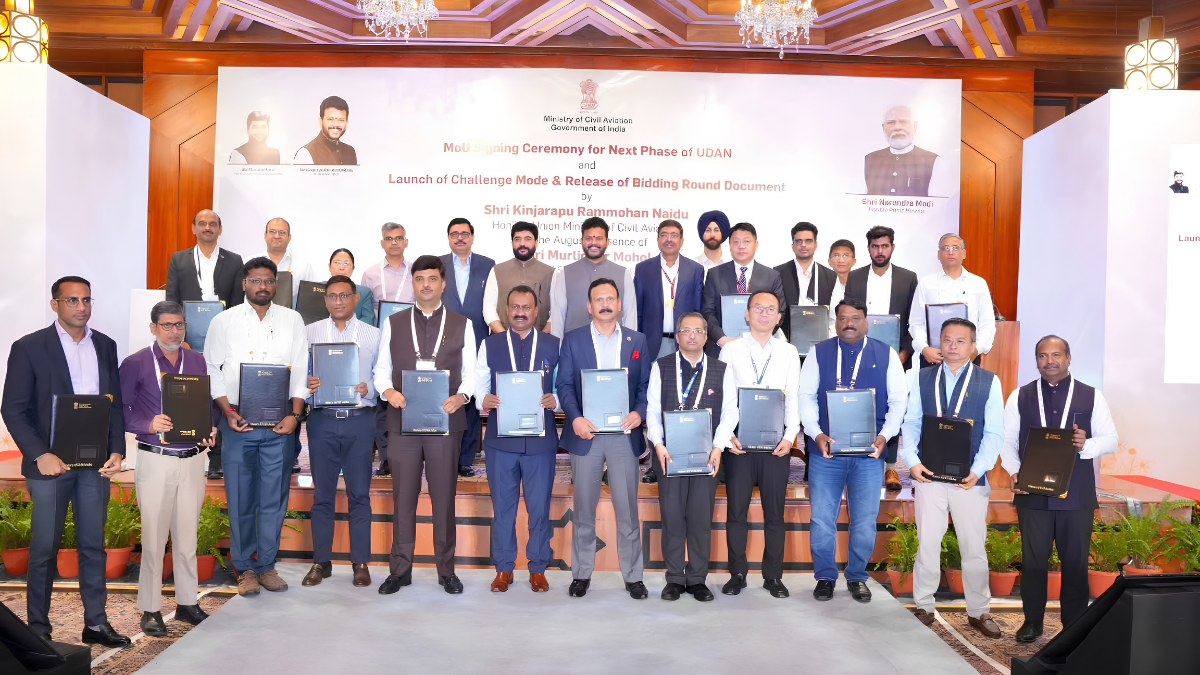
Press Information Bureau records that the Ministry of Civil Aviation finalized these agreements on September 22, 2026. Union Minister Ram Mohan Naidu led the signing ceremony in New Delhi. Officials want to bridge the gap between large metropolitan hubs and remote districts.
The updated policy targets one hundred and twenty new destinations and four crore additional passengers over the coming decade. The government introduced a transparent Challenge Mode portal. State administrations can now nominate local airstrips directly through this digital system.
Headlines promise rapid connectivity for remote towns. The fine print tells a different story about municipal bottlenecks. State governments must acquire the required land and clear local roadblocks before central funds unlock. If a local administration moves slowly on land titles, the eighteen-month construction clock never starts ticking. Central money cannot fix local bureaucratic inertia.
Key financial allocations and operational targets under the Modified UDAN scheme
| Metric | Official Target | Operational Reality |
| Financial Outlay | ₹28,840 crore | Spread across 10 years from FY 2026–27 |
| Airport Target | 100 new airports | Dependent on state land acquisition |
| Subsidy Window | 5 years | Tapered viability gap support |
| Construction Cap | 18 months | Clock starts only after ground work begins |
Earlier iterations of the regional scheme suffered from high route mortality after initial subsidies expired. Under the older regional connectivity rollout launched in 2016, airlines operated 687 routes across 95 aerodromes. Many regional flights vanished the moment financial support stopped because passenger volumes could not sustain market-rate fares. The new framework attempts to fix this by extending support windows, yet underlying passenger economics in remote sectors remain fragile.
ⓘ Sponsored: Unbox Daily HQ earns a commission if you buy through these links, at no extra cost to you. Prices shown are subject to change, and the actual price on Amazon at the time of purchase may vary from what is displayed here.
Citizens living in tier-two and tier-three towns stand to gain the most if their state governments secure funding through the new portal. Remote communities in hilly regions and northeastern states will also see new helipads. Commuters on major metropolitan trunk routes will notice no change since this policy targets unserved airspace. Readers can examine our detailed breakdown on ₹28,840Cr Modified UDAN brings 100 new airports to India to understand the wider financial architecture.
Aviation sector jobs grew from three million in 2014 to nearly seven point seven million today according to official ministry data.
The Unboxed Truth
Unbox Daily HQ cuts through the official press release to find the mechanics that actually matter in the Modified UDAN framework. The scheme brings much-needed capital to neglected air routes. Yet it leaves execution entirely in the hands of state bureaucracies that historically struggle with land acquisition. Readers should look past the headline destination count and check whether their local administration has actually cleared the land titles required for the portal.
Best for: Residents of unserved regional towns and regional business travelers.
Who is this for: Adults aged 20 to 45 living in tier-two or tier-three districts.
Courtesy: Press Information Bureau
The Modified UDAN scheme officially entered its implementation phase across India on September 22, 2026. Twenty-one states signed formal agreements in New Delhi to roll out the next regional connectivity phase. This national framework allocates ₹28,840 crore over ten years starting from fiscal year 2026 to 2027.
The framework introduces a transparent Challenge Mode portal enabling state administrations to nominate local airstrips directly. It extends financial support for airline operators on unviable routes from three years to five years. This addresses high route mortality seen in earlier regional connectivity rollouts across India.
The scheme is best for residents of unserved regional towns and regional business travellers. Specifically, this framework targets adults aged 20 to 45 living in tier-two or tier-three districts across India. It delivers vital regional aviation connectivity through transparent state-level infrastructure development.