Thursday, May 28, 2026 |Navi Mumbai
--:-- | --°C | AQI --
If it's not on Unbox Daily HQ, it's not a Launch. Every product, policy and brand launch in India. One hub. What's new?
The interoperable pass requires no KYC and works across metros, buses, and retail outlets nationwide.
The Essentials
The Pulse
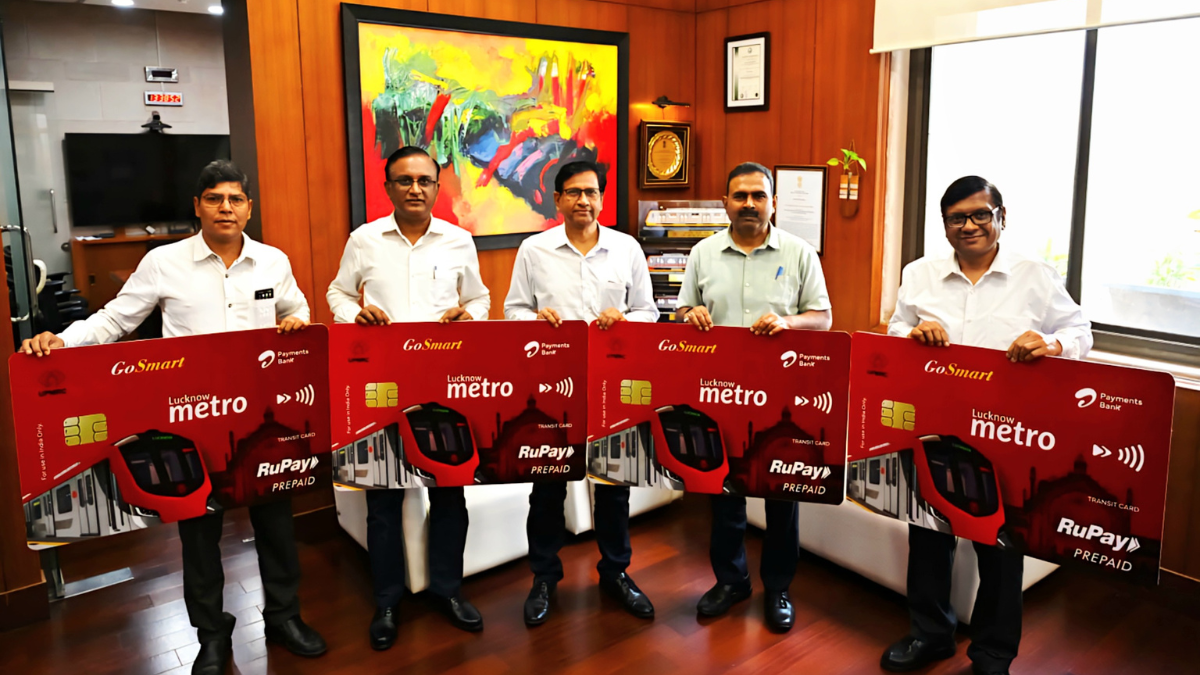
The Uttar Pradesh Metro Rail Corporation brings the National Common Mobility Card to Lucknow, aligning the city with the central government’s One Nation One Card initiative. The 21 July 2026 deployment follows similar integrations in Kanpur and Agra, gradually linking the state’s fragmented transit networks into a single cohesive grid.
Commuters asking if they must discard their existing passes will find that older Go Smart cards remain active for now, though a free exchange window will operate at stations for thirty days. The transition addresses the long-standing friction of interstate travel, where professionals previously needed half a dozen different local cards for domestic transit.
By partnering with 23 participating banks and using Airtel Payments Bank for distribution, the infrastructure moves away from isolated metro ticketing counters. This allows existing bank-issued NCMC holders from other states to walk directly into Lucknow Metro stations without queuing for a new local pass.
The Breakdown
ⓘ Sponsored: Unbox Daily HQ earns a commission if you buy through these links, at no extra cost to you. Prices shown are subject to change, and the actual price on Amazon at the time of purchase may vary from what is displayed here.
The physical card operates on an open-loop framework and requires no formal documentation for issuance, using mobile OTP verification at the point of sale. The financial architecture limits recharges to a maximum of ₹2,000 per transaction, establishing it strictly as a transit and micro-payment instrument. Recharging infrastructure spans digital and physical touchpoints, including Ticket Vending Machines, the Airtel Thanks App, and Airtel Payments Bank kiosks. A dedicated QR code printed on the reverse side of the card enables direct smartphone scanning for instant balance top-ups, bypassing the need for physical counter interactions entirely.
The Distinction
The primary differentiator of the Lucknow Metro NCMC is its structural shift from a closed-loop transit token to an open-loop, interoperable financial instrument. Competing older systems, like the existing Go Smart pass, restrict usage to a single city’s infrastructure. This card introduces a universal standard that functions across buses, parking facilities, retail services, and other metro networks across the country. It achieves this without requiring traditional KYC documentation, relying instead on instant OTP verification for immediate deployment at the station.
The Snapshot
| Feature | Specification |
| Product | National Common Mobility Card (NCMC) |
| Network | Lucknow Metro |
| Issuance Fee | ₹100 |
| Recharge Limits | ₹100 to ₹2,000 |
| KYC Requirement | None (OTP verification based) |
| Participating Banks | 23 |
| Legacy Card Exchange | Free within 30 days |
The Big Picture
India’s domestic transit sector has historically suffered from closed-loop inefficiency, with cities like Mumbai, Bengaluru, and Delhi operating isolated ticketing networks for years. The Union government’s push for a unified standard attempts to replicate the interoperability of systems like London’s Oyster or Hong Kong’s Octopus card, but on a national scale. Integrating Lucknow alongside Kanpur and Agra indicates that tier-two urban centres are adopting open-loop transit architecture faster than some legacy metro networks, standardising how domestic travellers navigate public transport.
The India Prospective
For the domestic professional frequently commuting between Mumbai, Delhi, and Uttar Pradesh, this rollout eliminates the need to hoard city-specific transit cards. At ₹100, the entry barrier is identical to legacy local cards but offers national utility. The integration with 23 local banks and digital top-ups via the Airtel Thanks app aligns perfectly with India’s modern payment habits, removing reliance on physical cash counters and exact change.
The Inside Intel
Despite being a government-mandated transit pass, the physical deployment relies entirely on private telecommunications infrastructure for its distribution. Airtel Payments Bank manages the station kiosks and digital recharges, effectively outsourcing the retail and top-up friction away from the metro corporation’s own administrative framework.
The Unboxed Truth
Unbox Daily HQ considers this a mandatory upgrade for regular commuters, the new architecture fundamentally changes how you interact with public transport across state lines.
At a ₹100 issuance fee, it costs the exact same as a standard coffee, making the transition essentially risk-free. For a transit tool that doubles as a retail micro-payment instrument, that represents honest utility. The true value lies in the immediate OTP-based issuance, bypassing the tedious paperwork usually associated with bank-linked transit cards.
The ability to scan a QR code on the back of the card to top it up via smartphone removes the single biggest friction point of daily travel: queuing at physical ticket machines during morning rush hour.
Best for: frequent domestic travellers who require immediate access to local transit networks without standing in ticketing queues.
Who Is This For: Perfect for 28 to 50-year-old travelling professionals in India who frequently navigate between tier-one cities and emerging urban centres.
The Checkout
Uttar Pradesh Metro Rail Corporation
The Source
Uttar Pradesh Metro Rail Corporation Ltd.
The Query
The Lucknow Metro National Common Mobility Card costs ₹100 for issuance, with top-ups available from ₹100 to ₹2,000. It is available instantly at Airtel Payments Bank kiosks across Lucknow Metro stations using basic OTP verification. Existing bank-issued NCMC holders can use their cards directly without paying an additional fee.
Unlike the closed-loop Go Smart card restricted to Lucknow Metro, the NCMC functions as an open-loop transport card valid across national metros, buses, parking, and retail services. It eliminates city-specific ticketing counters by allowing digital recharges through the Airtel Thanks App and station TVMs.
Yes, the card is a mandatory upgrade for frequent domestic travelling professionals who navigate public transport across different Indian cities. At an issuance fee of ₹100, it delivers nationwide interoperability, no KYC friction, and instant QR-code digital top-ups that eliminate physical ticket queueing entirely.