Thursday, May 28, 2026 |Navi Mumbai
--:-- | --°C | AQI --
If it's not on Unbox Daily HQ, it's not a Launch. Every product, policy and brand launch in India. One hub. What's new?
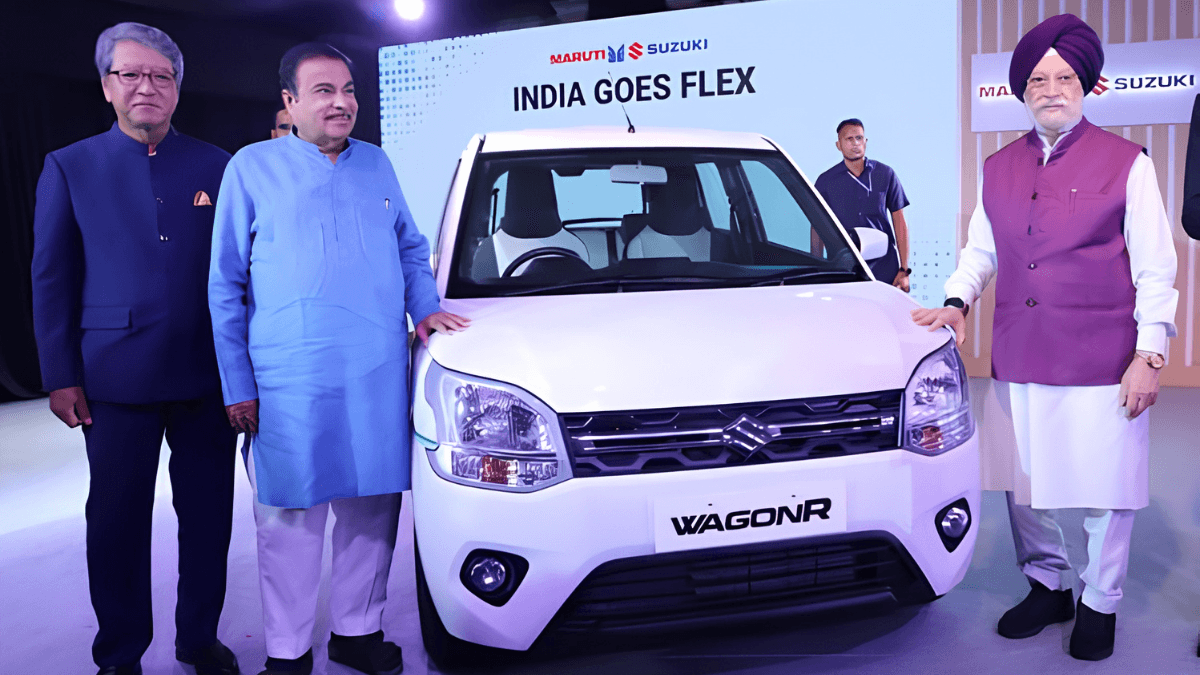
The Union government has detailed a roadmap for E85 fuel outlets to support this Maruti Suzuki passenger vehicle.
The Essentials
The Pulse
Maruti Suzuki has delivered a passenger vehicle that does not rely solely on petrol, running instead on flex-fuel blends up to E100. This is a direct shift away from standard internal combustion engines, allowing drivers to fuel up using high-ethanol mixtures that are actively being subsidised to reduce crude oil imports.
If you are wondering where to find this fuel, the government is currently rolling out an initial network of dedicated retail outlets. The plan identifies E85 as the standard mono-fuel under BIS specifications, aiming to establish 500 stations by December 2026, and scaling up to 5,000 across major cities by the end of 2027.
For drivers, this transitions ethanol from a background blending mandate handled by refineries into a direct consumer choice at the pump.
The Snapshot
ⓘ Sponsored: Unbox Daily HQ earns a commission if you buy through these links, at no extra cost to you. Prices shown are subject to change, and the actual price on Amazon at the time of purchase may vary from what is displayed here.
| Specification | Details |
| Product | Maruti Suzuki Flex-Fuel Passenger Vehicle |
| Fuel Compatibility | E20 up to E100 |
| Mono-Fuel Standard | E85 (BIS specifications) |
| Initial Fuel Network | Delhi-NCR, Mumbai-Pune-Nagpur |
| Classification | Zero-Emission Vehicle (E85) |
| India Price | Price not yet confirmed |
The Big Picture
The automotive industry is rapidly hedging its bets beyond battery electric vehicles. With Hero MotoCorp also introducing flex-fuel motorcycles, the internal combustion engine is finding a second life through alternative fuels. By hitting its 20 percent ethanol blending target five years ahead of schedule, the Indian government is aggressively building an agricultural supply chain to reduce crude oil dependency. If half of all new two and four-wheelers make this switch, it creates a ₹12,403 crore domestic market for farmers while maintaining the familiar refuelling habits of drivers.
The India Prospective
For a daily commuter in Mumbai or Delhi, this means a practical alternative to the high upfront cost of electric vehicles, without remaining entirely dependent on volatile petrol prices. The government is actively working on road tax concessions and pricing support to make flex-fuel cars competitive from day one. Early adopters living along the initial Mumbai-Pune-Nagpur or Delhi-NCR fuel corridors will be the first to test whether E85 pumps can genuinely rival the convenience of traditional petrol stations.
The Inside Intel
NITI Aayog officially classifies flex-fuel vehicles running on high blends like E85 as Zero-Emission Vehicles. Because E85 fuel produces near-zero particulate matter, these cars are placed in the same regulatory conversation as fully electric vehicles despite still using internal combustion engines.
The Unboxed Truth
Unbox Daily HQ recommends holding off on any purchase decisions until the dedicated E85 pumps are actually operational in your specific city. While the ability to run on pure ethanol is a brilliant engineering answer to high petrol costs, you do not want to be stuck hunting for specialised fuel stations on your morning commute. The government is promising supportive measures like road tax concessions, which could make this highly lucrative, but owning one only makes sense once the targeted 500 outlets are live. Keep an eye on this category over the next year as Maruti confirms the final retail price.
Best for: Early technology adopters living in the Delhi-NCR or Mumbai-Pune corridors who want a greener alternative to pure petrol.
Who Is This For: Perfect for 30 to 45-year-old daily commuters in major metros who regularly drive long distances and want lower running costs without electric vehicle range anxiety.
The Checkout
The Source
Ministry of Petroleum & Natural Gas | PIB.GOV.
The official purchase price for this passenger vehicle has not yet been confirmed. Initial availability will focus on drivers within the Delhi-NCR and Mumbai-Pune-Nagpur corridors. The government is supporting the launch by rolling out an initial network of 50 to 100 dedicated fuel outlets in these regions.
Unlike standard vehicles that rely solely on petrol, this engine is designed to operate on varying ethanol-petrol blends ranging from E20 up to E100. It runs on high-ethanol mixtures like E85, which produces near-zero particulate matter and is officially classified by NITI Aayog as a Zero-Emission Vehicle. This allows drivers to lower emissions while maintaining the familiar refuelling habits of traditional internal combustion engines.
It is currently best to hold off on a purchase until dedicated E85 fuel pumps are fully operational in your specific city. The vehicle is ideal for 30 to 45-year-old daily commuters in major metros who want lower running costs without electric vehicle range anxiety. However, owning one only makes practical sense once the initial network of fuel outlets becomes active.