Thursday, May 28, 2026 |Navi Mumbai
--:-- | --°C | AQI --
If it's not on Unbox Daily HQ, it's not a Launch. Every product, policy and brand launch in India. One hub. What's new?
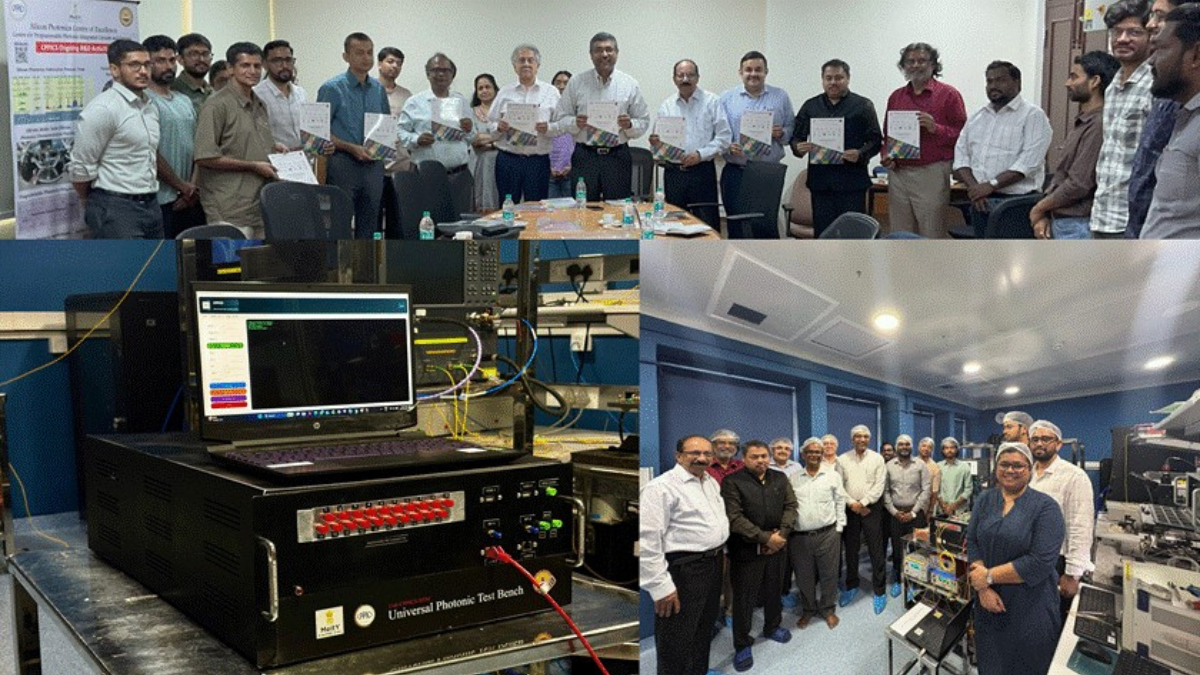
IIT Madras introduces a local design kit and test engine to reduce reliance on foreign semiconductor technology.
The Essentials
The Pulse
India is establishing its own infrastructure for photonic chip development through a new shared national facility at IIT Madras. The Silicon Photonics Process Design Kit (PDK) provides a library of over 50 verified components, allowing Indian engineers to build high-speed circuits for data centres and telecommunications. This move addresses the growing need for indigenous semiconductor solutions in a market traditionally reliant on imported design tools.
What is the Silicon Photonics PDK in India? It is a standardised set of design rules and verified building blocks that allow local startups and researchers to create reliable photonic integrated circuits. By using these tools, Indian companies can ensure their designs are compatible with manufacturing processes at global foundries.
A universal test engine also simplifies the characterisation of these chips, which is a critical step before they enter mass production. Starting in the third quarter of this financial year, the centre plans to offer fabrication runs alongside packaging and testing services. This integrated approach helps bridge the gap between initial research and final product manufacturing within the country.
The Snapshot
ⓘ Sponsored: Unbox Daily HQ earns a commission if you buy through these links, at no extra cost to you. Prices shown are subject to change, and the actual price on Amazon at the time of purchase may vary from what is displayed here.
| Feature | Details |
| Solution Name | Silicon Photonics PDK & PPIC Test Engine |
| Developing Institute | IIT Madras (CoE-CPPICS) |
| Sponsoring Ministry | Ministry of Electronics and Information Technology (MeitY) |
| PDK Library Size | 50+ verified components |
| Fabrication Timeline | Starting Q3 Financial Year 2026-27 |
| Foundry Partner | SilTerra Malaysia |
| Packaging Partner | izmo Microsystems, Bengaluru |
| User Eligibility | Industry, startups, academia and defence R&D |
| Applications | Classical and Quantum Photonics |
The Big Picture
The global semiconductor industry is shifting towards integrated photonics to overcome the speed limitations of traditional electronic chips. While global giants like Intel and TSMC lead this space, India is carving its own niche through the India Semiconductor Mission. This local development represents a strategic pivot towards technology sovereignty, ensuring that Indian firms have the tools to compete in the high-growth quantum and classical computing sectors. It moves the conversation from simple assembly to high-value chip design and verification on home soil.
The Inside Intel
The IIT Madras facility operates on a unique Product Research, Development and Manufacturing (PRDM) model. Instead of just conducting theoretical research, the centre links directly with SilTerra in Malaysia for fabrication and izmo Microsystems in Bengaluru for packaging. This end-to-end pipeline ensures that a chip designed in Chennai can be fully tested and packaged within a coordinated, professional supply chain.
The UDHQ. Take
Unbox Daily HQ. views this as a vital step for India’s high-tech ambitions rather than just another academic milestone. For years, Indian hardware startups faced high barriers to entry due to the cost and complexity of accessing international design kits. By providing a verified library of 50 components, this facility lowers the threshold for innovation. It is a practical, middle-class approach to deep-tech: sharing expensive resources to help everyone grow.
While it may not impact the average smartphone user tomorrow, it lays the groundwork for faster, more efficient Indian data centres and communication networks. The focus on a shared national facility ensures that even smaller players can experiment without needing massive capital. This is true value for money for the Indian R&D community, turning theoretical designs into tangible hardware.
Best for: Hardware engineers and deep-tech founders in India who need a cost-effective way to prototype and test photonic integrated circuits.
Who Is This For: Perfect for 22–45 year old researchers and tech entrepreneurs in Bengaluru, Chennai and other tech hubs who require verified semiconductor design tools for local manufacturing.
The Checkout
The Source
Ministry of Electronics and Information Technology | IIT Madras