Thursday, May 28, 2026 |Navi Mumbai
--:-- | --°C | AQI --
If it's not on Unbox Daily HQ, it's not a Launch. Every product, policy and brand launch in India. One hub. What's new?
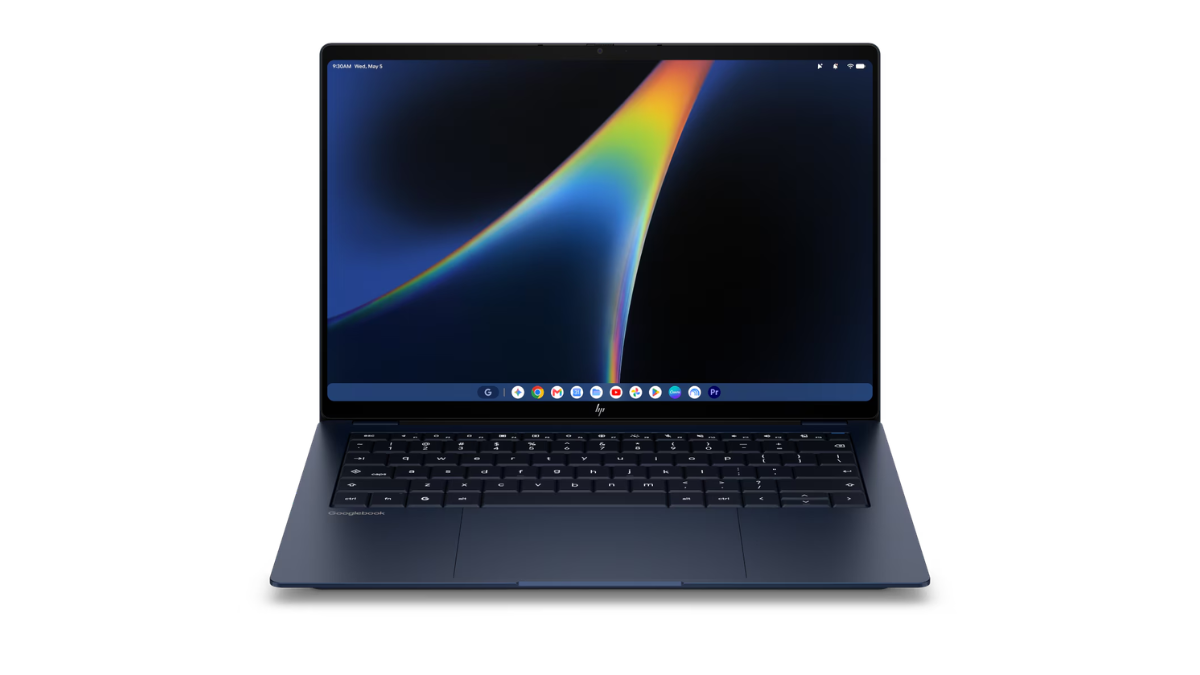
HP Googlebook 14 replaces traditional Windows software with Qualcomm silicon and an Android desktop system.
The Takeaway
HP begins selling the HP Googlebook 14 across North American stores on 4 October 2026. This machine scraps standard Windows code. Instead, it runs Googlebook OS, an operating system built on Android code to deliver phone applications on a laptop screen. Additional shipments reach Britain, Canada, Australia, France, and Germany on 5 October 2026. Indian buyers must wait, as local retail availability remains unscheduled.
Qualcomm supplies the computational base with its Snapdragon X Elite platform. Qualcomm pairs this chip with an NPU, or Neural Processing Unit, rated at 45 TOPS (trillion operations per second) to handle local machine learning tasks. Technical reports indicate HP fitted a vapour chamber cooling system inside the 10.91-millimetre aluminium chassis. When you open a notebook this thin, thermal dissipation depends entirely on unobstructed airflow through ultra-narrow exhaust vents. A modest layer of household dust will choke those microscopic copper fins, forcing the processor to throttle performance under prolonged workloads.
Software execution marks the genuine break from traditional computers. While HP limits its new Ferrari OLED laptop to just 4,999 units for sports car enthusiasts, this machine targets everyday office desks. It installs Android APK (Android Package) files directly onto the storage drive. Hardware integration connects with Android 17 smartphones through Cast My Apps, letting you project phone applications without running third-party emulator tools. A dedicated keyboard button called Rambler handles speech dictation into formatted text paragraphs. Cursor navigation includes Magic Pointer, which sends on-screen text and graphics to cloud servers to answer contextual prompts.
HP Googlebook 14 technical specifications and pricing details
| Feature | Specification |
| Processor | Qualcomm Snapdragon X Elite |
| Neural Engine | 45 TOPS NPU |
| Operating System | Googlebook OS |
| Display | 14-inch 3K OLED touch, 120Hz |
| Memory | 16 GB or 32 GB |
| Storage | 512 GB or 1 TB SSD |
| Chassis Thickness | 10.91 mm |
| Weight | 1.24 kg (2.74 lbs) |
| Starting Price | ₹1,24,000 (approx. $1,299) |
At roughly ₹1,24,000 before local import duties, this machine enters direct competition with the Apple MacBook Air M3. Apple offers decades of established desktop software optimisation and predictable local battery drains. Google and HP counter with mobile phone synchronisation and 12 months of bundled Google AI Pro cloud access. Yet corporate professionals who need native Windows software will hit a wall. Traditional executable files ending in dot-exe do not install here.
ⓘ Sponsored: Unbox Daily HQ earns a commission if you buy through these links, at no extra cost to you. Prices shown are subject to change, and the actual price on Amazon at the time of purchase may vary from what is displayed here.
Operating this laptop outside air-conditioned rooms will expose genuine physical trade-offs. The brand claims battery endurance reaches up to 19 hours for web tasks; we could not independently verify this figure because internal manufacturer trials ran at a dim 200 nits of brightness. Cranking the 3K OLED panel past 400 nits to combat harsh Indian daylight will deplete the cells far quicker. Ambient room temperatures above 38 degrees Celsius will also strain the tiny internal fans. Furthermore, core features like cursor intelligence require an active cloud connection. Intermittent mobile hotspot connections during a train commute will stall those background queries. HP claims its massive authorised service network will support this hardware across India; we could not independently verify whether regional technicians possess the diagnostic tools or training required to troubleshoot a first-generation operating system.
Standard desktop design programs do not function here. Retouching a photograph requires either web tools or mobile phone versions like Adobe Lightroom for Android.
The Unboxed Truth
At Unbox Daily HQ, our testing metric looks past launch brochures: will this laptop still work, and will the brand still support it, after launch week ends? Purchasing the HP Googlebook 14 requires trusting that third-party developers will actively maintain Android applications for desktop screens over the coming years. First-generation hardware platforms often face abandoned software catalogues once corporate priorities shift. You get a sharp OLED display and immediate phone mirroring today. However, you surrender decades of backwards software compatibility. You should skip this laptop unless your daily workflow already operates entirely inside a Google Chrome browser.
Best for: Writers and web-based administrators.
Who Is This For: Users aged 22 to 45.
Courtesy: HP
The HP Googlebook 14 starts globally at an equivalent of approximately ₹1,24,000 for the base 16 GB memory and 512 GB storage model. Retail sales open across North American shops on 4 October 2026 before expanding to Europe and Australia. India remains excluded from the first release schedule, leaving domestic pricing and availability unconfirmed.
The HP Googlebook 14 operates on an Android foundation with Qualcomm Snapdragon X Elite silicon, whereas the Apple MacBook Air M3 uses macOS desktop software. HP integrates mobile phone synchronisation and a 45 TOPS neural processing engine, but the device lacks support for legacy computer applications.
Skip the HP Googlebook 14 unless your daily computing routine runs entirely inside a browser, making it practical only for writers and administrators aged 22 to 45. The device abandons traditional PC software compatibility in favour of mobile application ports. First-generation operating systems also risk losing long-term developer support once initial corporate enthusiasm wanes.