Thursday, May 28, 2026 |Navi Mumbai
--:-- | --°C | AQI --
If it's not on Unbox Daily HQ, it's not a Launch. Every product, policy and brand launch in India. One hub. What's new?
The guide reverses the historical wasteland label to safeguard scrublands, deserts and vital native biodiversity.
The Takeaway
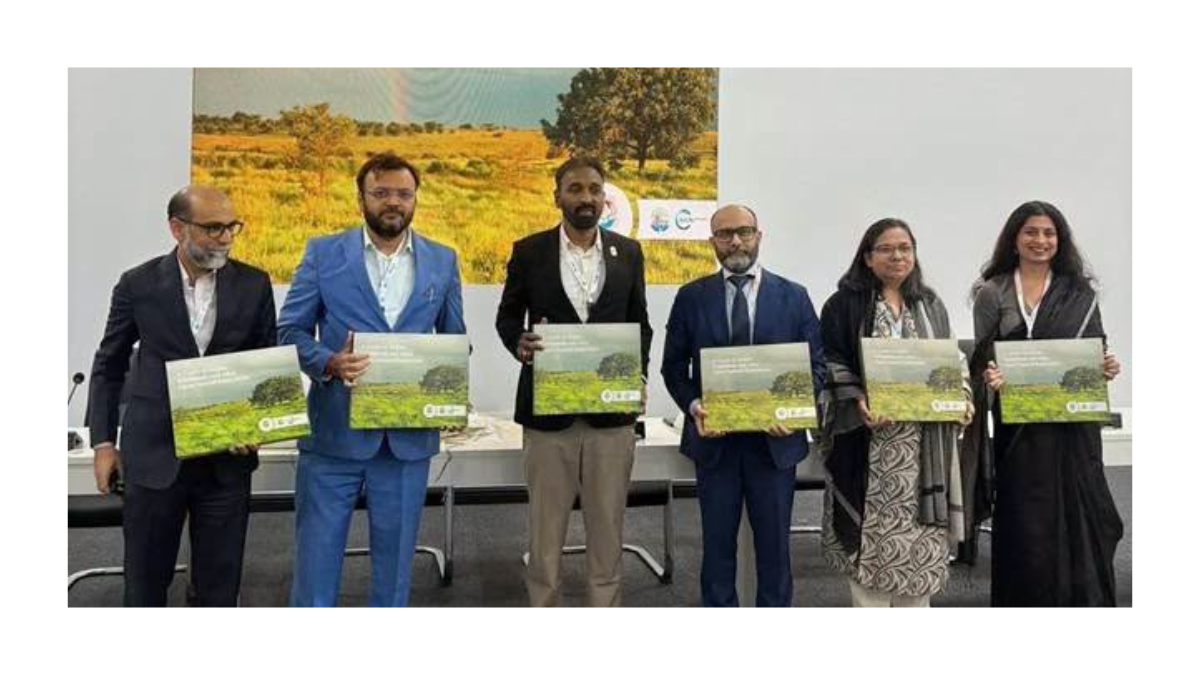
The Ministry of Environment, Forest and Climate Change formally introduced the Guide to Grasslands and Other Open Natural Ecosystems of India at the UNCCD COP17 summit in Ulaanbaatar. The ministry developed this document alongside the Ashoka Trust for Research in Ecology and the Environment (ATREE), the IUCN, ICFRE and ISRO’s Space Applications Centre. This collaboration outlines a science-based framework for environmental preservation across the subcontinent. It provides a standard rulebook to stop ecologically damaging projects on lands traditionally ignored by forest-centric conservation models.
The resource maps critical habitats like the Thar and Banni terrains, Himalayan meadows, coastal regions, ravines and rocky plateaus. It establishes specific thematic guidelines covering pastoralism, fire ecology and soil carbon sequestration. Planners now have a clear baseline to differentiate a healthy savanna from actual degraded land. This distinction prevents well-meaning but destructive land-use policies. Planting dense trees in habitats where native wildlife require wide, open spaces to survive is now actively discouraged.
The genuine shift here is the formal scientific rejection of the wasteland classification for non-forest habitats. Historically, policies allowed commercial development or aggressive tree-planting on open terrain simply because it lacked a dense canopy. The Guide to Grasslands actively reverses this approach. It confirms that these open ecosystems shelter rare, endemic species found nowhere else on earth and demand the same level of protection as dense jungles.
Grassland ecosystem policy parameters
| Parameter | Details |
| Ecosystems classified | 24 distinct open natural types |
| Key landscapes covered | Himalayan grasslands, Thar, Banni, Deccan savannas |
| Thematic focus areas | Pastoralism, fire ecology, carbon sequestration |
| Debut event | UNCCD COP17, Ulaanbaatar, Mongolia |
| Availability | Confirmed for policymakers and stakeholders in India |
Protecting these varied terrains aligns with broader national efforts to support rural populations who rely directly on the land for their livelihoods. While rural initiatives often focus on direct financial support, such as how monthly scholarship transfers reach 6,000 agriculture students, securing grazing commons offers long-term economic stability for nomadic herders. The framework ensures pastoralists maintain legal access to the pastures essential for their livestock.
ⓘ Sponsored: Unbox Daily HQ earns a commission if you buy through these links, at no extra cost to you. Prices shown are subject to change, and the actual price on Amazon at the time of purchase may vary from what is displayed here.
The policy directly shields traditional land-use systems specific to western India. It specifically recognises the community-protected Oran sacred groves and gauchar village grazing lands in places like Ajmer, Rajasthan. Recognising these cultural landscapes prevents them from being appropriated for solar farms or industrial zones under the guise of land recovery. Surprisingly, planting trees in these natural scrublands can actually destroy the habitat of threatened species. This makes the ban on inappropriate afforestation crucial for local wildlife.
The Unboxed Truth
You will find Unbox Daily HQ fully behind this long-overdue correction in environmental policy. This framework finally stops developers from bulldozing vital scrublands under the excuse that they are just empty lots. By treating open ecosystems with the same reverence as dense forests, it hands local herders a vital legal shield to protect their traditional pastures from commercial land grabs.
Best for: Environmental researchers, conservation planners and pastoral communities.
Who Is This For: Policymakers and conservation professionals aged 30 to 50.
Courtesy: Ministry of Environment, Forest and Climate Change
The Guide to Grasslands and Other Open Natural Ecosystems of India is not a commercial product available for purchase. It is an official policy framework released for conservation practitioners, development agencies, and policymakers. The resource is confirmed for immediate institutional use across India following its international debut in Mongolia.
The framework formally rejects the historical practice of labelling non-forest terrains as wastelands. It provides clear scientific rules that actively discourage destructive tree-planting drives on natural grasslands and scrub habitats. This grants open landscapes the same level of environmental protection and conservation focus as dense forests.
The framework is essential because it stops developers from bulldozing vital scrublands under the pretext of them being empty lots. It provides pastoralists and researchers aged 30 to 50 with a legal shield to protect traditional grazing commons. This makes it a crucial resource for professionals managing landscape-scale conservation across India.