Thursday, May 28, 2026 |Navi Mumbai
--:-- | --°C | AQI --
If it's not on Unbox Daily HQ, it's not a Launch. Every product, policy and brand launch in India. One hub. What's new?
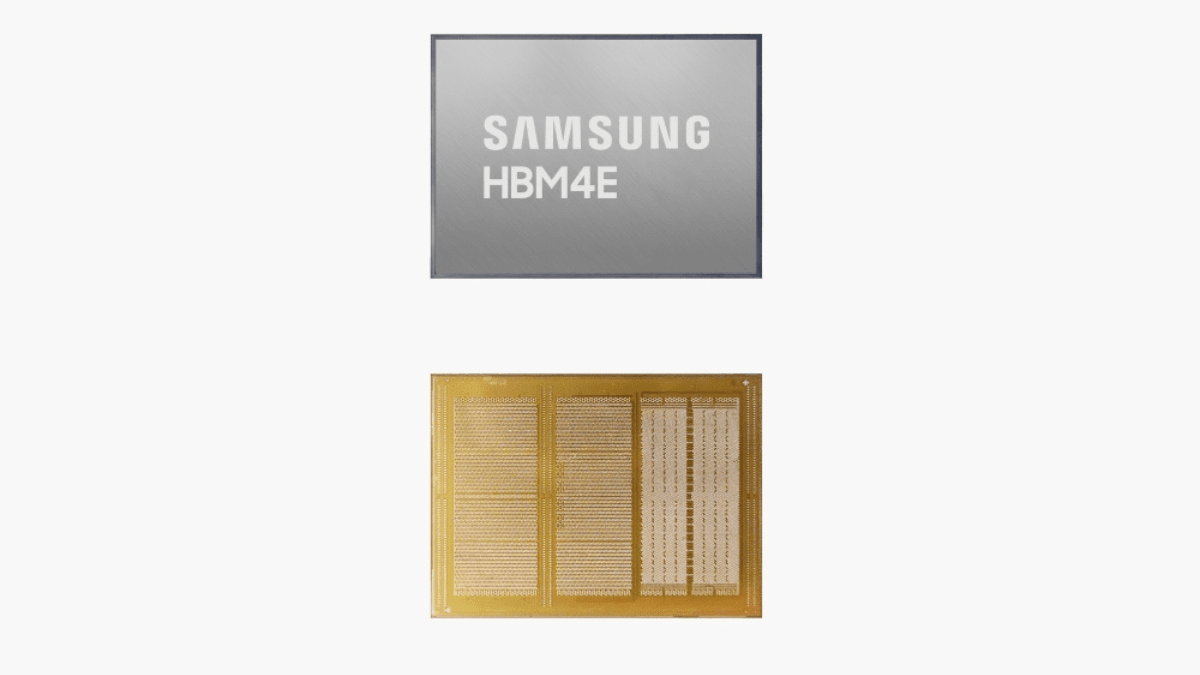
Samsung begins supplying 48GB hardware samples to enterprise clients to handle intense datacentre computations.

The Essentials
The Pulse
The actual limitation in artificial intelligence infrastructure right now is memory bandwidth rather than processor speed. Samsung is targeting this infrastructure bottleneck directly by distributing high-bandwidth memory modules that move up to 3.6 terabytes of data per second within a single stack. This technical capability ensures that complex digital models receive data fast enough to prevent processing delays.
How fast does Samsung HBM4E transfer data? The new hardware delivers a stable pin speed of 14Gbps that scales up to 16Gbps during intense calculations. Because this is a global business-to-business hardware rollout, enterprise clients and server facilities operating in India can integrate these evaluation units directly into their custom infrastructure setups today.
The engineering focus centres on thermal control to maintain stability during prolonged datacentre operations. Stacking twelve layers of memory normally traps heat, but structural updates reduce thermal resistance by more than 14 percent compared to earlier components. This reduction in operating temperatures allows infrastructure managers to run heavy processing cycles without triggering extreme cooling expenses.
The Snapshot
ⓘ Sponsored: Unbox Daily HQ earns a commission if you buy through these links, at no extra cost to you. Prices shown are subject to change, and the actual price on Amazon at the time of purchase may vary from what is displayed here.
| Specification | Details |
| Component Type | 12-layer HBM4E memory |
| Peak Data Speed | 16Gbps |
| Bandwidth Capacity | Up to 3.6 TB/s per stack |
| Memory Storage | 48GB |
| Thermal Resistance | Improved by over 14 percent |
| Energy Efficiency | Increased by 16 percent |
| India Price | Enterprise component pricing not publicly disclosed |
| Availability | Available for enterprise sampling |
The Big Picture
The business-to-business silicon market is racing to supply hyperscale data infrastructure. While retail consumers look at graphics cards, cloud platforms look at high-bandwidth memory to determine their true processing capacity. Samsung is positioned against components from SK Hynix and Micron to secure bulk orders from global cloud providers. For Indian infrastructure companies like Yotta Data Services that are building massive server farms locally, adopting high-efficiency components is the only sustainable way to manage high cooling requirements.
The India Prospective
Operating server infrastructure in the Indian climate demands aggressive thermal management. The 14 percent improvement in thermal dissipation directly matches the requirements of local enterprise datacentres trying to lower their overheads. As cloud providers adopt this hardware, the resulting energy savings will eventually dictate the local rental costs of cloud processing power for Indian software developers.
The Inside Intel
The physical construction relies on a dual-architecture manufacturing method. Samsung uses its sixth-generation 10-nanometre-class DRAM process for the memory layers but places them on top of a 4-nanometre logic base die fabricated by its own foundry division. Integrating both of these internal production lines allows the company to optimise the underlying packaging for better structural stability and higher manufacturing yield.
The Unboxed Truth
Unbox Daily HQ views this engineering development as a shift in how cloud platforms manage operational overheads. Enterprise buyers who handle large-scale data processing should track these evaluation units because the thermal gains alter long-term server economics. Expect local server pricing configurations to reflect these efficiency updates as datacentres upgrade their hardware. The 16 percent reduction in energy consumption makes it a necessary standard for modern data farms. Businesses looking to optimise their compute budgets should prepare their infrastructure roadmaps for this standard.
Best for: Datacentre infrastructure managers who need to reduce cooling overheads.
Who Is This For: Perfect for 28 to 55-year-old technology directors in enterprise companies who plan hardware procurement for cloud-scale data operations.
The Checkout
Samsung Semiconductor – Global Page
The Source
Samsung Global
Samsung has made its 12-layer HBM4E memory components available globally for enterprise sampling, meaning server facilities operating in India can integrate these units directly into their infrastructure today. However, the exact timeline for full commercial distribution to Indian facilities and specific enterprise pricing remain unconfirmed. Because this is a business-to-business product, it will not be sold directly to retail consumers.
Samsung positions this hardware against its rivals by using a dual-architecture manufacturing method that places a 10-nanometre-class memory structure on top of a 4-nanometre logic base die. This specific packaging layout improves thermal resistance by more than 14 percent and boosts energy efficiency by 16 percent compared to earlier components. These changes allow datacentres to process up to 3.6 terabytes of data per second within a single stack while lowering their overall cooling expenses.
This hardware is built for technology directors and datacentre infrastructure managers in enterprise companies who oversee procurement for intensive cloud-scale operations. It is highly suited for local infrastructure providers, like Yotta Data Services, that need to manage aggressive cooling requirements within the Indian climate. Indian software developers will not purchase this hardware directly, but they should track it because its adoption will eventually dictate local cloud processing rental costs.