Thursday, May 28, 2026 |Navi Mumbai
--:-- | --°C | AQI --
If it's not on Unbox Daily HQ, it's not a Launch. Every product, policy and brand launch in India. One hub. What's new?
The Ministry of Commerce and Industry consolidates operations to target two trillion dollars in exports by 2030.
The Essentials
The Pulse
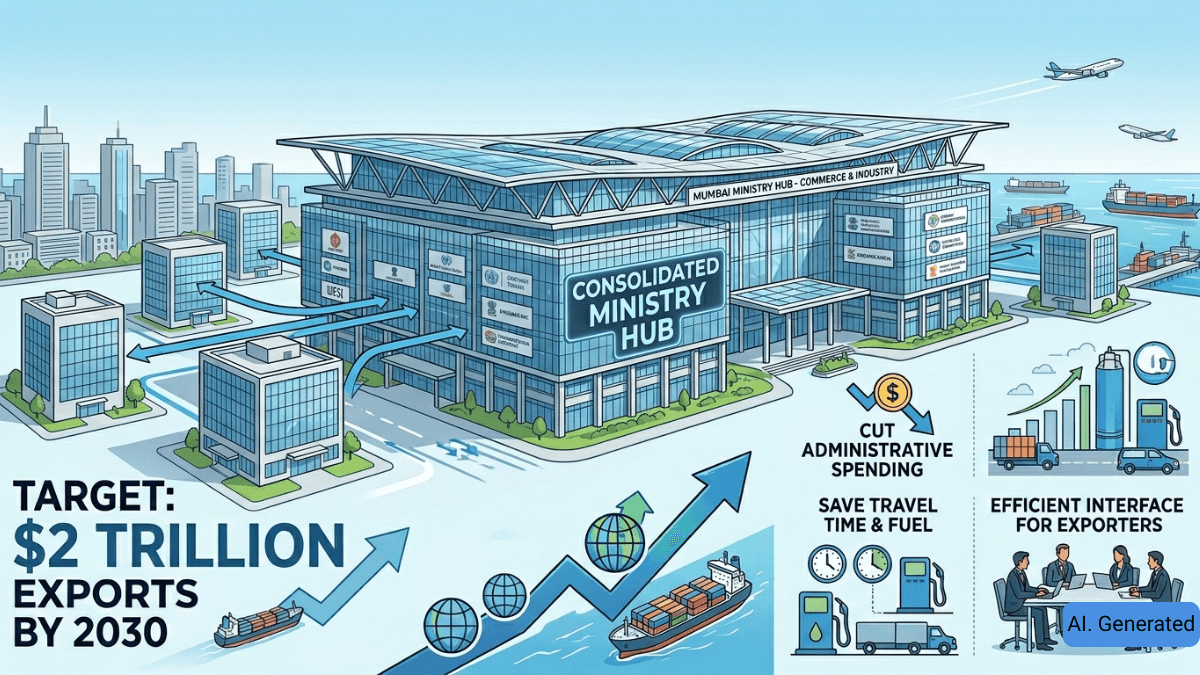
The government is bringing twenty different offices from twelve separate organisations together at a single point in Mumbai. Right now, these entities occupy lakhs of square feet of premium commercial space worth hundreds of crores of rupees across the city. Centralising them aims to make life simpler for common citizens and businesses who regularly interface with various government departments.
The new integrated commerce hub in Mumbai allows businesses to access forty-six different organisations under one roof to resolve their trade and administrative requirements. Exporters will gain a direct connection to trade facilitation channels through high-quality audio-visual infrastructure and dedicated personnel. Even statutory bodies without a physical branch in the city, such as the Spices Board, will become accessible through this centralised system.
This structural shift is designed to drive the aggressive export promotion missions of the country directly out of these offices. The primary goal is to help anchor the national export targets of one trillion dollars for this year and two trillion dollars by 2030. It will actively reduce unnecessary travelling for both the public and government officials while promoting green governance.
The Snapshot
ⓘ Sponsored: Unbox Daily HQ earns a commission if you buy through these links, at no extra cost to you. Prices shown are subject to change, and the actual price on Amazon at the time of purchase may vary from what is displayed here.
| Metric | Details |
| Location | Mumbai |
| Offices Co-located | 20 offices |
| Independent Organisations | 12 organisations |
| Total Connected Organisations | 46 organisations |
| Export Target This Year | $1 trillion (approximately ₹83,500,000,000,000) |
| Export Target by 2030 | $2 trillion (approximately ₹167,000,000,000,000) |
| India Price | Free to access |
The Big Picture
Bureaucratic delays have long been a major bottleneck for Indian business owners trying to scale globally. While private logistics firms and digital compliance platforms like Shiprocket simplify local shipping operations, dealing with multi-layered state bodies remains highly fragmented. Consolidating dozens of distinct departments under a single roof mirrors global administrative standards seen in major trade hubs like Singapore. If the government successfully cuts down physical hand-offs and structural friction, it will directly lower compliance timelines for local companies looking to compete on an international level.
The India Prospective
For an independent business operator in Mumbai, this structural consolidation means no longer travelling to twenty scattered locations across the city to clear export paperwork. Saving fuel and conserving energy directly impacts operational expenses. Common citizens needing to interface with any of the forty-six organisations under the ministry can complete their requirements at a single central hub, making everyday administrative work simpler and significantly reducing unnecessary transit across premium urban spaces.
The Inside Intel
Many business owners might not know that organisations without any physical branch in Mumbai will still be completely reachable through this new setup. For instance, the Spices Board does not maintain a dedicated physical office in the city, yet it is fully integrated into this centralised system. Dedicated personnel and high-quality audio-visual infrastructure will be stationed there specifically to connect stakeholders directly to these otherwise distant departments.
The Unboxed Truth
Unbox Daily HQ. suggests tracking this development closely if your enterprise depends on cross-border trade clearances. The facility is entirely worth your attention because it eliminates the classic bureaucratic run-around between multiple distinct locations. The single most valuable factor is having dedicated personnel stationed under one roof to handle your specific requirements across forty-six organisations simultaneously. If you are an entrepreneur or exporter operating out of western India, you should plan to migrate your compliance operations here the moment the doors open.
Best for: Mumbai-based independent exporters who need to clear paperwork across multiple government boards without wasting days in traffic.
Who Is This For: Perfect for 28 to 55 year old business owners and logistics managers in Maharashtra who want to cut down corporate compliance times and administrative travel.
The Checkout
Ministry of Commerce and Industry
The Source
Ministry of Commerce and Industry | PIB.GOV.
Accessing the new integrated facility is completely free for citizens and businesses. The hub centralises forty-six different organisations under one roof to handle trade requirements without charging any usage fees. This structural consolidation is designed to directly reduce your overall administrative and travelling costs.
While private platforms like Shiprocket simplify local shipping and logistics, they cannot clear official state regulatory approvals. This central hub provides direct physical and electronic access to forty-six different government organisations under a single roof to process official trade paperwork. It directly addresses the multi-layered state compliance systems that private platforms do not handle.
This facility is built for entrepreneurs, exporters, and logistics managers in western India who regularly interface with trade ministries. It is ideal for independent business operators who want to stop travelling to twenty separate locations across the city to clear paperwork. Enterprises whose specific trade boards lack a physical branch in Mumbai can also use this central point to connect via audio-visual infrastructure.