Thursday, May 28, 2026 |Navi Mumbai
--:-- | --°C | AQI --
If it's not on Unbox Daily HQ, it's not a Launch. Every product, policy and brand launch in India. One hub. What's new?
The Takeaway
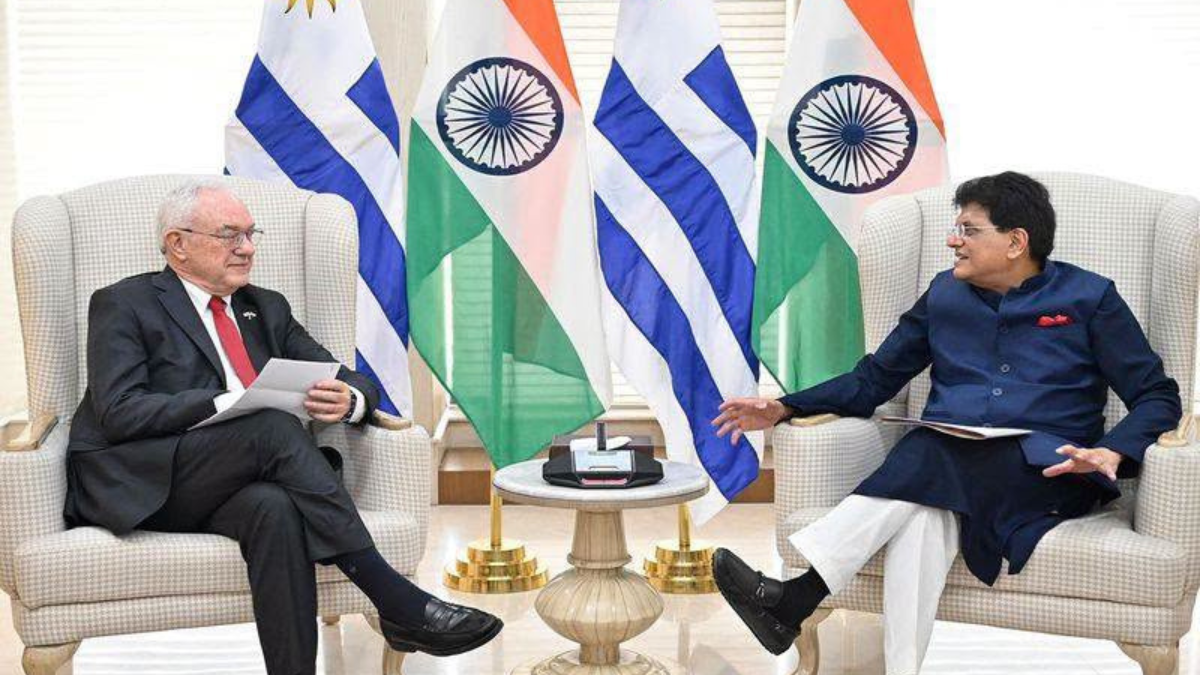
Ministry of Commerce and Industry started official expansion talks with South American trade bloc MERCOSUR on 14 September 2026. The dialogue occurred during Uruguay’s Pro Tempore Presidency. Union Minister Piyush Goyal and Foreign Minister Mario Lubetkin jointly led the meeting. Both sides intend to create stronger economic channels that directly benefit private sector companies operating across the participating countries.
The original framework took effect on 1 June 2009 with narrow boundaries. It encompasses 450 product categories from India alongside 452 items from the Latin American bloc. Participating nations include Argentina, Brazil, Paraguay, Uruguay, and Bolivia. Venezuela remains suspended from the trade grouping since 2016, placing it outside these discussions.
This negotiation push aims to convert a basic goods deal into a comprehensive framework. Adding services and investments creates fresh opportunities for commercial sectors left out of the initial pact.
India-MERCOSUR Preferential Trade Agreement trade statistics
| Indicator | Value |
| Operational Status | Active negotiations |
| Bilateral Trade (2024-25) | $17.48 billion |
| Indian Exports | $8.12 billion |
| MERCOSUR Imports | $9.36 billion |
Indian companies encounter significant freight charges alongside stringent regulatory requirements across Latin American markets. Lowering these administrative barriers mirrors how UPI implementation in Greece worked to minimize expense structures for cross-border money transfers.
ⓘ Sponsored: Unbox Daily HQ earns a commission if you buy through these links, at no extra cost to you. Prices shown are subject to change, and the actual price on Amazon at the time of purchase may vary from what is displayed here.
Expanding market access gives domestic IT providers and pharmaceutical exporters valuable growth avenues. India currently runs a trade deficit with the region, importing more goods than it sells. Wider commercial rules help balance this trade dynamic while opening long-term corporate pipelines.
The Unboxed Truth
At Unbox Daily HQ, this expansion of the India-MERCOSUR Preferential Trade Agreement stands out because it opens doors for service exporters. You should monitor these negotiations closely if your business relies on cross-border service contracts or foreign direct investment channels. Moving beyond physical goods gives Indian professionals direct entry into South American markets that were previously hard to penetrate.
Best for: Service exporters wanting expanded market access in South America
Who Is This For: Corporate strategy managers and export executives aged 28 to 50 years
Courtesy: Ministry of Commerce and Industry
The expanded India-MERCOSUR Preferential Trade Agreement is currently in its active negotiation phase with no confirmed implementation deadline. Businesses must continue operating under the original 2009 trade terms until new rules receive final ratification. Bilateral trade between the two regions reached 17.48 billion dollars during the 2024-25 financial year.
The expanded deal introduces services and investments into a framework previously restricted to physical goods trade. It also adds electronic Certificates of Origin to grant digital documents equal legal standing with physical paper. This structural addition reduces administrative friction and customs processing times for Indian service providers entering Latin American markets.
The expanded agreement provides clear commercial value for Indian service exporters and corporate strategy managers seeking reduced border paperwork. Moving beyond physical goods allows Indian professionals direct entry into previously restricted South American markets. This update creates direct avenues for domestic IT providers and pharmaceutical firms looking to balance India’s regional trade deficit.