Thursday, May 28, 2026 |Navi Mumbai
--:-- | --°C | AQI --
If it's not on Unbox Daily HQ, it's not a Launch. Every product, policy and brand launch in India. One hub. What's new?
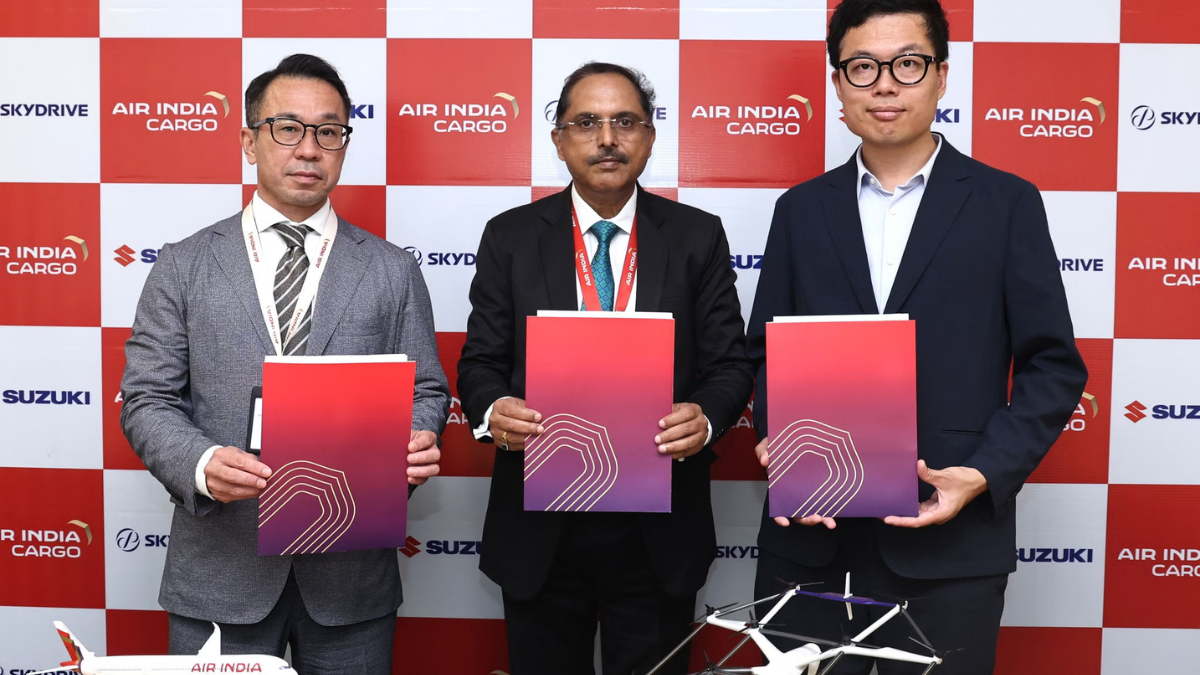
Three companies are studying aerial transit to bypass urban road delays for urgent healthcare supplies.
The Takeaway
Air India joins this joint mobility initiative as domestic aviation expands rapidly into a primary global market. Aerial transit provides a logical addition to traditional ground networks. Teams plan to establish operational flight guidelines. This joint research project evaluates safety, reliability, and scalability standards for emergency healthcare transit across crowded municipal areas throughout the region.
Vehicle engineering follows Suzuki’s ‘Sho-Sho-Kei-Tan-Bi’ approach. This philosophy translates to smaller, fewer, lighter, shorter, and neater dimensions. Cargo focus remains on high-value medical supplies. Suzuki connects its technical development role to its slogan, ‘By Your Side’.
Combining commercial airline expertise with compact vehicle manufacturing creates a unique multi-industry approach. Flying directly above ground traffic reduces transit times during critical care situations.
eVTOL medical air logistics study specs
| Organization | Sourced Contribution |
| Air India | Airport facility knowledge and stakeholder relationships |
| SkyDrive | eVTOL technology and aircraft manufacturing |
| Suzuki | Market insight and technology collaboration |
Indian metropolitan areas routinely experience severe traffic delays that impede ground ambulances and supply trucks. Testing aerial logistics directly addresses emergency healthcare delivery in heavily populated Indian cities.
ⓘ Sponsored: Unbox Daily HQ earns a commission if you buy through these links, at no extra cost to you. Prices shown are subject to change, and the actual price on Amazon at the time of purchase may vary from what is displayed here.
The Unboxed Truth
Unbox Daily HQ sees real promise in moving emergency medical shipments into the air. Ground traffic in major cities creates unpredictable delays during critical health emergencies. Bypassing road networks with small electric aircraft offers a practical solution for urgent care supply chains. You get faster transport options for life-saving deliveries without waiting for road traffic to clear.
Best for: Medical networks seeking faster transit for critical supplies.
Who Is This For: Healthcare administrators and urban logistics planners aged 28 to 50 managing emergency supply chains.
Courtesy: Air India, SkyDrive, and Suzuki
Commercial availability and service pricing remain unannounced because the initiative is currently a joint feasibility study. Air India, SkyDrive, and Suzuki are evaluating operational frameworks to establish flight safety guidelines. The partners aim to deploy these electric air vehicles across traffic-congested Indian metropolitan areas.
This initiative combines commercial airline operational experience with compact electric aircraft manufacturing to bypass ground traffic entirely. Vehicle engineering incorporates Suzuki’s ‘Sho-Sho-Kei-Tan-Bi’ design philosophy to create smaller and lighter aircraft. Flying above city roads drastically reduces transit times for time-critical emergency medical shipments across urban India.
Yes, moving urgent healthcare deliveries into the sky offers a practical solution to bypass unpredictable urban road congestion. This initiative is designed for healthcare administrators and urban logistics planners aged 28 to 50 managing emergency supply chains. Bypassing Indian city traffic enables rapid transport for life-saving medical supplies.