Thursday, May 28, 2026 |Navi Mumbai
--:-- | --°C | AQI --
If it's not on Unbox Daily HQ, it's not a Launch. Every product, policy and brand launch in India. One hub. What's new?
Passengers pay a fixed service fee while drivers become shareholders who earn a portion of the institutional profits.
The Essentials
The Pulse
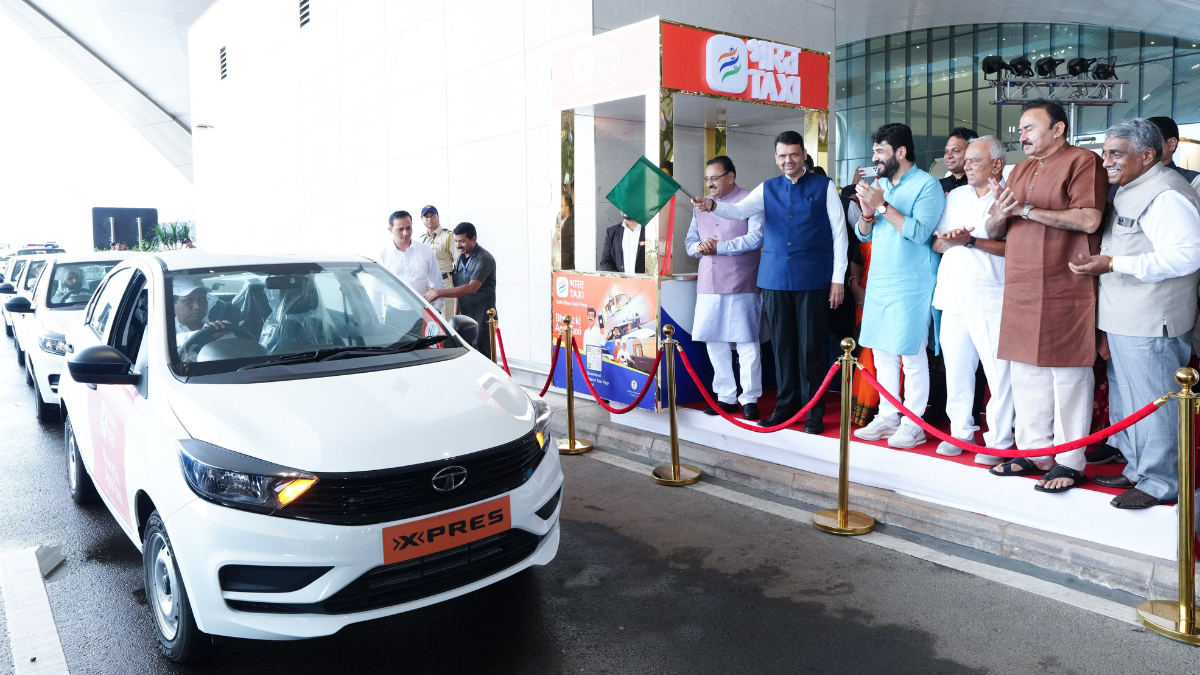
The Bharat Taxi platform eliminates dynamic pricing algorithms to offer a completely stable fare structure for urban commuters. After establishing initial operations in Delhi and Gujarat, the Ministry of Cooperation has systematically expanded this service to Maharashtra, officially initiating services at the Navi Mumbai International Airport.
This rollout reflects a broader governmental strategy to integrate the transport sector into India’s massive cooperative network. The service directly addresses why app-based rides have become a point of friction by replacing volatile aggregator commissions with a flat, predictable fee model.
By structurally altering how trip revenue distributes, the platform targets passenger anxiety over unpredictable billing and driver dissatisfaction over stagnant earnings. Local authorities have partnered with the late D. B. Patil Cooperative Transport Association to issue direct credit lines for local youth, enabling them to purchase vehicles and join the platform as equity-holding members rather than disposable gig workers.
The Breakdown
ⓘ Sponsored: Unbox Daily HQ earns a commission if you buy through these links, at no extra cost to you. Prices shown are subject to change, and the actual price on Amazon at the time of purchase may vary from what is displayed here.
The structural operation of Bharat Taxi hinges on bypassing algorithmic surge multipliers in favour of fixed transparent pricing. The financial backend routes payments to a cooperative framework rather than traditional corporate commission structures. Upon onboarding, drivers receive physical share certificates alongside operational service kits, legally validating their equity in the institution. The platform prioritises the safety of women passengers and ensures an accountable service delivery system. The integration relies on local credit facilities to onboard initial fleets, ensuring drivers own their vehicles while the profits generated by the cooperative return directly to these operational members.
The Distinction
The primary differentiator of the Bharat Taxi platform is its structural cooperative ownership model. Competing ride-hailing applications operate as intermediaries that extract high commissions from contract drivers while imposing dynamic surge multipliers on passengers. This service eliminates that layer entirely. Drivers, classified as Sarathis, are formally registered as equity shareholders and members of the cooperative institution. This architectural shift ensures drivers receive a portion of the institutional profits alongside their daily earnings, while passengers pay a fixed service fee that does not fluctuate based on weather or demand.
The Snapshot
| Feature | Specification |
| Service Name | Bharat Taxi |
| Ownership Model | Driver-owned cooperative |
| Fare Structure | Fixed service fee (surge-free) |
| Regional Availability | Maharashtra, Delhi, Gujarat |
| Launch Location | Navi Mumbai International Airport |
| Driver Target | 3,000 to 4,000 local youth |
| Key Partnership | D. B. Patil Cooperative Transport Association |
The Big Picture
Private aggregators have controlled Indian ride-hailing for a decade, operating on high-commission models that frequently alienate drivers and frustrate passengers with volatile peak-hour pricing. Bharat Taxi tackles this structural friction by institutionalising direct driver ownership. Maharashtra alone houses nearly 2.5 lakh cooperative societies, providing a massive existing framework for this extensive expansion. By converting drivers into profit-sharing shareholders rather than independent contractors, the government is deliberately challenging the established venture-capital mobility model with a self-sustaining financial alternative that entirely removes the corporate intermediary.
The India Prospective
Indian commuters currently tolerate extreme fare fluctuations during monsoons and festival seasons, while drivers frequently cancel rides to avoid high commission penalties. For a working professional in Mumbai, this platform guarantees absolute fare consistency regardless of the hour. With initial credit rollouts targeting 4,000 youth around Navi Mumbai, the service directly addresses regional unemployment while building a localised fleet that fundamentally understands municipal transport dynamics better than outsourced operators.
The Inside Intel
While app-based taxis feel like a strictly modern tech solution, this platform leans on a surprisingly historic foundation. Of the 8.6 lakh cooperative societies currently operating across India, nearly 2.5 lakh are based exclusively in Maharashtra, reflecting a century-old tradition. This means the new digital service has a massive, established rural and urban network to tap into for rapid regional expansion, rather than building operational infrastructure entirely from scratch.
The Unboxed Truth
Unbox Daily HQ considers this the most viable alternative to venture-backed ride aggregators currently operating in India, the economic structure removes the exact friction points that make daily commuting stressful.
This platform serves the 32-year-old corporate employee travelling between Bandra and Navi Mumbai who routinely faces doubled fares during the evening rush hour. Because the service operates strictly on a fixed service fee, the cost remains entirely predictable. Over a month of daily office commutes, avoiding those peak-time multipliers translates to substantial savings that rival traditional monthly transit passes. The singular advantage here is absolute price certainty. Competing applications treat dynamic surge pricing as a core revenue pillar; this cooperative actively forbids it while offering the driver a share of institutional profits. The mathematical reality is that removing the corporate middleman creates a fairer ride for the passenger and a wealthier driver.
Best for: Daily corporate commuters in Mumbai and Pune who require consistent transport budgeting
Who Is This For: Perfect for 28 to 50 urban professionals in Maharashtra who need transparent transit pricing
The Checkout
The Source
Ministry of Cooperation
The Query
Bharat Taxi operates on a fixed fare structure in Maharashtra starting at ₹31 for the first 1.5 kilometres and ₹21 per additional kilometre. The service completely eliminates surge pricing and hidden aggregator fees. Fares remain fixed and transparent across its initial launch region at Navi Mumbai International Airport and surrounding areas.
Bharat Taxi operates as a driver-owned cooperative rather than a private corporate intermediary. Unlike Ola and Uber, drivers are equity shareholders who receive institutional profit shares, while passengers pay flat service fees without dynamic surge pricing multipliers. This structural model eliminates heavy aggregator commissions entirely.
Bharat Taxi is worth choosing for daily urban commuters in Maharashtra due to its complete elimination of surge pricing. The fixed rate of ₹21 per kilometre after the base fare provides long-term budget predictability for corporate professionals travelling during peak hours. By removing corporate middlemen, commuters get lower fares while drivers earn higher returns.