Thursday, May 28, 2026 |Navi Mumbai
--:-- | --°C | AQI --
If it's not on Unbox Daily HQ, it's not a Launch. Every product, policy and brand launch in India. One hub. What's new?
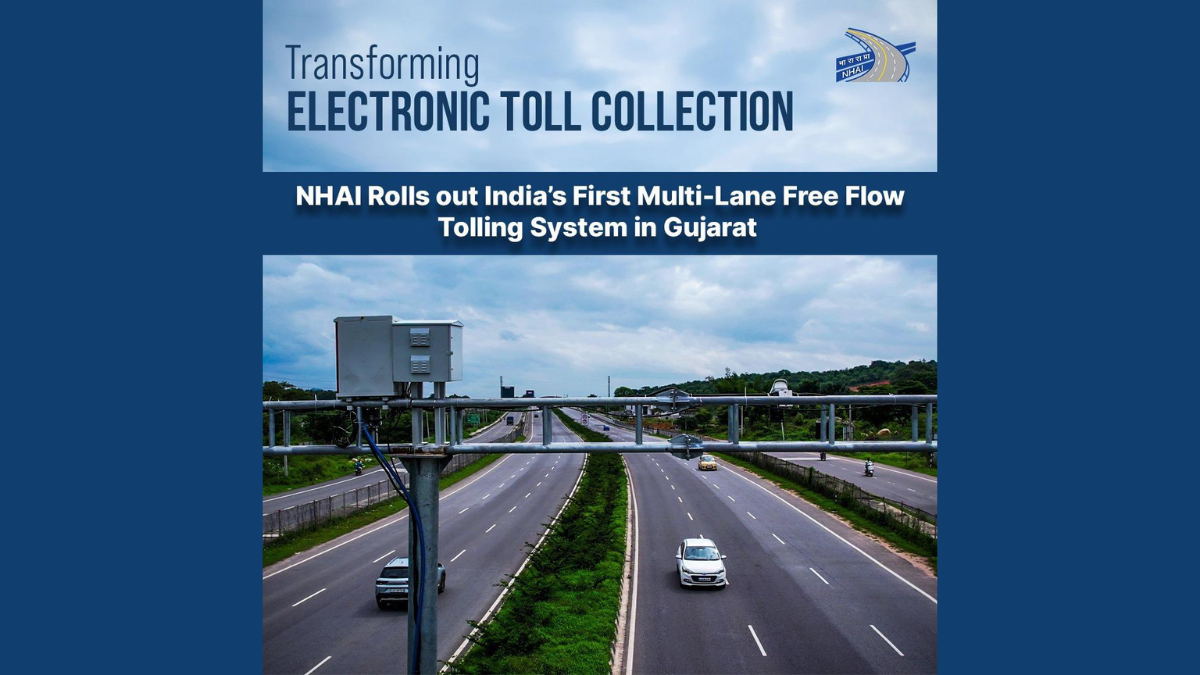
India’s first barrier-less tolling system is now active at the Chorayasi Toll Plaza in Gujarat for faster NH-48 travel.
The Essentials
The Pulse
The first Multi-Lane Free Flow (MLFF) barrier-less tolling system in India is now operational at the Chorayasi Toll Plaza in Gujarat. This new infrastructure on the Surat–Bharuch section of NH-48 allows vehicles to pass through toll zones without slowing down or stopping for physical gates.
How does barrier-less tolling work in India? The system uses a combination of Automatic Number Plate Recognition (ANPR) and FASTag technology to identify vehicles and deduct charges while they maintain highway speeds. High-speed cameras and sensors capture vehicle details instantly, removing the need for traditional booths and boom barriers.
This digitisation of the highway network aims to reduce travel time and decongest busy routes across the country. By removing physical obstructions, the system helps improve fuel efficiency and lowers vehicular emissions, making long-distance travel across India more efficient. The move is part of a broader effort to modernise National Highway infrastructure in line with international transport standards.
The Snapshot
ⓘ Sponsored: Unbox Daily HQ earns a commission if you buy through these links, at no extra cost to you. Prices shown are subject to change, and the actual price on Amazon at the time of purchase may vary from what is displayed here.
| Feature | Details |
| Project Name | Multi-Lane Free Flow (MLFF) Tolling |
| Location | Chorayasi Toll Plaza, Gujarat |
| Route | Surat–Bharuch Section (NH-48) |
| Technology | ANPR and FASTag |
| Toll Mechanism | Barrier-less / No-stop |
| Authority | Ministry of Road Transport & Highways |
| India Status | Live and operational |
The Big Picture
Indian road travel is shifting towards a “stop-free” highway model. While the introduction of FASTag reduced queues, physical barriers remained a bottleneck for logistics and private commuters alike. The MLFF system brings India closer to the highway standards seen in Europe and Singapore, where tolling is an invisible background process. This pilot on NH-48 competes with traditional gated plazas by offering a fluid path for goods movement. As this expands to other corridors, it will likely transform how the NHAI designs future expressways.
The Inside Intel
The Automatic Number Plate Recognition (ANPR) technology used here is sophisticated enough to identify vehicles at speeds exceeding 100 kilometres per hour. This ensures that the transition to barrier-less tolling does not compromise highway safety or force drivers to brake suddenly. It is a significant leap from the standard sensors that often require vehicles to crawl at 10 kilometres per hour to be detected correctly.
The UDHQ. Take
Unbox Daily HQ. views this as a vital step for the Indian commuter who is tired of the “FASTag crawl” at busy plazas. While digital payments were a massive leap, the physical barriers were always a psychological and mechanical hurdle. This trial in Gujarat proves that India is ready for high-speed logistics and smarter traffic management.
It is a pragmatic solution to highway congestion that actually respects a driver’s time and fuel. If this scales across the Golden Quadrilateral, it could save billions in lost productivity currently spent idling at toll gates. For the average traveller, it means a more relaxed journey without the constant stop-start rhythm of the Indian highway.
Best for: Indian road trippers and logistics operators who frequently use the Surat–Bharuch corridor.
Who Is This For: Perfect for 25–65 year old car owners and fleet managers in Gujarat and Maharashtra who value time-efficient highway travel.
The Checkout
Ministry of Road Transport & Highways
The Source
Ministry of Road Transport & Highways | PIB.GOV.
The Multi-Lane Free Flow (MLFF) system is currently operational at the Chorayasi Toll Plaza on the Surat–Bharuch section of NH-48 in Gujarat. This marks the first time this technology has been implemented on an Indian National Highway for public use.
Traditional FASTag lanes require vehicles to slow down or stop for a physical boom barrier to lift. This new system uses high-speed cameras and Automatic Number Plate Recognition (ANPR) to deduct tolls while vehicles maintain highway speeds without stopping.
This system is highly beneficial for drivers who want to reduce travel time and improve fuel efficiency by avoiding congestion at toll gates. It is especially useful for logistics operators and frequent travellers on the NH-48 route who value a more efficient journey.