Thursday, May 28, 2026 |Navi Mumbai
--:-- | --°C | AQI --
If it's not on Unbox Daily HQ, it's not a Launch. Every product, policy and brand launch in India. One hub. What's new?
Microsoft splits its enterprise AI suite into chat tools and background workers.
The Takeaway
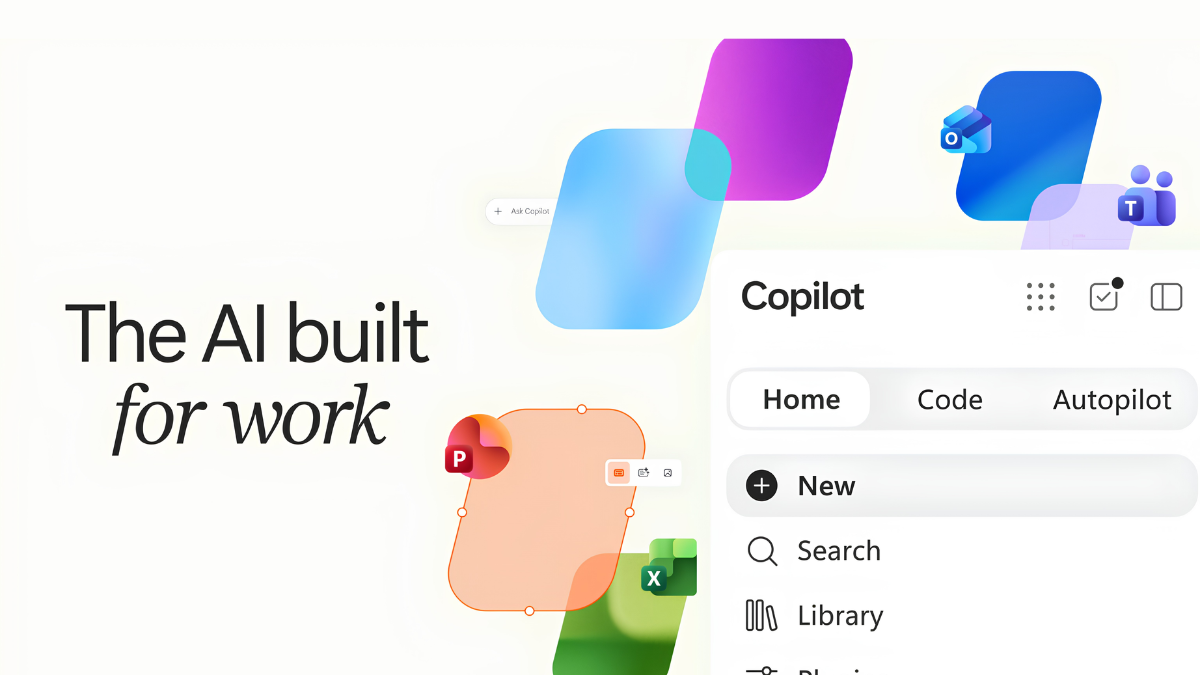
Microsoft is overhauling its workplace Copilot experience, moving beyond a single prompt-and-response interface toward a workspace designed to handle both everyday conversations and longer-running tasks.
The redesigned Home experience brings regular Copilot conversations together with delegated work. Microsoft is also introducing Code, a tool intended to help users create applications and workflows using natural-language instructions, while Autopilot is designed for tasks that can continue operating after the user has handed them off.
The shift reflects Microsoft’s broader move toward AI agents that can perform multi-step work rather than simply responding to individual prompts.
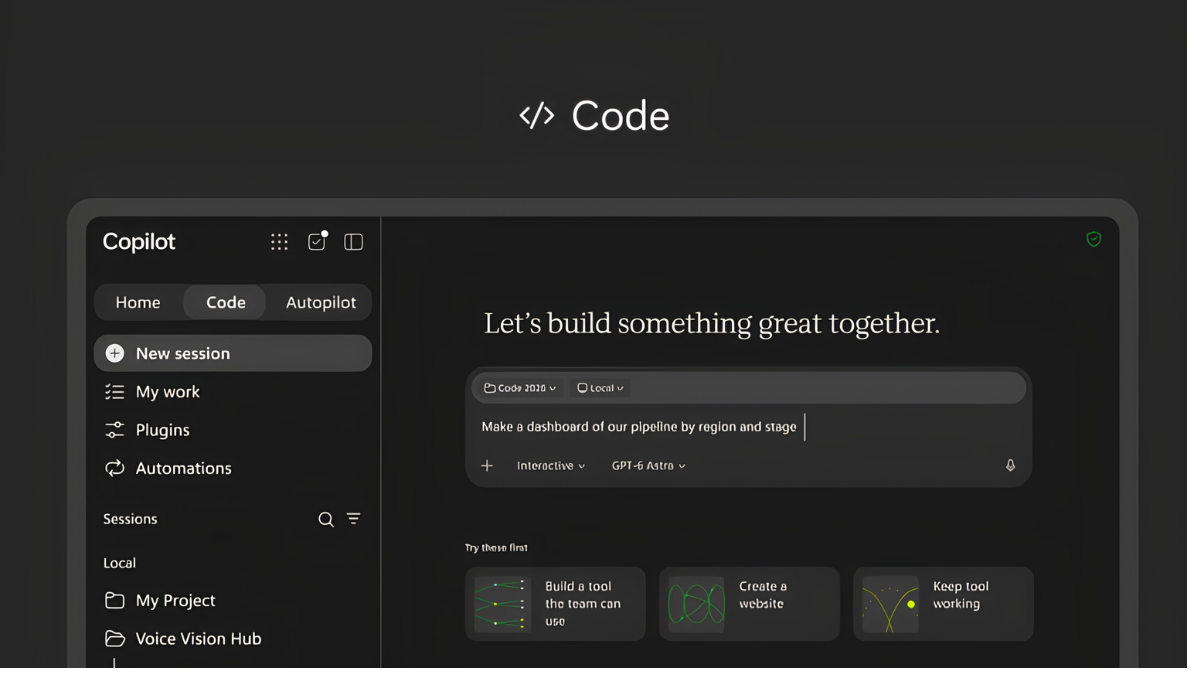
Code Brings App Creation Into Copilot
The new Code experience is designed to allow users to describe what they want to build in natural language rather than starting with traditional programming workflows.
ⓘ Sponsored: Unbox Daily HQ earns a commission if you buy through these links, at no extra cost to you. Prices shown are subject to change, and the actual price on Amazon at the time of purchase may vary from what is displayed here.
Microsoft is positioning the feature for workplace use cases where employees may need to create custom applications or internal tools without building everything manually from scratch.
The Code environment uses technology associated with GitHub Copilot and is designed to run within Microsoft’s managed environment. Microsoft also provides administrative controls for organisations that need to manage how these capabilities are used across different teams and business units.
This could make Copilot more useful beyond conventional document and email assistance, particularly for companies that regularly need small internal applications, automation tools or custom workflows.
Autopilot Moves Copilot Toward Autonomous Work
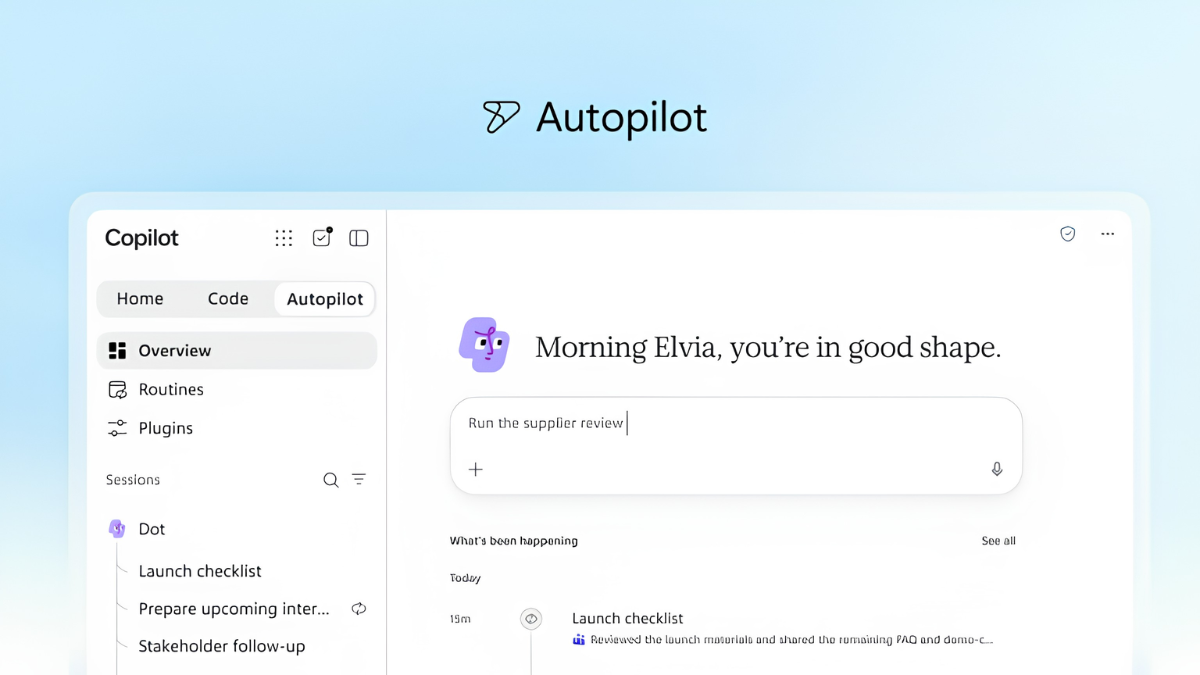
Autopilot is the more significant change in Microsoft’s approach to workplace AI.
Instead of requiring users to remain involved throughout an assignment, Autopilot is designed to take on longer-running tasks and continue working after the initial instruction has been provided.
Users can define the task and the boundaries within which the agent operates. Microsoft is positioning this capability for workflows that may involve multiple steps and require information to be gathered or processed over an extended period.
The approach represents a shift from conversational AI toward delegated digital workers. However, organisations will still need appropriate controls around permissions, data access, oversight and spending before allowing autonomous agents to operate on business systems.
Work IQ and Enterprise Context
Microsoft is also expanding the intelligence layer behind Copilot with Work IQ, which is designed to use an organisation’s existing work context to make AI assistance more relevant.
That context can include information from workplace applications and communications, allowing Copilot to understand relationships between people, documents, meetings and ongoing work.
Microsoft’s broader enterprise strategy is to make Copilot increasingly aware of the organisation’s working environment rather than treating every prompt as an isolated request.
For businesses, this also makes governance more important. The more context an AI system can access, the more important permissions, identity controls and data-management policies become. The workspace now features a task-aware prompt line and a Work IQ intelligence layer that references your past emails.
Key Copilot rollout phases and infrastructure details
| Feature | Operational status |
| Code deployment | Microsoft 365 Premium preview later this year |
| Autopilot rollout | Private preview starts late this month |
| Core chat billing | Fixed User Subscription Licence fee |
| Autonomous compute | Usage-Based Billing via frontier models |
The distinction is important for enterprises because autonomous AI workloads can consume considerably more computing resources than a conventional chat interaction.
Organisations evaluating agent-based Copilot deployments will therefore need to understand both the licence costs and any applicable consumption charges.
Microsoft Targets More Autonomous Workplace AI
The broader strategy places Microsoft in competition with other productivity platforms that are adding increasingly capable AI assistants and agents.
Rather than limiting AI to answering questions inside applications such as Word, Outlook or Teams, Microsoft is attempting to make Copilot capable of taking responsibility for multi-step assignments.
That could change how employees interact with workplace software. Instead of repeatedly instructing an AI system at each stage, users could increasingly define an objective, provide permissions and allow an agent to carry out the work.
The practical value, however, will depend on how reliably these systems complete tasks, how much human oversight organisations require and how predictable the associated computing costs remain.
What It Means for Indian Enterprises
Indian companies considering autonomous Copilot deployments will face many of the same infrastructure and governance considerations as organisations elsewhere.
Reliable connectivity remains important for cloud-based enterprise applications, particularly when employees are working with large documents, data sources and connected business systems.
However, claims that VPN connections in specific Indian cities will routinely interrupt Copilot’s background processes should not be treated as a universal limitation. Actual performance will depend on an organisation’s network architecture, security policies, cloud configuration and connectivity.
Data residency will also be an important consideration for highly regulated organisations. Companies in sectors such as banking and financial services should evaluate Microsoft’s applicable data-processing, residency, compliance and security commitments against their own regulatory requirements before deploying agents with access to sensitive information.
The Unboxed Truth
Microsoft’s Copilot overhaul is significant because it changes the role of the AI assistant from something employees actively question into something that can potentially be assigned work.
That convenience also makes governance more important. An autonomous agent with access to business data, applications and external services needs clearly defined permissions, spending controls and monitoring.
For organisations considering Autopilot or other agent-based workflows, the sensible approach is to begin with clearly defined tasks and measurable limits rather than giving an autonomous system unrestricted access from day one.
Best for: Enterprise IT teams looking to introduce controlled AI automation across departments.
Who Is This For: Organisations evaluating AI agents, natural-language application development and longer-running workplace automation.
Courtesy: Microsoft