Thursday, May 28, 2026 |Navi Mumbai
--:-- | --°C | AQI --
If it's not on Unbox Daily HQ, it's not a Launch. Every product, policy and brand launch in India. One hub. What's new?
Federal health funds build ten intensive care units and twelve laboratories across district hospitals.
The Takeaway
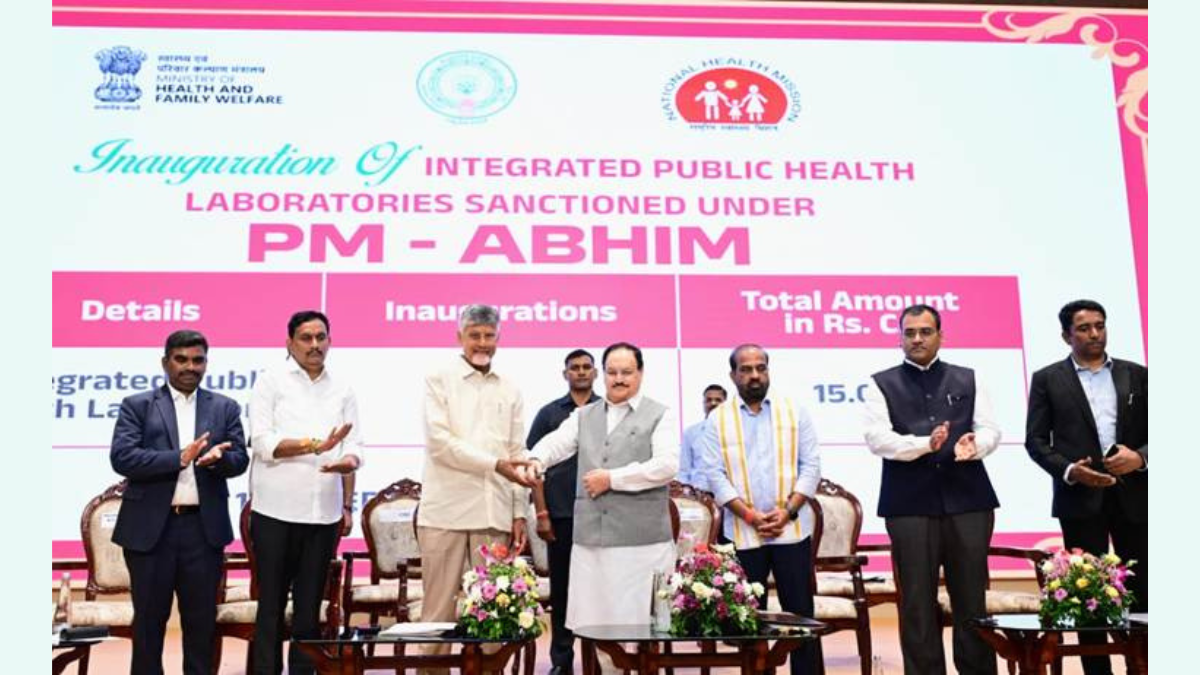
Ministry of Health and Family Welfare brings 22 newly finished medical facilities to Andhra Pradesh. These structures focus on severe illness management and infection tracking. Union Health Minister J.P. Nadda opened the units on September 12. This project aims to catch health threats early. That approach keeps standard hospital operations running smoothly during unexpected emergencies.
The decentralised network places specialised resources inside existing state colleges and district sites. Ten intensive care blocks offer dedicated isolation wards and advanced oxygen supply lines. Twelve new diagnostic laboratories provide focused local disease surveillance. Civil construction for all these approved locations is completely finished. Fourteen other laboratories from the exact same central scheme are already processing daily test samples.
The real operational shift is the dual-pronged structural design. Most medical expansions simply add basic general admission beds. This Pradhan Mantri Ayushman Bharat Health Infrastructure Mission network pairs intensive treatment capacity directly with infectious disease tracking. Local health officials can now identify and isolate an outbreak within a specific district. Localised containment stops a viral spread before it paralyses the broader national system.
Andhra Pradesh critical care blocks and laboratories breakdown
| Feature | Detail |
| Total state allocation | ₹1,271.80 crore over five years |
| Approved critical care blocks | 24 units |
| Critical care investment | ₹606 crore |
| Approved public health labs | 26 units |
| Public health lab investment | ₹32.50 crore |
| Newly opened locations | 10 blocks, 12 laboratories |
This rollout matches a broader national shift toward decentralised diagnostics. States are increasingly building specialised testing capacity away from major capital cities. For instance, the new Public bladder diagnostics centre to test 5,000 complex cases annually highlights this ongoing push for advanced local care. The central government is also studying the Sanjeevani doorstep testing programme. They may expand this community-level screening model across the entire country soon.
ⓘ Sponsored: Unbox Daily HQ earns a commission if you buy through these links, at no extra cost to you. Prices shown are subject to change, and the actual price on Amazon at the time of purchase may vary from what is displayed here.
The underlying policy shift since 2017 correlates with some major public health improvements. India currently reports an 86 per cent drop in maternal mortality over recent years. Under-five mortality also fell by 79 per cent compared to global averages. Out-of-pocket medical spending by citizens dropped to 43.4 per cent. Furthermore, the U-WIN digital platform now actively tracks 12 distinct vaccines from birth to age 16.
The Unboxed Truth
Unbox Daily HQ views this decentralised facility network as a necessary evolution for regional healthcare. You get a much better chance of survival when advanced treatment lives near your home. Expecting every critically ill patient to travel to a metropolitan hub is dangerous. Pradhan Mantri Ayushman Bharat Health Infrastructure Mission puts oxygen, isolation, and diagnostics in the same rural building. The total investment mirrors the cost of building just one large urban hospital. It smartly spreads that value across the entire state instead.
Best for: Regional communities needing immediate intensive medical support.
Who Is This For: High-risk residents aged 50 to 70 years.
Courtesy: Government of India
The central government allocated ₹647.51 crore specifically for these medical infrastructure upgrades across the state. This funding successfully covers the construction of 24 critical care units and 26 public health laboratories. The overall state allocation for Andhra Pradesh reaches ₹1,271.80 crore over a planned five-year period to build this decentralised network in India.
The real operational shift is its dual-pronged structural design that pairs intensive treatment capacity directly with infectious disease tracking. While most standard medical expansions simply add basic general admission beds, this decentralised network places specialised diagnostic resources inside existing district sites. Local health officials can therefore identify and isolate an outbreak immediately before it overwhelms the broader national system.
Unbox Daily HQ views this decentralised facility network as a necessary evolution for regional healthcare. This infrastructure is explicitly built for high-risk residents aged 50 to 70 years who need immediate intensive medical support. Patients receive a much better chance of survival when advanced treatment lives near their home, rather than risking dangerous travel to a metropolitan hub.