Thursday, May 28, 2026 |Navi Mumbai
--:-- | --°C | AQI --
If it's not on Unbox Daily HQ, it's not a Launch. Every product, policy and brand launch in India. One hub. What's new?
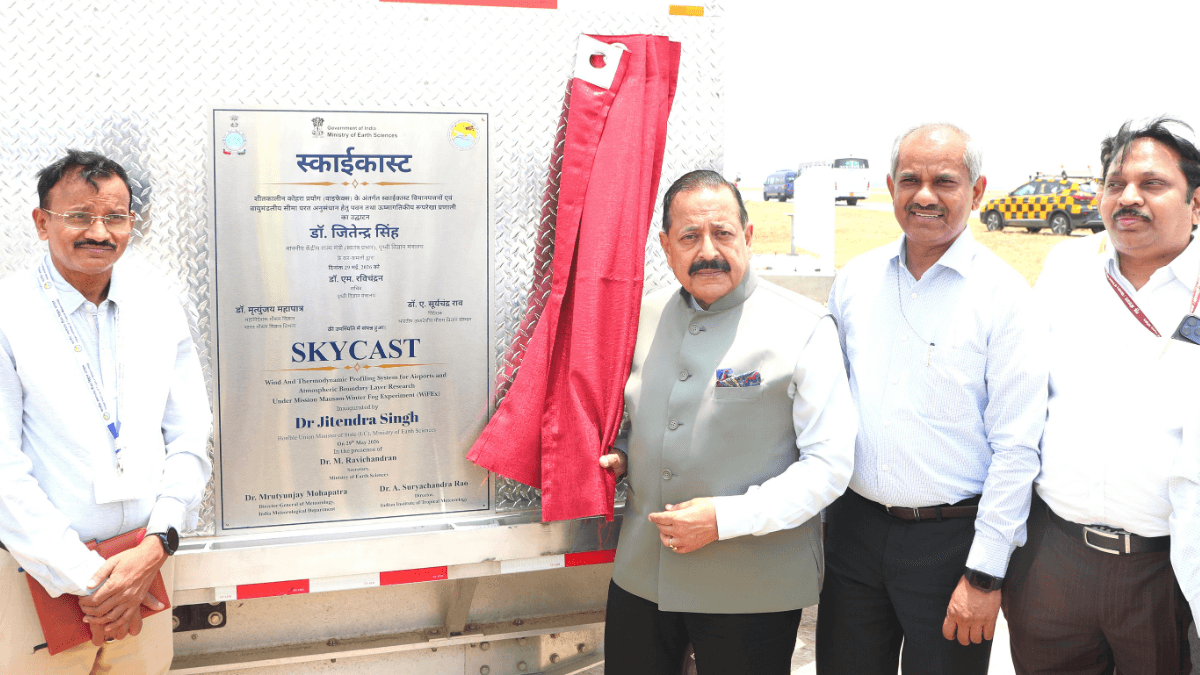
India is only the 19th country to install this system, giving pilots a three-hour warning before fog hits the runway.
The Essentials
The Pulse
Indira Gandhi International Airport just installed SkyCast, an advanced weather monitoring setup that tracks fog and turbulence before it hits the runway. The system combines radar wind profilers with spectrometers specifically designed to measure how pollution particles interact with winter fog in Delhi.
This answers the biggest question for anyone flying in or out of the capital: yes, it is designed to stop you from spending six hours trapped on a tarmac this December. Instead of waiting until visibility drops to zero, air traffic controllers now get a three-hour advance warning. This means pilots can adjust their landing times or divert long before they begin their final descent.
The technology grew out of a 2015 study by the Indian Institute of Tropical Meteorology to understand why Delhi fog is so uniquely stubborn. India is currently the 19th country to deploy this specific combination of remote atmospheric sensing. Following this Delhi installation, Jewar Airport is next in line to receive the equipment before it rolls out to other major transit hubs across the country.
The Snapshot
ⓘ Sponsored: Unbox Daily HQ earns a commission if you buy through these links, at no extra cost to you. Prices shown are subject to change, and the actual price on Amazon at the time of purchase may vary from what is displayed here.
| Feature | Detail |
| Facility Name | SkyCast System |
| Location | Glide Path 10, IGI Airport, New Delhi |
| Next Planned Location | Jewar Airport |
| Monitoring Range | Up to 3 kilometres |
| Alert Window | Approximately 3 hours |
| Key Instruments | Radar Wind Profiler, GFAS, CL61 Lidar Ceilometer |
| Parent Project | Mission Mausam |
| Developers | IITM and IMD |
| Global Standing | 19th country globally to deploy |
The Big Picture
Winter flight disruptions cost Indian airlines crores annually while creating massive logistical headaches for millions of passengers across the country. Traditionally, domestic carriers like IndiGo and Air India have had to rely heavily on reactive ground-level visibility readings, often forcing last-minute diversions to smaller airports like Jaipur or Lucknow when Delhi fogs over entirely. By shifting from reactive measurement to predictive atmospheric modelling, national aviation authorities are finally attempting to treat extreme weather as a manageable data problem rather than an unpredictable act of nature.
The India Prospective
If you travel frequently for work, this directly impacts your winter bookings. Delhi serves as the primary northern transit hub, meaning a morning fog delay there usually cascades into delayed evening flights in Bengaluru or Mumbai. While it will not completely clear the skies, accurate three-hour alerts mean airlines can notify you before you leave for the airport, rather than after you have cleared security.
The Inside Intel
The technology specifically targets urban fog behaviour. Instruments like the Ground-based Fog Aerosol Spectrometer are installed precisely because Delhi air pollution interacts with atmospheric moisture far differently than natural fog does. The hardware measures the exact relationship between aerosol particles and microscopic fog droplets. By doing this, the system treats winter smog as a complex, distinct meteorological event rather than just simple low cloud cover over the airport.
The Unboxed Truth
Unbox Daily HQ views this as a necessary infrastructure upgrade that you will hopefully never notice, except through the absence of frustrating delays. While it operates entirely behind the scenes, you should absolutely factor it into your winter travel plans. Once this system is fully integrated with airline notification apps, you should expect far more accurate delay warnings before you leave home. Keep an eye out for how domestic carriers update their weather alert policies this coming winter.
Best for: frequent domestic flyers routing through northern India during the winter months who need reliable scheduling.
Who Is This For: Perfect for 28 to 50 working professionals in corporate roles who regularly transit through Delhi and cannot afford to lose a working day to tarmac delays.
The Checkout
Indira Gandhi International Airport – Home Page
The Source
Ministry of Earth Sciences | PIB.GOV.
The system is currently operational only at Indira Gandhi International Airport in New Delhi. The next facility is scheduled to come up at Jewar Airport, followed by a wider expansion across other airports in India.
The system combines radar wind profilers and specialized fog sensors to monitor atmospheric conditions up to 3 kilometres above the runway. It provides air traffic management and pilots with advance weather alerts within a three-hour window. This allows airlines to systematically adjust landing times or plan diversions well before visibility drops to zero.
The infrastructure primarily helps frequent domestic flyers and working professionals who regularly transit through northern India during the winter months. It also supports pilots, commercial airlines, and airport operators by providing real-time atmospheric intelligence to prevent passengers from being trapped on the tarmac.