Thursday, May 28, 2026 |Navi Mumbai
--:-- | --°C | AQI --
If it's not on Unbox Daily HQ, it's not a Launch. Every product, policy and brand launch in India. One hub. What's new?
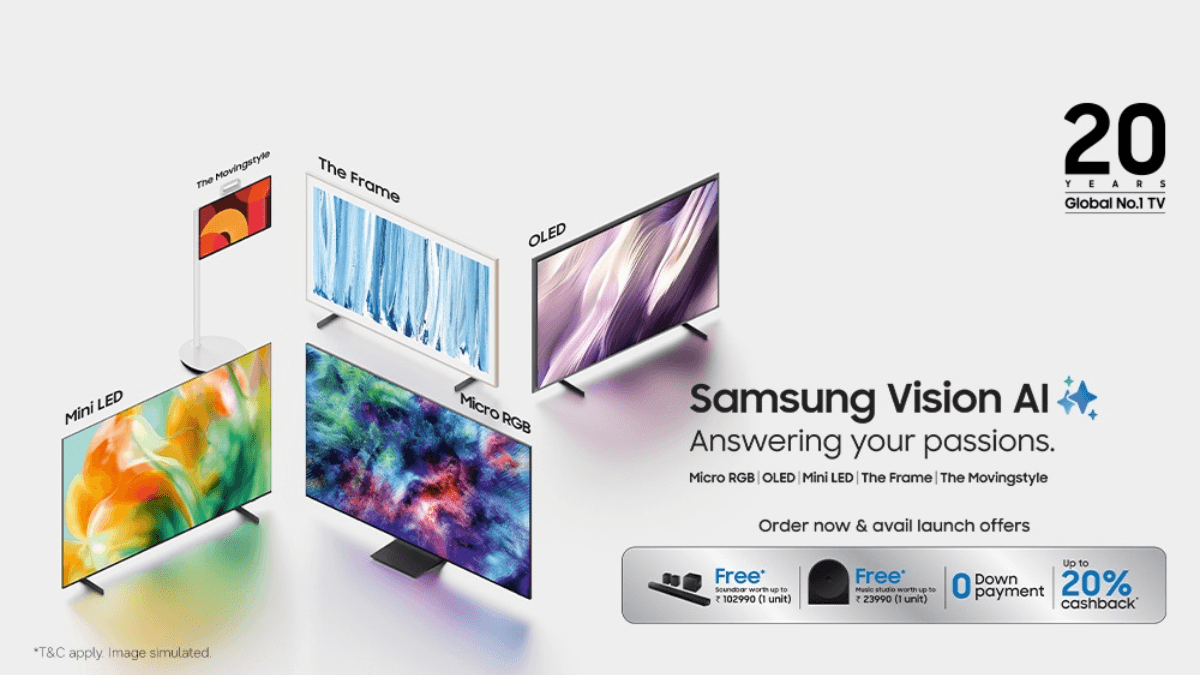
Samsung’s 2026 Vision AI TV range brings 72 models across OLED, Micro RGB, and Mini LED formats to Indian living rooms.
The Essentials
The Pulse
The most significant shift in the 2026 Vision AI TV series is not just the sheer volume of 72 models, but the integration of an intelligent companion across all 4K and above screens. At a starting price of ₹36,990 for UHD variants, the barrier to entry for smart features has dropped considerably, though the flagship Micro RGB models demand a premium starting at ₹1,24,990.
By embedding AI directly into the viewing experience, these televisions solve the common frustration of endlessly scrolling for content. Does the television really need AI to function? For those who want their screen to optimise sound during a football match or upscale older films in real time, the processing capabilities offer an immediate visual upgrade.
The inclusion of Perplexity, Microsoft Copilot, and Bixby turns the television into a central hub that answers queries or suggests meals without requiring a separate device. Meanwhile, specific modes for sports and cinema actively tweak audio levels, ensuring dialogue remains crisp even when background stadium noise peaks.
The Snapshot
ⓘ Sponsored: Unbox Daily HQ earns a commission if you buy through these links, at no extra cost to you. Prices shown are subject to change, and the actual price on Amazon at the time of purchase may vary from what is displayed here.
| Series | Starting Price (₹) | Key Display Feature |
| Micro RGB | 1,24,990 | Micro RGB Precision Color 100 |
| OLED | 1,14,990 | Pantone Validated ArtfulColor |
| The Frame | 56,990 | Art Mode with 3000+ Artworks |
| Neo QLED | 52,990 | Real QLED 100% Color Volume |
| Mini LED | 42,990 | Pure Spectrum Color |
| UHD | 36,990 | Vision AI Companion |
The Big Picture
The Indian television market is rapidly shifting from basic smart screens to AI-driven entertainment hubs, forcing manufacturers to compete on processing capabilities rather than just panel size. While brands like Sony India continue to dominate the premium audio-visual space, this aggressive 72-model rollout signals an intent to capture every possible price tier. By integrating upscaling technology and interactive agents directly into the interface, the television is evolving from a passive display into an active home management system. This broad release strategy ensures that advanced display technologies reach beyond the enthusiast niche and enter everyday homes.
The India Prospective
For Indian households, the integration of local content platforms and multilingual support ensures the interface feels native rather than ported. The televisions are designed to handle India’s diverse living environments with energy-efficient solutions, which is crucial for regions with fluctuating power grids. Furthermore, the inclusion of flexible EMI options through Samsung Finance+ and extended warranty via Samsung Care+ makes upgrading to premium panel technologies like Neo QLED or OLED considerably more accessible for the urban professional.
The Inside Intel
The flagship R95H Micro RGB model has secured both Safety for Eyes and Circadian Rhythm Display certifications from the German testing institute VDE. This means the display actively manages its light output to minimise sleep disruption, a rare hardware validation that prioritises long-term viewing comfort over pure brightness metrics. Most premium televisions chase brighter panels for daytime viewing, making this specific focus on physiological well-being an unusual and welcome technical priority.
The Unboxed Truth
Unbox Daily HQ. views this expansive release as a clear signal that AI processing is now the baseline for home entertainment. If you are still using a basic smart television that struggles with menu lag or poor upscaling, the mid-tier Mini LED or Neo QLED models offer the most noticeable performance jump for your money. The integration of real-time audio adjustments and glare-free panels resolves everyday viewing frustrations in bright, noisy living rooms. At the entry level, the UHD models provide excellent value, but the real technological leap happens once you move into the dedicated AI processor tiers. Skip the flagship Micro RGB unless you are building a dedicated, no-compromise home cinema.
Best for: Urban professionals building a modern living room who want a television that doubles as an interactive art and entertainment hub.
Who Is This For: Perfect for 28 to 55 year olds in metro cities who value responsive interfaces and automated picture optimisation for streaming and sports.
The Checkout
Samsung TV Lineup – India Page
The Source
Samsung India
The 2026 Vision AI TV lineup starts at a price of ₹36,990 for the entry-level UHD models. Prices scale up across various panel categories, with the flagship Micro RGB range starting at ₹1,24,990. Buyers can also access flexible EMI options through Samsung Finance+ and extended warranty options via Samsung Care+.
The system combines Bixby, Perplexity, and Microsoft Copilot to answer queries and suggest content without interrupting your broadcast. It actively monitors the screen to upscale lower-resolution videos and adjust audio levels in real time based on what you are watching. This integration turns the television into an active home hub rather than a standard passive display.
It is entirely worth buying if you are upgrading from an older smart television that struggles with interface lag or poor picture upscaling. The mid-tier Neo QLED and Mini LED variants deliver the most noticeable performance improvements and value for money in typical Indian households. However, the premium Micro RGB sets should be skipped unless you specifically require a no-compromise home cinema setup.