Thursday, May 28, 2026 |Navi Mumbai
--:-- | --°C | AQI --
If it's not on Unbox Daily HQ, it's not a Launch. Every product, policy and brand launch in India. One hub. What's new?
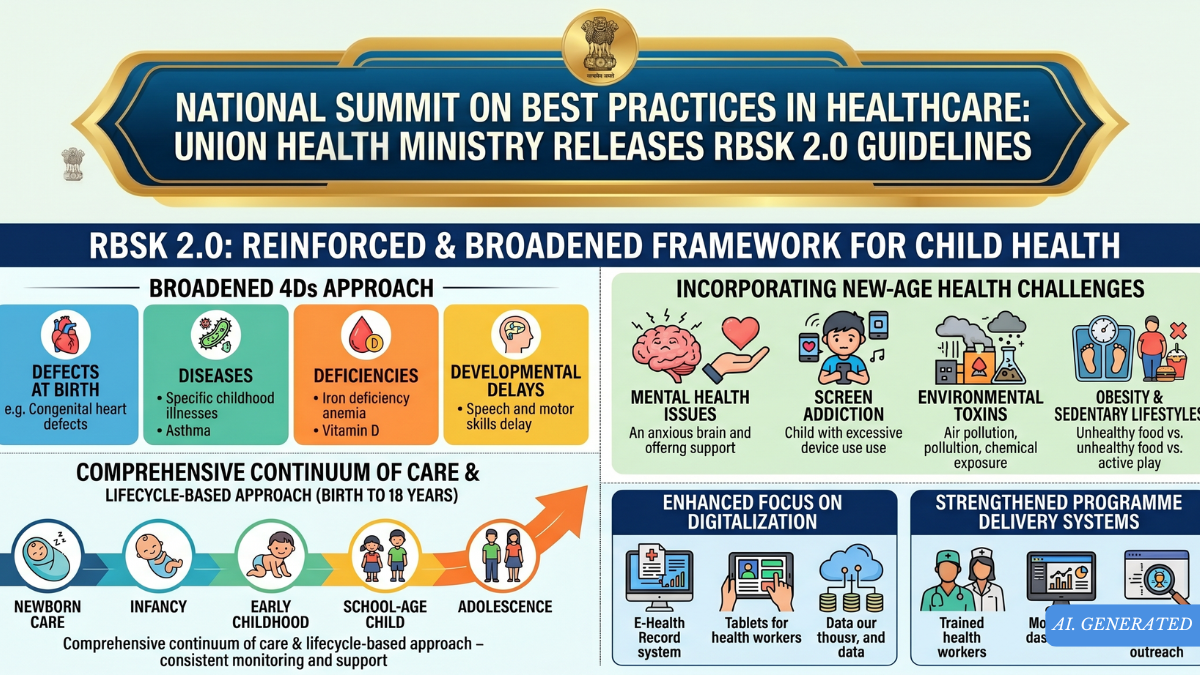
RBSK 2.0 expands school health screenings to include mental health and diabetes for children up to 18 years.
The Essentials
The Pulse
School health check-ups in India are moving beyond the basic measurement of height and weight. The updated RBSK 2.0 framework acknowledges that lifestyle diseases like diabetes and hypertension are now affecting younger populations. This is a significant shift for the Mobile Health Teams that visit Anganwadi centres and schools across the country.
What is the age limit for the RBSK 2.0 health programme? The scheme provides a health safety net for every Indian child from birth until they turn 18.
Instead of one-off checks, there is now a focus on a continuum of care. This means a child identified with a developmental delay or a mental health concern will not just be a statistic; the new digital system tracks their referral to ensure they actually receive specialist treatment. Multi-sectoral convergence means health and education departments will work together to monitor these digital records, reducing the burden on parents to keep track of physical reports over a decade of schooling.
The Snapshot
ⓘ Sponsored: Unbox Daily HQ earns a commission if you buy through these links, at no extra cost to you. Prices shown are subject to change, and the actual price on Amazon at the time of purchase may vary from what is displayed here.
| Feature | Specification |
| Target Age | Birth to 18 years |
| Screening Method | Mobile Health Teams |
| Primary Locations | Schools and Anganwadi Centres |
| Core Focus | Defects, Diseases, Deficiencies, Developmental Delays |
| New Additions | Mental health, Diabetes, Hypertension, Behavioural issues |
| Data Tracking | Digital Health Cards and real-time monitoring |
| India Availability | Available nationwide |
| Cost | Government-funded service |
The Big Picture
India is currently seeing a spike in juvenile-onset lifestyle conditions, which were often ignored in older public health programmes. By integrating these into the existing RBSK infrastructure, the government is catching up to the realities of modern Indian childhood. Similar programmes in other regions often struggle with the final step of treatment. However, by using digital health cards, the Ministry is attempting to bridge the gap between a primary school diagnosis and a hospital bed. This moves the focus from simple survival to long-term quality of life.
The Inside Intel
The original RBSK programme has been the national standard for over a decade, but this is the first time mental health has been given equal footing with physical defects in a school-level directive. Most people assume these screenings only happen in rural pockets, but the framework is designed to cover every child in the education system, including those in urban centres.
The UDHQ. Take
Unbox Daily HQ. suggests every parent in India should familiarise themselves with this updated schedule. It is essentially a government-backed health monitoring system for your child’s developmental years. If your school holds an RBSK 2.0 camp, do not treat it as a routine event. The inclusion of mental health and lifestyle disease tracking makes this a practical tool for early intervention. You should ensure your child’s data is correctly captured on the new digital health card to simplify any future specialist visits. It is a sensible safety net for every Indian family.
Best for: Parents with school-going children who want a structured way to monitor developmental and lifestyle health risks.
Who Is This For: Perfect for 28 to 45 year old parents in India with children in school who value preventive healthcare and digital record-keeping.
The Checkout
The Source
Ministry of Health and Family Welfare | PIB.GOV.
The programme is available nationwide and covers every child from birth until they turn 18. It is a government-funded service, meaning the screenings and follow-up treatments are provided at no cost to families.
The new guidelines expand the original focus on basic defects and diseases to include modern health challenges like mental health, diabetes, and hypertension. It also introduces digital health cards and real-time data monitoring to ensure children receive a full continuum of care.
This updated framework acts as a free, structured health safety net that monitors developmental and lifestyle risks that private healthcare often charges a premium for. It is particularly useful for tracking long-term health metrics through a digital record that stays with the child until adulthood.