Thursday, May 28, 2026 |Navi Mumbai
--:-- | --°C | AQI --
If it's not on Unbox Daily HQ, it's not a Launch. Every product, policy and brand launch in India. One hub. What's new?
New framework links ocean observation, deep-sea mining, and coastal surveillance into one national policy.
The Takeaway
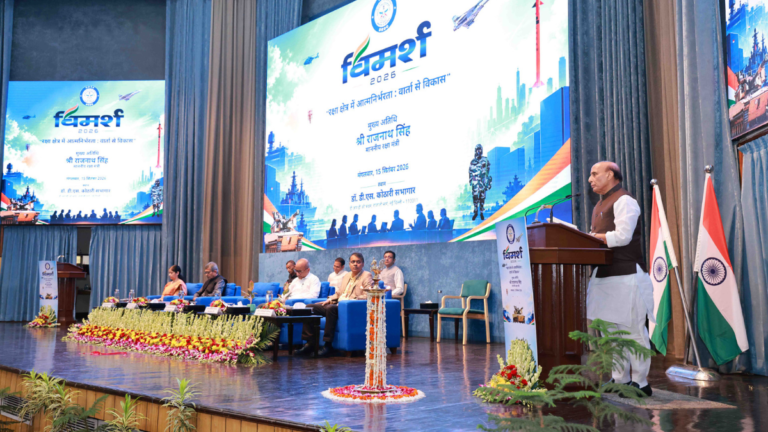
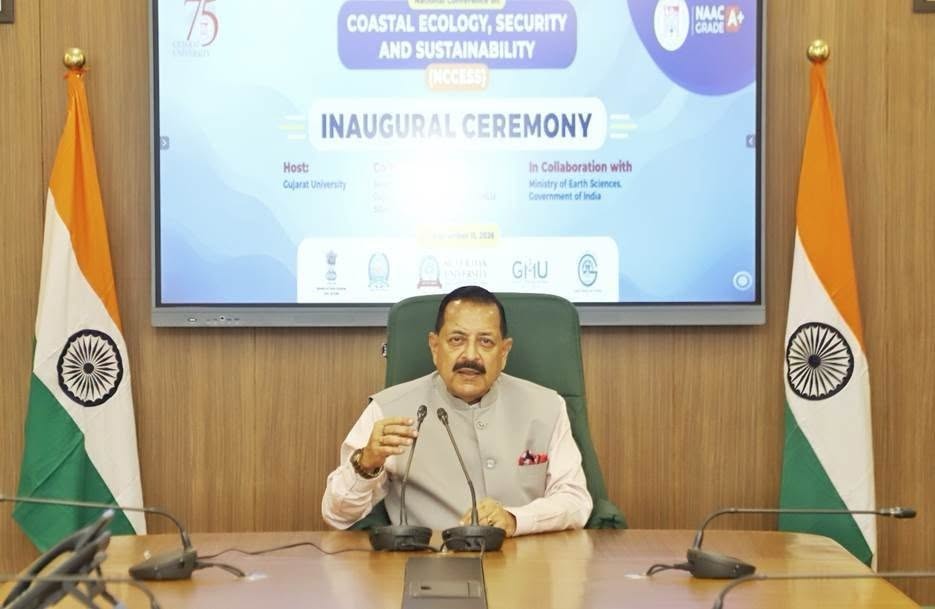
Ministry of Earth Sciences introduced the Coastal Bharat strategy at the National Conference on Coastal Ecology, Security and Sustainability 2026. Union Minister Dr. Jitendra Singh addressed delegates virtually to unveil the comprehensive blueprint. The policy treats India’s 11,000 to 12,000 km coastline as an interconnected domain for economic growth and national security.
The strategy relies on indigenous technology to survey deep waters. Operations center around the newly launched ORV Sagar Manthan research vessel. Scientists are developing autonomous ocean robots alongside crewed submersibles. These instruments target marine mineral deposits like black sulphites, metal reserves, and sustainable fisheries under the Deep Ocean Mission.
Instead of managing defense, trade, and environmental policy separately, the Coastal Bharat framework combines ocean observation networks, remote sensing platforms, and surveillance data. Port expansion projects must now integrate marine ecosystem conservation alongside local community welfare.
Coastal Bharat framework key details
| Feature | Confirmed Specification |
| Coastline Reach | 11,000 to 12,000 km |
| Research Vessel | ORV Sagar Manthan |
| Campaign Window | 12 September to 19 September |
| Core Initiative | Deep Ocean Mission |
Establishing decentralized scientific capabilities helps connect national marine policies directly with local regional governance. Just as regional medical access expands when the Vidisha day-care cancer facility opens to cut metro travel for patients, localized maritime infrastructure gives regional ports immediate access to central surveillance data. Linking ocean research with state-level administrative bodies speeds up responses to ecological and security threats.
ⓘ Sponsored: Unbox Daily HQ earns a commission if you buy through these links, at no extra cost to you. Prices shown are subject to change, and the actual price on Amazon at the time of purchase may vary from what is displayed here.
India manages one of the longest coastlines globally, making structured maritime planning essential for domestic economic stability. Protecting coastal environments preserves the livelihoods of traditional fishing communities along the coastline. Citizens can participate directly through clean-up drives and public pledges scheduled for mid-September.
At Unbox Daily HQ, our verdict is that the Coastal Bharat framework marks a practical shift toward integrated maritime management. Converting theoretical ocean science into concrete research assets like the ORV Sagar Manthan provides real monitoring tools for national waters. Integrating deep-sea mineral exploration with naval surveillance ensures stronger protection for coastal interests.
Best for: Tracking national maritime policy and deep-sea exploration initiatives
Who Is This For: 25–50 years old
Courtesy: Ministry of Earth Sciences
Public clean-up drives and ocean protection pledges under the campaign take place from 12 September to 19 September. The Coastal Bharat policy itself operates as an active national framework for maritime governance. Citizen participation covers multiple coastal states across the country.
The framework unifies marine ecology, ocean observation, deep-sea exploration, and maritime security into one single national strategy. Traditional approaches manage environmental protection, ocean research, and naval defense as isolated sectors. It actively pairs surveillance data with deep-sea research assets.
The Coastal Bharat strategy delivers necessary progress by combining underwater research tools with coastal defense. Deploying indigenous submersibles and the ORV Sagar Manthan vessel provides essential capability for managing sea resources. This initiative is best for maritime policy analysts and citizens aged 25 to 50 years old.