Thursday, May 28, 2026 |Navi Mumbai
--:-- | --°C | AQI --
If it's not on Unbox Daily HQ, it's not a Launch. Every product, policy and brand launch in India. One hub. What's new?
Over 33,600 developers used real city data to build solutions for Bengaluru's worst bottlenecks.
The Takeaway
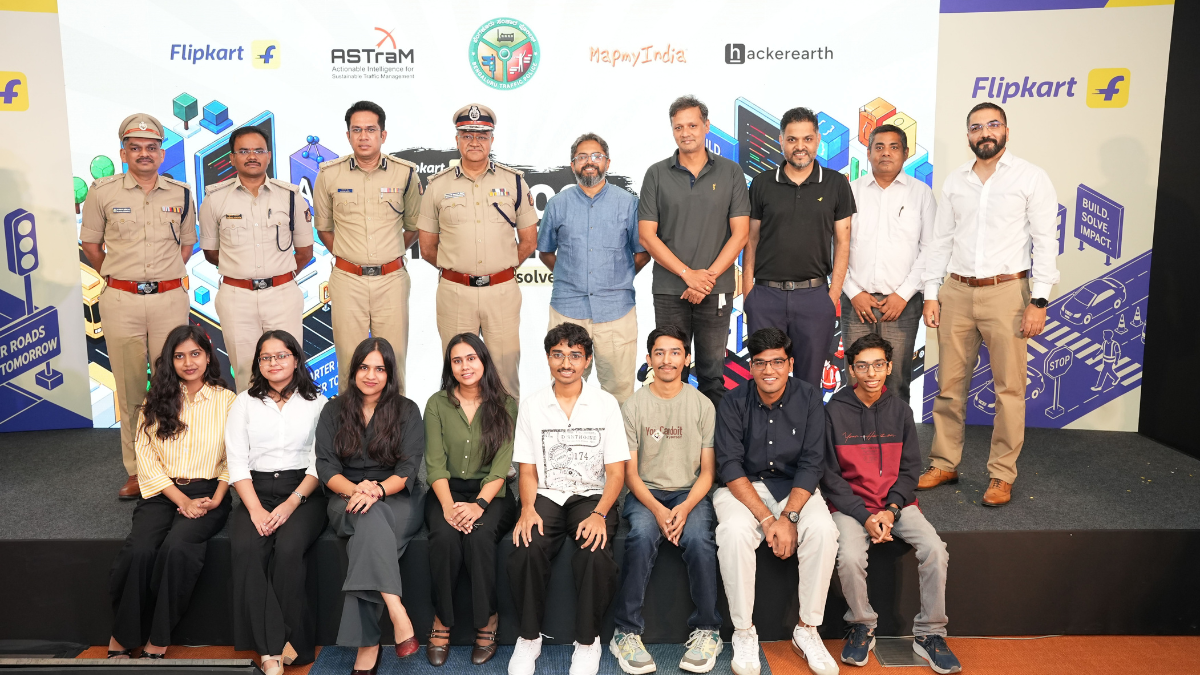
Flipkart partnered with the Bengaluru Traffic Police to wrap up a massive crowdsourced technology challenge. The initiative brought together technical partners like Arcadis, MapmyIndia and HackerEarth. The goal was to find practical ways to manage urban congestion.
The event began with an online machine learning phase and ended with an in-person finale at the e-commerce brand’s headquarters. Top civic leadership attended the final showcase. The winning tool uses a Hawkes Process model to calculate how a single blocked road affects surrounding areas. It gives officers a live control-room view to divert vehicles early. The runner-up built a software-only platform that suggests where to deploy staff or barricades based on incident data. The final podium spot went to a system analysing violation records to validate hotspot zones.
Most coding competitions rely on simulated environments. The standout factor here was direct access to the ASTraM network. Arcadis designed this actionable intelligence platform specifically for city law enforcement. It gave developers genuine street records to train their software instead of theoretical data. All civic datasets were strictly anonymised to protect privacy.
Corporate involvement in finding civic fixes is definitely growing. The retail giant clearly likes building functional technology for different sectors. They recently provided conversational diagnostic software and dedicated agency management to online sellers. Now they are pointing external talent at daily public problems.
Gridlock Hackathon 2.0 details and results
ⓘ Sponsored: Unbox Daily HQ earns a commission if you buy through these links, at no extra cost to you. Prices shown are subject to change, and the actual price on Amazon at the time of purchase may vary from what is displayed here.
| Feature | Detail |
| First Place Prize | ₹2,25,000 |
| Second Place Prize | ₹1,75,000 |
| Third Place Prize | ₹1,00,000 |
| Core Data Source | ASTraM Platform |
| 2017 Registrations | 3,000 |
Real-world testing changes expectations for public tech projects. The inaugural 2017 edition led to dynamic signal testing at Silk Board Junction. That earlier experiment indicated a potential 17 percent drop in wait times. The sheer scale of interest this time around is quite unusual. This new edition saw participation jump more than eleven times compared to the first attempt.
Bengaluru commuters regularly spend hours stuck in unpredictable jams. A minor accident on a major road often paralyses several neighbourhoods within minutes. Predictive software lets traffic cops act before a bottleneck actually forms. Deploying officers proactively keeps major corridors moving during peak hours. You simply cannot fix city streets by building wider flyovers anymore.
The Unboxed Truth
We at Unbox Daily HQ think opening up civic data is a brilliant move. Gridlock Hackathon 2.0 proves that you can actually build functional public tools when developers get access to real police records. You see countless theoretical whitepapers on urban mobility. This challenge produced concrete software designed to keep your daily commute moving. It is a massive step up from the inaugural edition. Cities need this kind of proactive technology right now.
Best for: Civic tech developers and city planning authorities.
Who Is This For: Software engineers and data scientists aged 18 to 40.
Courtesy: Flipkart
First place won ₹2,25,000 at Gridlock Hackathon 2.0 in India, followed by ₹1,75,000 for second place and ₹1,00,000 for third place. The challenge concluded its finale at Flipkart’s Bengaluru headquarters after an initial machine learning phase. Over 33,600 participants registered nationwide to build mobility tools.
Gridlock Hackathon 2.0 provided developers with direct access to actual police traffic records through the ASTraM platform. Arcadis designed this system using curated datasets that remained strictly anonymised for public privacy. This gave teams real city conditions to train predictive congestion models in Bengaluru.
Yes, Gridlock Hackathon 2.0 is completely worth backing for software engineers and data scientists aged 18 to 40. Opening real police records resulted in functional predictive software rather than theoretical whitepapers. It offers genuine value for city authorities looking to ease severe road bottlenecks.