Thursday, May 28, 2026 |Navi Mumbai
--:-- | --°C | AQI --
If it's not on Unbox Daily HQ, it's not a Launch. Every product, policy and brand launch in India. One hub. What's new?
The updated software suite introduces whole-body movement for humanoids along with quick local model adaptation.
The Takeaway
Integrating physical coordination with AI reasoning requires moving beyond basic tabletop actions. Google DeepMind introduced Gemini Robotics 2 to serve as an intelligent motor and reasoning layer for physical hardware. The August 2026 update establishes three distinct tools: the primary Vision-Language-Action (VLA) model for physical movements, the Gemini Robotics ER 2 Vision-Language Model (VLM) for agentic reasoning, and Gemini Robotics On-Device 2 for local execution.
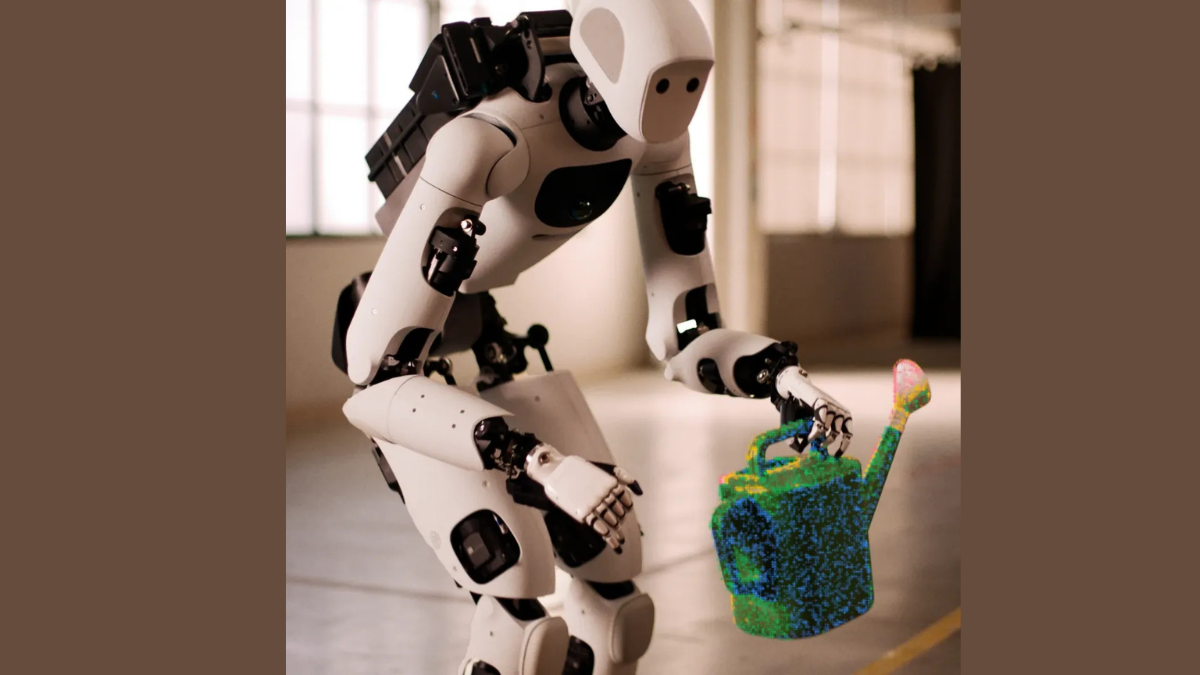
Whole-body motor control allows humanoid machines to crouch, stretch, balance, and walk inside tight physical spaces. Operating the Apptronik Apollo 2 humanoid, the primary model translates natural language requests into complex multi-step actions, such as fetching a watering can from a table and placing it on a lower shelf. Finesse extends down to the hands. The system operates 5-fingered, 22 degree-of-freedom SharpaWave hands for delicate tasks like tying knots or sealing ziplock bags, alongside standard 2-fingered parallel grippers on Franka Duo platforms. When operating locally, the on-device variant adapts to new physical hardware like Dexmate, SO101, and Trossen platforms in a matter of hours.
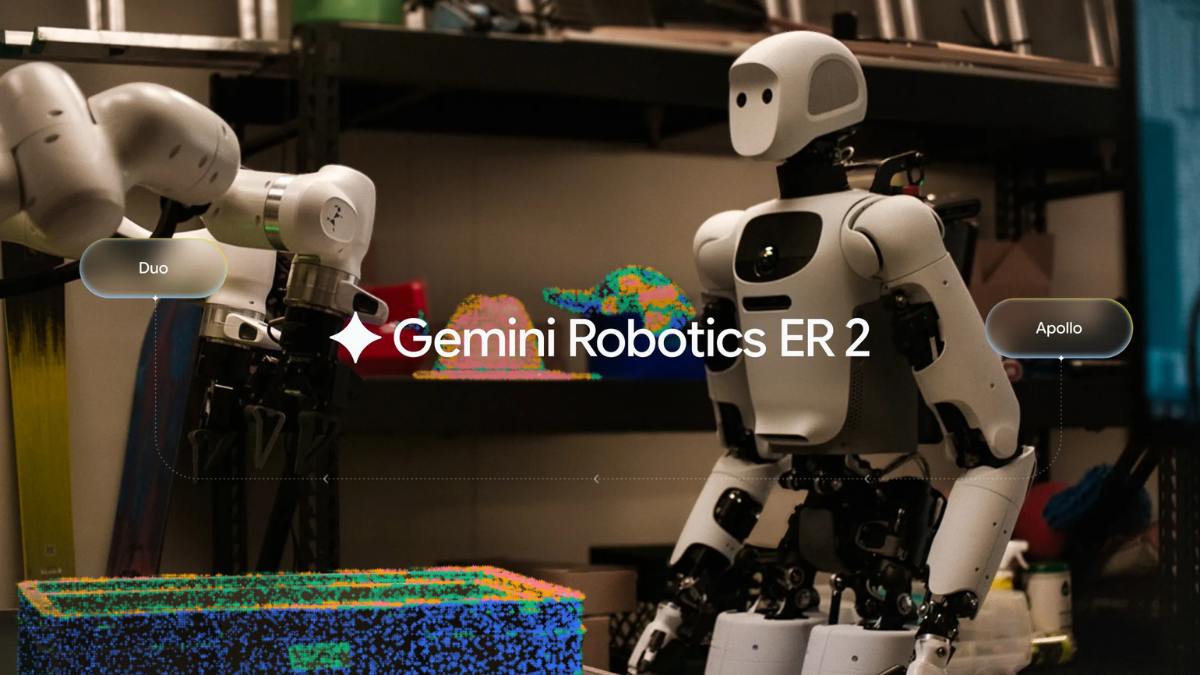
Converting visual inputs and spoken instructions directly into full-body motor control across diverse physical bodies represents the primary functional shift. A single model checkpoint controls entirely different hardware setups without needing full retrain cycles for each body shape.
Gemini Robotics 2 platform specifications
| Feature | Details |
| Developer API input pricing | $2.00 (approx ₹168) per 1 million tokens |
| Developer API output pricing | $10.00 (approx ₹840) per 1 million tokens |
| Progress classification accuracy | 57.4 per cent |
| Frame identification accuracy | 91.3 per cent (0.96-second distance) |
| On-device adaptation requirement | Under 200 examples |
| Hand degree-of-freedom support | 22 degrees of freedom |
Developers across India can access the reasoning model through Google AI Studio or generate keys via the standard API portal. Enterprise teams requiring private infrastructure can test preview access on Vertex AI. You might already know how to Put your family in AI art with Gemini India using consumer software. This expansion brings that same core artificial intelligence stack to physical enterprise hardware. Full end-to-end physical execution in local facilities remains tied to when hardware partners ship commercial units into the Indian market. Lower-level motor controls remain limited to early-access partners for now.
ⓘ Sponsored: Unbox Daily HQ earns a commission if you buy through these links, at no extra cost to you. Prices shown are subject to change, and the actual price on Amazon at the time of purchase may vary from what is displayed here.
The Unboxed Truth
This software update brings physical AI much closer to managing actual working environments. At Unbox Daily HQ, we see this leap from tabletop upper-body movement to full-body coordination as a crucial milestone for real automation. At $2.00 (approx ₹168) per million input tokens, developer API testing costs less than a cup of specialty coffee, keeping software testing cheap enough for local teams to build complex workflows immediately. You cannot deploy these full-body controls on a local assembly floor tomorrow because commercial humanoid bodies are not yet sold locally. You can, however, start building and simulating multi-step agentic pipelines today.
Best for: Engineering teams testing autonomous robotics software and multi-machine coordination.
Who Is This For: Software engineers and robotics researchers aged 25 to 45.
Courtesy: Google DeepMind
Gemini Robotics ER 2 costs $2.00 (approx ₹168) for input tokens and $10.00 (approx ₹840) for output tokens per million. Software models are available today in India through Google AI Studio and the Gemini API portal. Full physical deployment depends on when commercial hardware partners ship compatible bodies locally.
Gemini Robotics 2 translates vision and language inputs directly into whole-body motor control from feet to fingertips. A single model checkpoint operates diverse hardware configurations, including humanoids and bi-arm setups. The system also enables multi-robot collaboration and adapts to new physical bodies in hours using fewer than 200 examples.
Yes, Gemini Robotics 2 provides crucial spatial and motor intelligence for robotics engineers aged 25 to 45. Low token pricing allows cost-effective virtual simulation and testing of agentic multi-robot workflows. While physical hardware availability in India lags behind the software release, developers can start building compatible control pipelines immediately.