Thursday, May 28, 2026 |Navi Mumbai
--:-- | --°C | AQI --
If it's not on Unbox Daily HQ, it's not a Launch. Every product, policy and brand launch in India. One hub. What's new?
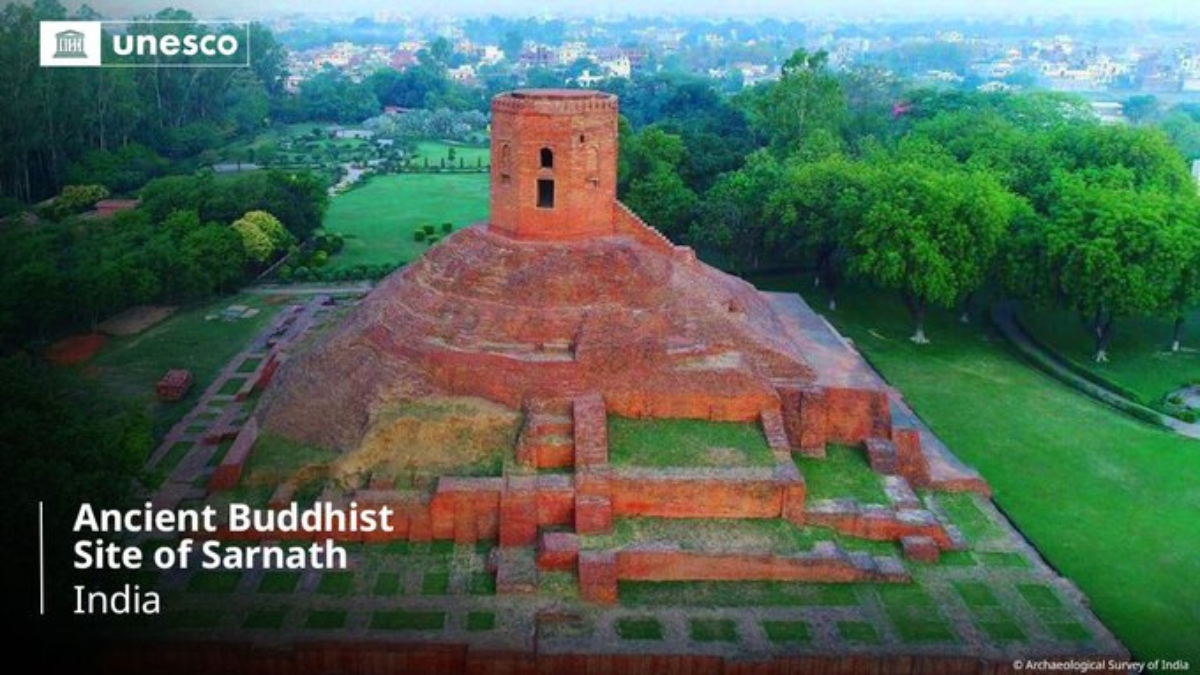
India's 45th UNESCO World Heritage site includes the Dhamek Stupa and Ashokan Pillar, ending a 28-year wait.
The Essentials
The Pulse
Sarnath officially joins the UNESCO World Heritage List as India’s 45th property, confirmed during the 48th World Heritage Committee session in Busan, South Korea. This inscription celebrates the site’s profound civilisational and spiritual heritage, driven by its enduring association with Lord Buddha’s teachings.
Prime Minister Narendra Modi marks the inscription as a proud moment for every Indian. He notes that the newly acquired status will inspire more people across the world to travel to Uttar Pradesh. The acknowledgement serves as a direct bridge connecting international visitors with the foundational ideals of wisdom, compassion, and harmony.
How does this status change the site’s future?
A UNESCO inscription historically guarantees strict preservation standards and elevates international tourism circuits. By sharing his response on X, the Prime Minister underscores the national gravity of this milestone, placing Sarnath at the centre of India’s cultural and spiritual outreach on the global stage.
ⓘ Sponsored: Unbox Daily HQ earns a commission if you buy through these links, at no extra cost to you. Prices shown are subject to change, and the actual price on Amazon at the time of purchase may vary from what is displayed here.
The Breakdown
The inscription covers two distinct archaeological zones located about 626 metres apart. The first component is the Chaukhandi Stupa, commemorating Buddha’s reunion with his five companions. The second comprises the main archaeological complex, which houses the Dhamek Stupa, the Dharmarajika Stupa, the Mulagandhakuti Vihara, and the iconic Ashokan Pillar. These structures represent a stratified settlement excavated by the Archaeological Survey of India, spanning 16 centuries from the pre-Mauryan period in the 5th to 4th centuries BCE until its decline in the 12th century CE. The UNESCO tag ensures these specific physical ruins receive internationally mandated structural safeguarding.
The Distinction
The primary differentiator of Sarnath’s new UNESCO inscription is the transition from a nationally maintained monument to a globally recognised heritage zone. Standard cultural sites rely entirely on domestic preservation frameworks. This recognition introduces an international layer of heritage acknowledgement, specifically cementing the location’s civilisational importance. For a site where Lord Buddha delivered his first sermon, the World Heritage tag guarantees that its structural and cultural legacy, across the Chaukhandi Stupa and main archaeological complex, receives global monitoring and support that standard tourism classifications do not provide.
The Snapshot
| Feature | Detail |
| Location | Sarnath, Varanasi, Uttar Pradesh |
| Status | Inscribed on UNESCO World Heritage List (India’s 45th site) |
| Key Monuments | Chaukhandi Stupa, Dhamek Stupa, Ashokan Pillar |
| Primary Significance | Site of Buddha’s first sermon |
The Big Picture
India currently ranks sixth globally and second in the Asia-Pacific region for the most World Heritage Sites. Within Uttar Pradesh, Sarnath becomes the fourth entry, joining the Taj Mahal, Agra Fort, and Fatehpur Sikri, which were all listed in the 1980s. The inscription also means three of the four most significant global Buddhist pilgrimage sites, Lumbini in Nepal, Mahabodhi Temple in Bihar, and now Sarnath are officially protected under the UNESCO framework, strengthening the international Buddhist tourism circuit.
The India Prospective
For Indian citizens and domestic travellers, this UNESCO inscription brings renewed national attention to Uttar Pradesh’s spiritual circuit and potential infrastructure upgrades. The Prime Minister explicitly frames this as a proud moment for every Indian, signalling a strategic focus on domestic cultural pride. This global status directly validates India’s historical heritage on the world stage, preparing Varanasi and Sarnath to receive enhanced central funding and improved amenities catering to both local pilgrims and international visitors.
The Inside Intel
This recognition comes precisely 28 years after Sarnath was first placed on UNESCO’s Tentative List in July 1998, marking one of the longest evaluation waits for an Indian heritage site before finally securing full inscription.
The Unboxed Truth
Unbox Daily HQ considers this UNESCO recognition a crucial milestone that permanently elevates Sarnath from a regional pilgrimage destination to a protected global asset. For a 35-year-old cultural traveller planning a heritage circuit through Uttar Pradesh, this tag guarantees strict site preservation and international importance. While a standard monument visit requires minimal time, exploring a newly minted UNESCO site offers tangible engagement with recognised civilisational history. The single element that makes this inscription matter is the formal global commitment to acknowledging the space where Lord Buddha’s ideals took root, ensuring the Dhamek Stupa and surrounding ruins remain culturally intact for future generations.
Best for: history and culture enthusiasts who prioritise visiting internationally recognised heritage locations
Who Is This For: Perfect for 28 to 55-year-old cultural tourists in India who track UNESCO site additions
The Checkout
The Source
PIB.GOV
The Query
Yes, Sarnath in Uttar Pradesh is officially inscribed on the UNESCO World Heritage List as India’s 45th property. The recognition follows a 28-year wait after its initial placement on the tentative list in 1998. The location is open to public visitors as part of Uttar Pradesh’s core spiritual circuit.
Standard cultural sites in India rely solely on domestic preservation frameworks. Sarnath’s UNESCO designation introduces an international layer of heritage monitoring and structural safeguarding for the Dhamek Stupa and surrounding complex. This status permanently elevates the location from a regional pilgrimage destination to a globally protected asset.
Yes, visiting Sarnath is genuinely worth it for cultural tourists aged 28 to 55 in India. The UNESCO designation guarantees strict site preservation across the Chaukhandi Stupa and main archaeological ruins. It offers valuable, tangible engagement with recognised civilisational history that standard monument visits cannot match.