Thursday, May 28, 2026 |Navi Mumbai
--:-- | --°C | AQI --
If it's not on Unbox Daily HQ, it's not a Launch. Every product, policy and brand launch in India. One hub. What's new?
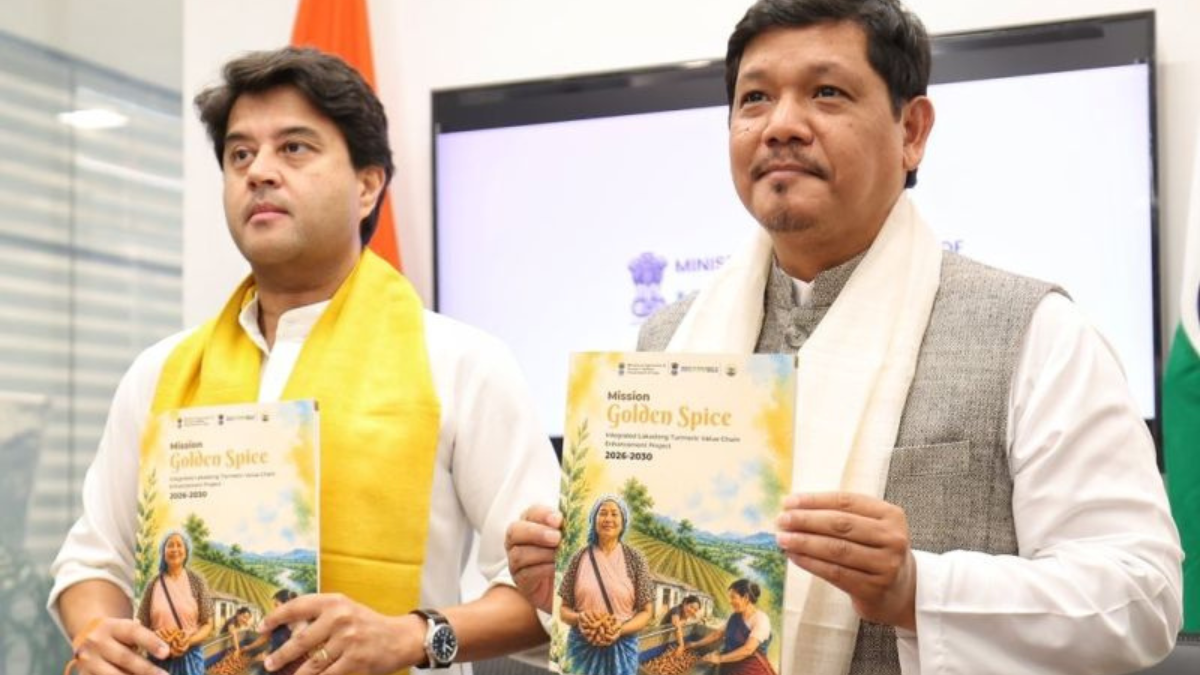
The ₹175.45-crore Mission Golden Spice targets doubling farmer income for Meghalaya's high-curcumin Lakadong turmeric.
The Essentials
The Pulse
Mission Golden Spice operates as a ₹175.45-crore strategic intervention to restructure the Lakadong turmeric value chain in Meghalaya. Historically, growers sold this premium crop in unprocessed or semi-processed forms, severely limiting their economic return despite the exceptional quality of the yield. The initiative addresses systemic infrastructural gaps that have previously bottlenecked the region’s agricultural export potential.
Does a targeted regional agricultural mission actually influence the global spice trade?
The integration of multiple ministries and agricultural boards signifies a shift from scattered subsidies to a concentrated, end-to-end commercial roadmap. By establishing dedicated processing facilities and structural market linkages, the project positions Meghalaya’s specific turmeric strain as a luxury export commodity rather than a standard bulk spice.
The five-year timeline running through 2030 divides into a foundational strengthening phase followed by mass scaling. This structural approach aims to correct the historical imbalance where high-value agricultural products failed to enrich their primary cultivators. The mission establishes a replicable template for how regional Indian states might monetise their distinct geographical indications on the international stage.
ⓘ Sponsored: Unbox Daily HQ earns a commission if you buy through these links, at no extra cost to you. Prices shown are subject to change, and the actual price on Amazon at the time of purchase may vary from what is displayed here.
The Breakdown
The physical implementation of the mission relies on constructing the largest integrated organic turmeric processing and curcumin extraction facility in the northeast. This infrastructural upgrade addresses direct post-harvest losses and introduces commercial-scale cold chain storage systems previously absent from the local supply chain. The operational model places women at the structural centre of the new farmer institutions and local enterprises. Cultivation metrics target a deliberate geographic expansion, scaling the active farming footprint from 2,500 hectares to 7,500 hectares within the state borders. The processing architecture ensures the unprocessed organic harvest converts into export-grade nutraceutical outputs, directly maintaining the 7 to 10 percent curcumin integrity during commercial extraction.
The Distinction
The primary differentiator of Lakadong turmeric is its verified chemical composition, explicitly tied to the agro-climatic soil conditions of Meghalaya. Competing commercial turmeric variants average significantly lower active compound yields. Lakadong naturally produces a curcumin content of 7 to 10 percent, which is nearly four times the global baseline. Attempts to cultivate these specific saplings outside the state result in a documented decline in curcumin retention. This unique geographic dependency forms the structural basis for Mission Golden Spice, transforming a regional agricultural crop into a highly specialised, globally competitive nutraceutical asset.
The Snapshot
| Metric | Detail |
| Project Name | Mission Golden Spice |
| Focus Crop | GI-tagged Lakadong Turmeric |
| Region | Meghalaya, India |
| Budget Allocation | ₹175.45 crore |
| Curcumin Content | 7 to 10 percent |
| Current Remuneration | ₹30 to ₹40 per kilo |
| Target Remuneration | ₹80 per kilo (by 2030) |
| Cultivation Target | Expansion from 2,500 to 7,500 hectares |
The Big Picture
The global organic spice market heavily values verified trace origins and high active compound concentrations. Indian agricultural exports traditionally suffer from fragmented supply chains and unprocessed material dumping, preventing premium pricing. By concentrating resources entirely on one specific GI-tagged crop through a multi-ministry convergence model, this initiative moves away from generic volume export. It aligns with a deliberate strategy to market distinct regional specialities directly to global luxury buyers, setting a precedent for other unique Indian agricultural assets like regional honey or native ginger strains.
The India Prospective
For the domestic consumer focused on preventative health and nutraceuticals, this mission guarantees a formalised pipeline of authentic, high-grade Lakadong turmeric within Indian markets. Buyers currently navigate a flooded market of adulterated or low-curcumin powders. An organised supply chain backed by government extraction facilities ensures urban Indian households can access verified, export-quality organic turmeric without relying on expensive imported wellness supplements or unverified third-party vendors.
The Inside Intel
The exact chemical profile of this turmeric is strictly geographically bound. When agricultural scientists attempted to cultivate genuine Lakadong turmeric saplings in soil outside of Meghalaya, the plants consistently failed to produce their signature high curcumin levels. This proves the yield relies entirely on the specific agro-climatic conditions of the state, making the crop impossible to replicate elsewhere.
The Unboxed Truth
Unbox Daily HQ views this initiative as a necessary correction to India’s agricultural export strategy, shifting the focus from cheap bulk commodities to high-value, scientifically backed regional assets. The historical model of selling unprocessed turmeric at ₹40 a kilo while international wellness brands extract the compounds for massive profit margins structurally disadvantages the primary grower.
For an urban professional integrating high-grade curcumin into their daily wellness routine, this formalised supply chain is crucial. Securing verified Lakadong turmeric currently costs a premium through niche organic brands, often with questionable trace authenticity. By standardising the extraction and cold-chain process domestically, consumers receive a mathematically superior product while keeping the monetary value within the local grower economy.
The commitment to establish a dedicated curcumin extraction facility within Meghalaya separates this mission from standard agricultural subsidies. It actually builds the industrial bridge required to turn a regional spice into a global nutraceutical brand.
At a ₹175 crore investment scale, this is the most structured governmental attempt to monetise a North Eastern geographical indication to date.
Best for: Health-conscious consumers and culinary professionals who prioritise verified organic ingredients and require high active compound ratios in their dietary supplements.
Who Is This For: Perfect for 30 to 55-year-old wellness advocates in metropolitan Indian cities who actively seek out functional, high-curcumin dietary additions and value transparent, farmer-direct supply chains.
Ministry of Development of North-East Region
The Source
PIB India
The Query
Mission Golden Spice has a total budget allocation of ₹175.45 crore over a five-year roadmap from 2025 to 2030 in Meghalaya. The government project aims to nearly double farmer remuneration from ₹30–40 to ₹80 per kilo. It will also expand organic turmeric cultivation from 2,500 to 7,500 hectares.
Lakadong turmeric contains an exceptionally high curcumin content of 7 to 10 percent, which is nearly four times the global baseline. Standard commercial turmeric variants average significantly lower active compound yields. Furthermore, attempts to grow Lakadong saplings outside Meghalaya result in a documented decline in curcumin retention.
Yes, Lakadong turmeric is worth buying for health-conscious consumers seeking verified, high-curcumin dietary supplements. At nearly four times the world average curcumin level, it offers superior nutraceutical value compared to standard commercial powders. The government project ensures a formalised supply chain of authentic, export-grade organic turmeric directly from Meghalaya farmers.